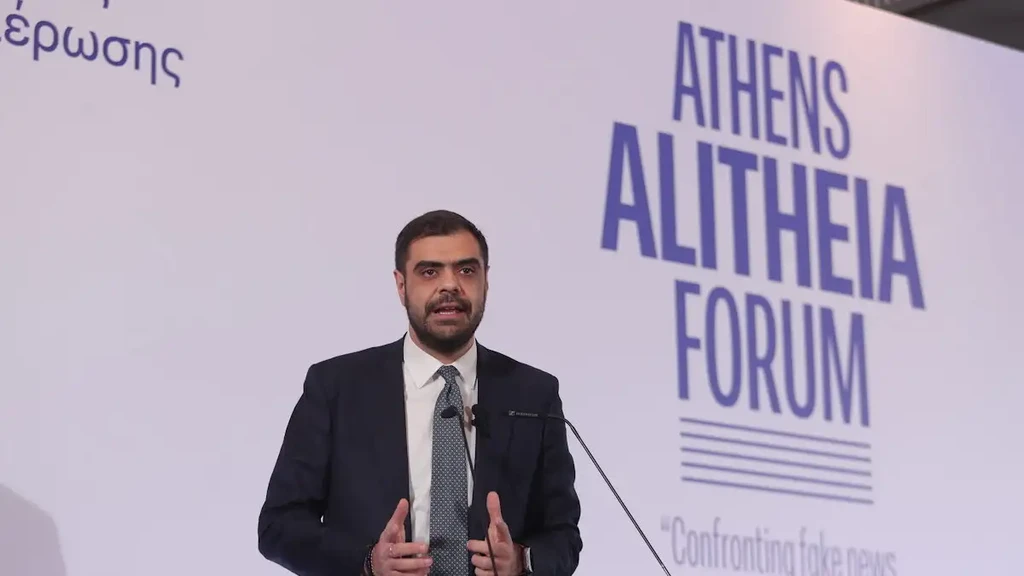
“Déjà vu all over again.” That is how Markos Kounalakis, a veteran foreign correspondent who witnessed the fall of the Berlin Wall and the collapse of the Soviet bloc, describes President Donald Trump’s recent moves over Greenland.
To Kounalakis, they are not an isolated diplomatic flare up, but a warning sign that great power politics is sliding back toward Cold War era patterns of pressure and brinkmanship.
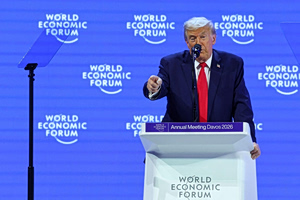
Trump’s decision in Davos to pull back from explicit threats of military force, Kounalakis argues, does not signal retreat. Instead, it reflects a negotiating style built on unpredictability, one that keeps allies and adversaries alike off balance and is already straining transatlantic relations.
Now a visiting fellow at Stanford University’s Hoover Institution after decades covering wars and revolutions from Moscow to Afghanistan, Kounalakis views the Greenland dispute as part of a broader challenge to the rules based international order.
In an interview with TO BHMA, he assesses the limits of what is often called the “madman theory” and explains what this new phase of strategic competition means for smaller countries like Greece, in a world where power is once again outpacing institutions.
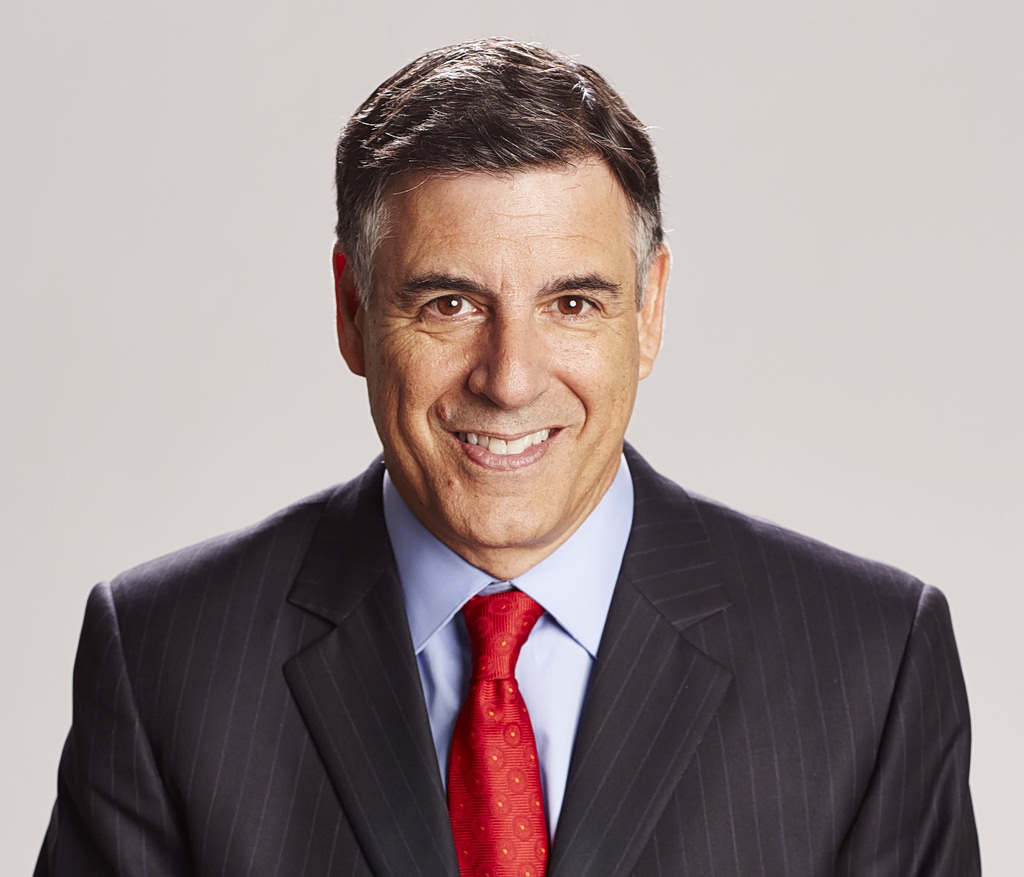
Markos Kounalakis is an award-winning, nationally syndicated foreign affairs columnist, author, and scholar.
In Davos, President Trump took military force off the table on Greenland. Why do you think he changed course there, and why at that moment? Was this a genuine de-escalation, or a tactical adjustment once he saw the reaction from allies and markets?
I think it’s always very difficult to try to interpret President Trump and his actions. He prides himself, and he is very clear about the fact that he is always willing to change course. And part of his strategy, part of his negotiating strategy, is to always keep the negotiating parties, his counterparts, off balance. So, what I suggest is that the president, part of his negotiating style is to keep his counterparts off balance and uncertain as to what his behavior and the actions of the United States might be.
So we can speculate, but in terms of the negotiating style and the ability to change from one minute to the next, that is consistent with the way that he negotiates overall. But what still remains clear, I think, is the fact that he wants, in some way, shape or form, Greenland to be under the, what he calls, ownership of the United States.
There is a long-standing belief in foreign policy that unpredictability can force concessions. Did Trump’s approach on Greenland actually deliver results that traditional diplomacy could not?
Well, you know, he is very vocal about what you suggested, which is the mad man theory. It’s not a change in his negotiating approach. So that shouldn’t come as a surprise to anybody who is negotiating with President Trump. But specifically on this issue, did he gain or lose anything? Well, you know, the whole world is talking about Greenland suddenly. So, this was an issue that didn’t even exist until he started talking about it. And already you have seen that Mark Rutte has potentially made some concessions. And that’s more than he had beforehand. So, while I may not find that a very comfortable negotiating strategy, to answer your question, yeah, he likely has gained something. Those who have lost something are, of course, the Greenlanders because they appear to be cut out of any negotiation. Those who have gained something as well are the Europeans because they have discovered that they need to be able to coalesce and provide a unified voice. And that is woefully missing with the European leadership as a collective unit.
But did that come at a cost to U.S. credibility? And what does this episode mean for the future of the transatlantic relationship?
So, there are multiple levels of the transatlantic relationship. I think many Europeans are now questioning the role that NATO might play. I think President Trump from the very outset has made Article 5 something that seems to be open also to negotiation while reaffirming, and many of his administration have reaffirmed Article 5. I think that’s still something that makes the European partners very nervous. On trade, I think everyone is observing the unreliability of trade negotiations and deals when he can at any moment, at least so far, change the terms of any negotiated settlement and trade agreement. So, the transatlantic relationship, while firmly based in shared values and a tradition and relationship that spans decades, is one that is constantly being renegotiated by this administration.
When Washington openly discusses acquiring territory linked to an ally, what message does that send to Moscow and Beijing? Are we entering a world where power matters more than rules?
I don’t think that Moscow or Beijing are going to base their behavior on something like Greenland. They are already aggressors, at least Russia currently in Ukraine. I don’t think their behavior is changing any there.
And Beijing seems to be using its trade policies and its hegemony to assert itself in its region. What you are doing is getting mixed messages in those great power capitals. On the one hand, the president is asserting American power in multiple areas: the bombing of Iran, the taking out of Maduro, etc. So, there is an understanding that he is willing to use military force in a much more assertive way than previous presidents. But on the other hand, he is constantly looking for negotiated deals, both with President Xi Jinping and with Putin. So, I think it’s both the carrot and the stick that he is wielding. And of course, it just is a matter of perception then in those capitals as to what those things mean.
What does this return to great power competition mean for smaller countries in sensitive regions, including Greece?
I think if you need to interpret how this new framework looks, you just need to go back to the Cold War era and recognize that the major powers are being much more assertive. They are expressing much fear, and middle powers oftentimes subjected to the interests and the behavior of these great powers. It’s not a very comfortable position to be in. Prime Minister Mark Carney expressed it best when he talked about effectively the Thucydides’ understanding of small and medium powers. Now, you know, not all middle powers are the same. Some have greater assets, greater geopolitical relationships, demographic power. The fact that Greece is located where it is gives it much greater power and say, than say Hungary or Montenegro. So, it just depends on the middle power. But in general, I think we are now in a phase where it’s déjà vu all over again, as one of our baseball greats once said.
Speaking of déjà vu, you covered some of the defining moments of the Cold War, from Berlin to Eastern Europe. When you look at today’s world, what worries you most?
I would say I have mixed emotions about the current stage because the way the decisions are being made at the global level is now much more focused on single leaders and less on process. So, that gives me discomfort because I believe in a system that has checks and balances as opposed to pronouncements and feckless behavior at the leadership level. But there are other things that make me feel conflicted. For instance, I am very happy that Nicholas Maduro is no longer empowered in Venezuela. I am conflicted because the outcome of the U.S. attack on the nuclear capacities of Tehran that possibly even bolstered opposition movements within that country. So, those are my feelings and that’s my emotional reaction to all of these things.