As the war with Iran reshapes the balance of power in the Middle East, a quieter shift is taking hold in Washington.
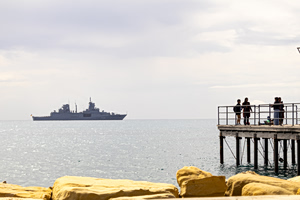
In May 2019, at an event at the Brookings Institution in Washington, the Speaker of the House of Commons, John Bercow, was asked a simple question: how concerned is the British Parliament about Turkish violations in Cyprus’ exclusive economic zone.
Richard Goldberg, former White House National Security Council official who helped shape U.S. sanctions policy on Iran, tells To Vima that Greece’s shipping industry and energy infrastructure could play a decisive role in U.S. efforts to secure energy flows amid Middle East tensions
Stavros Papastavrou returns to CERAWeek in Texas to discuss next steps with Chevron and ExxonMobil – On the table are timelines for exploratory drilling, studies, and seismic surveys
Athens has increased investments in its military capabilities, including upgrades to its F-16 fleet and the acquisition of advanced air defense systems, moves that U.S. lawmakers say enhance collective deterrence
At a time when the Trump administration is urging European allies to shoulder more of the continent’s defense burden, Greece is moving into a new framework of military cooperation with Washington.
The foundations were laid in Athens last November. This week in Washington, Greek officials believe they began building upward.
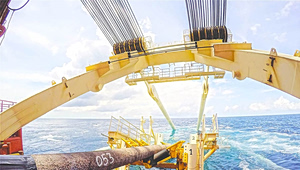
Greece is making a new argument about its place on Europe’s energy map: that geography, long viewed as peripheral, can become strategic power.
Trump commended Athens for its progress toward NATO’s 5 percent defense spending benchmark, saying Greece is demonstrating “real leadership” within the Alliance
Discussions are underway with Bulgaria, Romania, and Ukraine to extend the Vertical Corridor and convert it from concept into an operating supply architecture. The objective is to secure 10-to-20-year commitments that provide commercial predictability and signal durability
Despite years of diplomatic backing, the corridor continues to face structural challenges. Capacity auctions have not guaranteed stable volumes. Transit fees, layered across multiple countries, steadily erode its price competitiveness
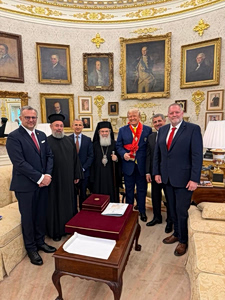
When representatives of the Russian Orthodox Church recently visited the White House, the meeting was not a routine courtesy call by religious leaders
Now a visiting fellow at Stanford University’s Hoover Institution after decades covering wars and revolutions from Moscow to Afghanistan, Markos Kounalakis views the Greenland dispute as part of a broader challenge to the rules based international order
Supporters of the legislation argue that these projects are essential not only to Europe’s energy resilience but also to the viability of a corridor designed to connect Asian and Middle Eastern supply chains to European markets
CERTH, founded in 2000 and overseen by Greece’s General Secretariat for Research and Innovation, has sought to expand its international profile as it competes for talent, partnerships and private capital
The archbishop placed his remarks within a broader institutional history, recalling the decision by his predecessor, Archbishop Iakovos, to stand alongside Martin Luther King Jr. during the 1965 Selma voting rights march
Greece’s newly appointed ambassador to the United States, Antonis Alexandridis, presented copies of his credentials
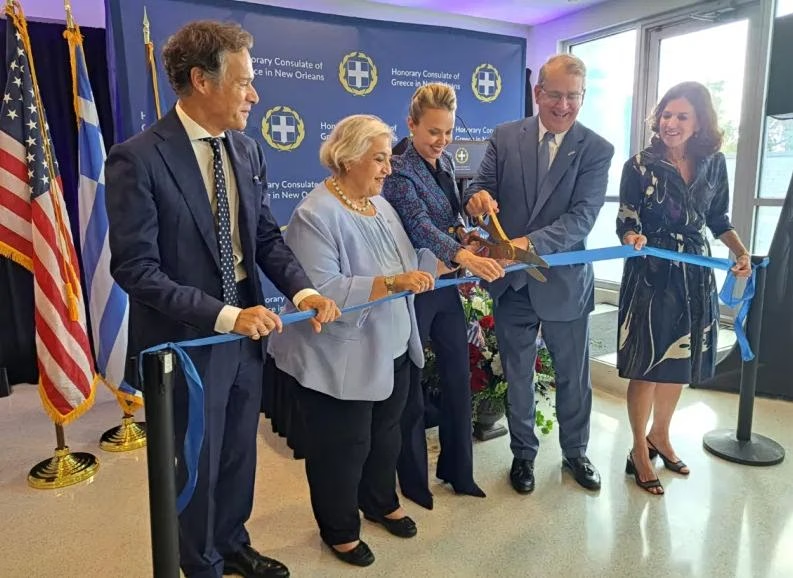
The long-sealed residence that witnessed pivotal moments in Greek-American relations is entering a new chapter
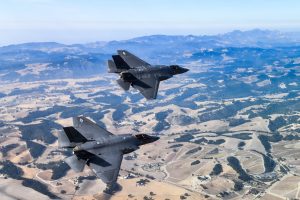
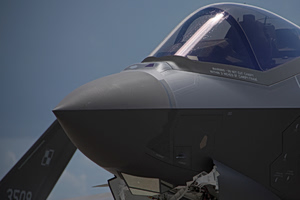
Turkey was removed from the F-35 program after it acquired the S-400, a decision Washington has repeatedly said is incompatible with NATO security requirements
Minister Papastavrou's visit came at a moment when governments across the region are reassessing supply routes and strategic alignments in response to shifting Middle Eastern dynamics and Europe’s ongoing effort to break from Russian gas