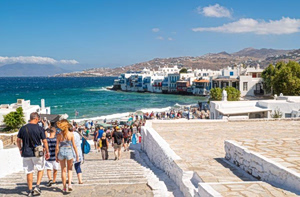
The sectors of tourism and shipping play a disproportionately large role in Greece and Cyprus, exposing their economies to escalating geopolitical risks in the Middle East, according to Morningstar DBRS.
The effective closure of the Strait of Hormuz and disruptions to airspace are forcing a rerouting of maritime traffic, driving up costs and freight rates, while also weighing on air travel and tourism demand. Cyprus is seen as more vulnerable due to its geographic proximity to conflict zones.
For banks, these developments heighten credit risks in the event of a prolonged conflict, given their above-average exposure to shipping and tourism. Greek banks benefit from some mitigation thanks to the more internationalized and secured financing structure of the shipping sector, supporting short-term resilience. By contrast, Cypriot banks are more heavily exposed to tourism.
Even so, both banking systems maintain strong profitability and capital buffers, which should help them navigate a more challenging operating environment, the Morningstar DBRS said.
Tourism and shipping carry significantly greater weight in the economies of Greece and Cyprus compared with most other European Union countries, underscoring their importance but also their vulnerability to external shocks.
Tourism has broad spillover effects across the economy, supporting industries such as transport and entertainment, while also driving private consumption due to its substantial contribution to employment.
Shipping, although less dominant than tourism, remains more significant in both countries than in most EU economies, reinforcing their exposure to global trade dynamics.
Despite high uncertainty surrounding developments in the Middle East and global oil and gas supply, recent tensions are expected to weigh on tourism, which has been a key driver of economic growth in recent years.