Recent Eurostat data reveal striking contrasts in how Europeans travel—from where they go to how much they spend and what they indulge in along the way. A strong preference for domestic trips dominates: 71% of Europeans’ journeys take place within their own countries, compared to 21% within the EU and just 8% beyond its borders.
Spaniards top the list of home loyalists, with only 8% of their EU trips occurring outside Spain. The French and Romanians follow closely, at 9%. At the opposite end are smaller nations like Luxembourg (78%), Belgium (62%), and Malta (48%), where most travel naturally happens abroad.
The Big Spenders
When it comes to travel budgets, Luxembourg leads the way. Its residents spend an average of 1,758 euros on foreign trips lasting at least four nights—just ahead of Swedes (1,744 euros), Austrians (1,573 euros), Finns (1,501 euros), and French (1,403 euros).
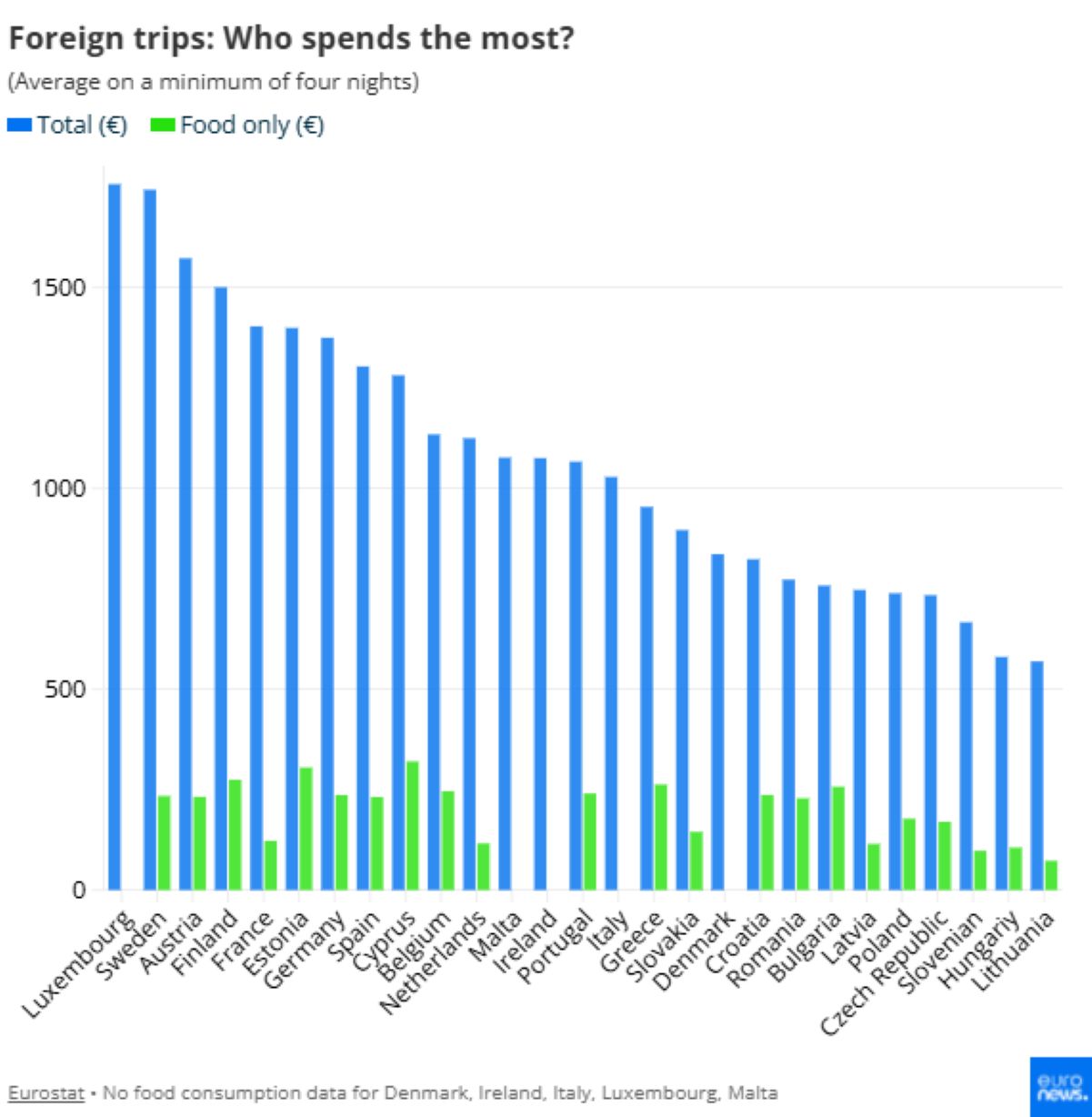
Lithuanians (569 euros), Hungarians (580 euros), and Slovenians (667 euros) spend the least, showing how income levels still shape European travel habits.
A Taste for the Local
Cypriots take the top spot for dining abroad, spending an average of 320 euros on food and drinks per trip. Estonians (305 euros), Finns (274 euros), and Greeks (263 euros) follow. Balkan travelers, however, devote a larger share of their budgets to gastronomy—often a quarter or more. Bulgarians lead with 34%, trailed by Romanians (29.5%), Croatians (29%), Greeks (27.5%), and Cypriots (25%).
In contrast, French tourists—despite being culinary icons—spend only 9% of their travel budget on food, the lowest in the EU, with Swedes close behind at 13%.
Comfort Comes First
Accommodation spending tells another story. Belgians, Germans, and Austrians allocate 40% or more of their total travel costs to lodging, prioritizing comfort over frills. Latvians follow, even though their overall budgets are modest. Central Europeans—Czechs, Poles, and Hungarians—spend proportionally the least, while Danes close the list at 32.6%.