Greece’s Parliament has approved, by majority vote, a comprehensive bill introduced by the Ministry of Infrastructure and Transport, marking a significant overhaul of the country’s transport framework. The legislation establishes a unified set of rules across key sectors—from urban public transit and the taxi market to vehicle inspections, electromobility, and sustainable urban mobility—aimed at strengthening safety, transparency, and overall system efficiency.
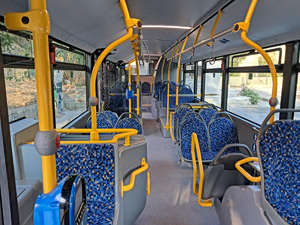
A central provision allows O.SY. S.A., the state-run urban transport operator, to train prospective bus drivers, addressing growing staffing shortages and bolstering the operational capacity of public transport services. The bill also places particular emphasis on safeguarding public transport assets and infrastructure. For the first time, it introduces the option of mandatory community service for individuals responsible for acts of vandalism.
Under the new framework, offenders may, in addition to existing administrative or criminal penalties, be required to participate in repair and restoration work—such as cleaning and fixing damage—in lieu of financial fines. The legislation also establishes a more coherent and stringent approach to fare evasion. Fines for traveling without a valid ticket on buses, metro, tram, suburban rail, and trolley services in Athens and Thessaloniki rise by 30 euros, bringing the total to 100 euros from the previous 72 euros.
Passengers eligible for reduced fares will face a 50 euros fine, up by 16 euros, though the penalty may be halved if the offender purchases an unlimited travel card, reinforcing incentives for compliance. These measures aim to further curb fare evasion and restore fairness for law-abiding passengers, while stricter sanctions are introduced for assaults against ticket inspectors and transport staff.
The bill also introduces targeted reforms for the taxi sector, resolving long-standing practical issues related to co-ownership and inheritance that often led to vehicle immobilization and income loss. The new provisions ensure continuity in license use without lengthy administrative procedures. Additionally, taxi operators will now be permitted to convert licenses from five-seat to nine-seat vehicles, offering greater flexibility, particularly during periods of high demand.
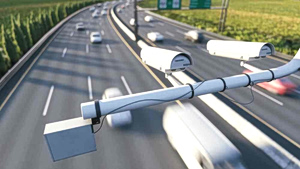
On the environmental front, the legislation mandates, for the first time, emissions testing for particulate matter in diesel vehicles, addressing a critical regulatory gap. It further modernizes the vehicle inspection framework, enhancing the reliability of technical control centers (KTEO) and contributing to improved road safety nationwide.