Reducing nuclear energy in Europe was a “strategic mistake,” Ursula von der Leyen said on Tuesday, warning that the shift has increased the bloc’s dependence on imported fossil fuels.
Speaking at a nuclear energy summit in Paris, von der Leyen said nuclear power once generated about one-third of Europe’s electricity in 1990, but that share has since fallen to roughly 15%.
“This reduction in the share of nuclear was a choice. I believe it was a strategic mistake for Europe to turn its back on a reliable, affordable source of low-emissions power,” she said.
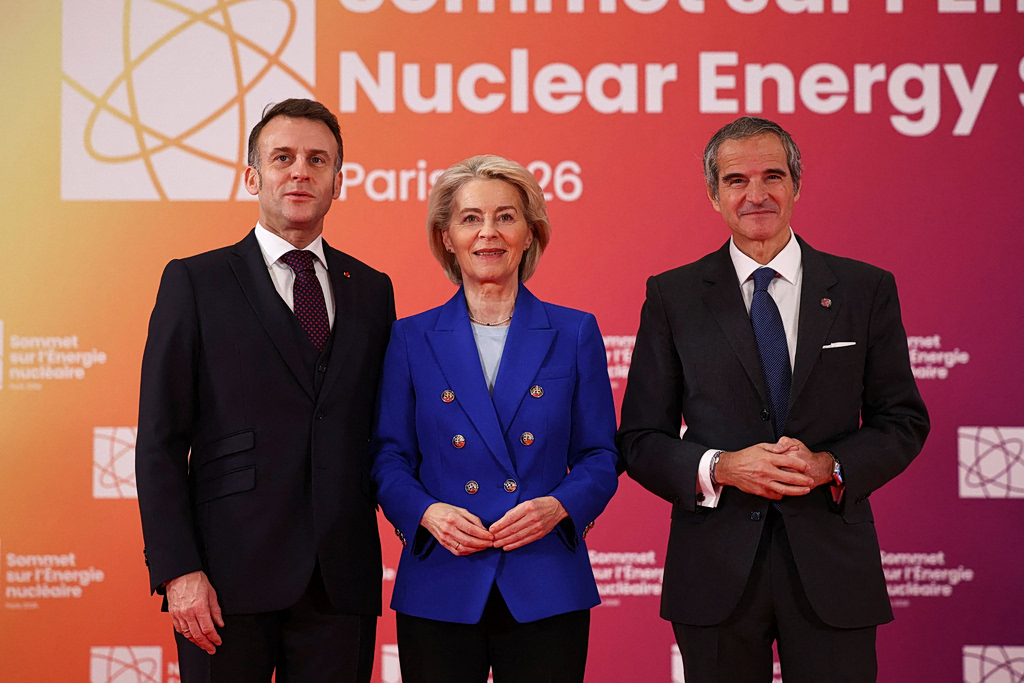
French President Emmanuel Macron, European Commission President Ursula von der Leyen and Rafael Grossi, Director General of the International Atomic Energy Agency (IAEA) attend the IAEA Nuclear Energy Summit in Paris, France, March 10, 2026. REUTERS/Abdul Saboor/Pool
According to von der Leyen, reliance on imported oil and gas leaves Europe exposed to volatile prices, especially during geopolitical crises such as the current conflict involving Iran.
Europe’s Energy Vulnerabilities
Europe’s dependence on external energy supplies became clear in 2022 when the continent lost access to cheap Russian gas following Moscow’s invasion of Ukraine.
Germany—von der Leyen’s home country—closed its final nuclear reactor in 2023, a decision made under former chancellor Angela Merkel after safety concerns sparked by the Fukushima nuclear disaster.
France Pushes Nuclear Expansion
France, Europe’s largest nuclear power producer, has argued that nuclear energy is essential for maintaining industrial competitiveness.
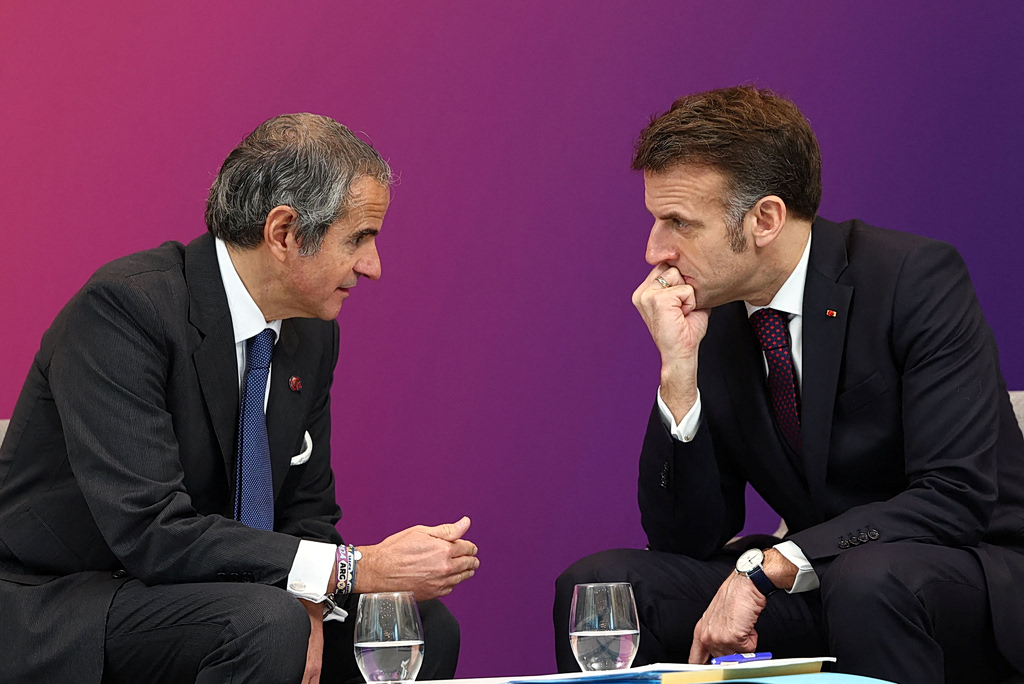
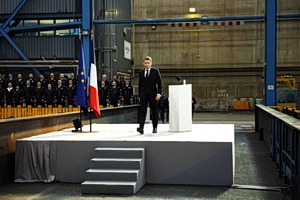
French President Emmanuel Macron attends a bilateral meeting with Rafael Grossi, Director General of the International Atomic Energy Agency (IAEA) during the IAEA Nuclear Energy Summit in Paris, France, March 10, 2026. REUTERS/Abdul Saboor/Pool
President Emmanuel Macron said Europe must diversify uranium supply sources and expand enrichment capacity to reduce reliance on Russia.
Data from the Euratom Supply Agency shows Russia supplied about 15% of the uranium used in the EU in 2024, while Canada accounted for around 34% and Kazakhstan about 24%. France itself imported 39% of its enriched uranium from Russia in 2025.
Macron also suggested standardizing reactor designs across Europe, a move that could benefit EDF, which has struggled to secure some recent international contracts.
China Calls for Inclusive Nuclear Governance
At the same summit, Zhang Guoqing said China was ready to work with other countries to promote more inclusive nuclear governance and development.
Zhang called for stronger international cooperation and a broader global division of labor across nuclear projects, emphasizing collaboration in the expansion of nuclear energy worldwide.