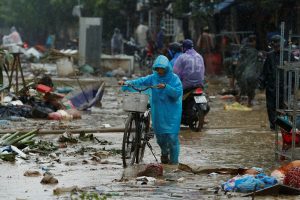
Vast swathes of farmland in Pakistan’s Punjab province lie under water after the worst floods in decades swept through villages, destroying homes, livestock, and crops that millions depend on for survival.
More than two million people have been affected, according to the provincial disaster management authority. At least 33 people have died in less than a week, while nearly 760,000 residents and 516,000 animals have been evacuated from inundated areas.
For many farmers, the losses are total. “Thirteen of my 15 acres are gone. Our rice is completely destroyed,” said Muhammad Amjad, a rice and potato farmer in Chiniot, whose family has been forced to evacuate.
Others say their livelihoods have collapsed overnight. As reported in Reuters, Amish Sultan, who relied on his buffalo herd for income, said his animals are too weak to produce milk. “I used to earn 100,000 to 150,000 rupees a month. That stability is gone,” he said.
Agriculture at risk
Punjab, Pakistan’s agricultural heartland, produces staples including rice, sugarcane, maize, vegetables, and cotton. Farmers and exporters warn that the impact will be staggering.
“We were expecting a bumper rice crop this year,” said Ibrahim Shafiq of Latif Rice Mills. “But with flood damage, prices could rise by 40–50%, hitting local consumers and making us uncompetitive internationally.”
Cotton losses pose a particular threat to the textile sector, which accounts for more than half of Pakistan’s exports. With U.S. tariffs already weighing on trade, reliance on costly imports could deepen the economic strain.
Agriculture experts warn shortages of wheat, vegetables, and cotton will ripple through supply chains, pushing up food prices and squeezing household budgets.
Inflation pressures return
The disaster comes just as inflation had begun to cool. Consumer prices fell to 4.1% in July from 11.1% a year earlier, while food inflation—once above 50% in 2023—had eased.
But officials now expect August inflation to tick back up to 4–5%, with food shortages already driving costs higher. Analysts warn that delayed wheat sowing, lost rice exports, and cotton imports will heap fresh pressure on Pakistan’s fragile economy.
Lives uprooted
The devastation extends beyond farms. In Lahore, rickshaw driver Aslam said he waded through two metres of floodwater to save his vehicle. “If I hadn’t saved my rickshaw, we would have lost everything. It is my only livelihood,” he said, now sheltering in a relief camp.
Across Punjab, authorities have set up more than 500 relief camps, alongside medical and veterinary sites, as rains continue. Thousands of police officers have been deployed to support rescue and relief efforts.
Still, families huddle in muddy tent cities with little certainty about the future. “Farmers grow the food that sustains us all,” said farmer and activist Aamer Hayat Bhandara. “If they are left alone in times of disaster, the whole nation will suffer.”