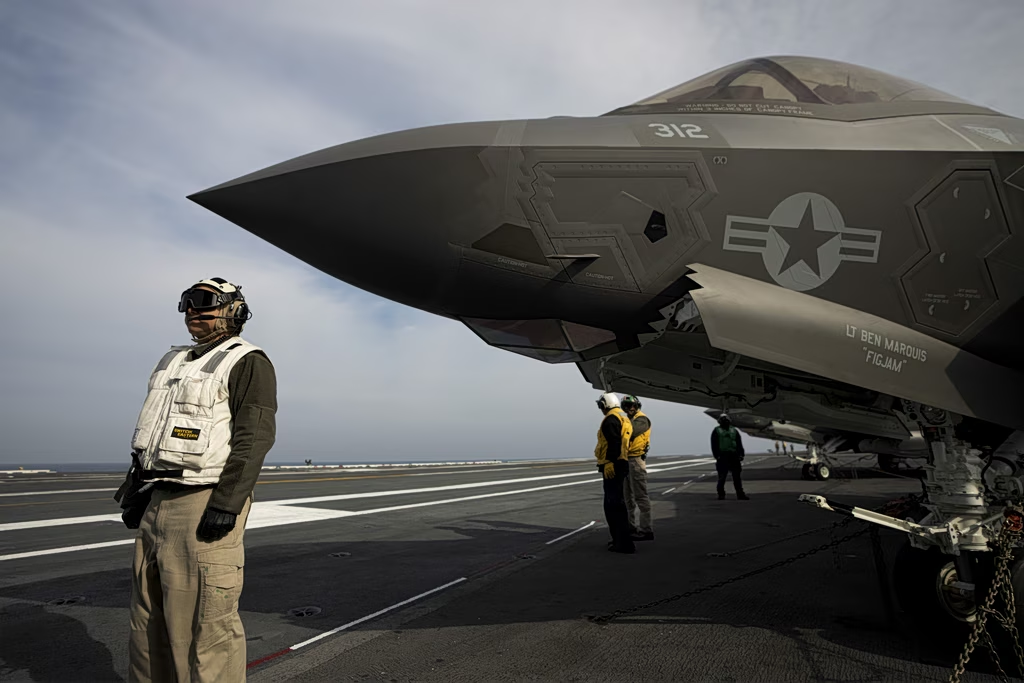
Turkey desperately wants them. Greece eagerly awaits its first four in 2028. Saudi Arabia is trying to acquire them. The reason is the F-35, the most advanced and commercially successful “stealth” fighter aircraft of our era. More than just an ultra-modern fighter jet, it is a potent geopolitical tool whose acquisition carries deep ramifications.
The F-35 Lightning II, built by America’s Lockheed Martin, constitutes the tip of the spear of 5th-generation fighters. It was developed through the international Joint Strike Fighter (JSF) program, a broad consortium between the US and allied countries, such as the United Kingdom, Italy, and the Netherlands, to replace older types like the F-16. The aircraft combines superior stealth design with unprecedented computing power and sensor data fusion.
Through years of systematic development, it is produced in three specialized versions: the conventional F-35A for the Air Force, which is the most economical ($92 million) and most popular worldwide; the short take-off and vertical landing F-35B for the Marines; and the F-35C with folding wings for Navy aircraft carriers.
In the operational field, the F-35 has proven its absolute superiority, striking the Taliban in Afghanistan, the Islamic State (ISIS) in Syria, the Houthis in Yemen, and recently Iran’s air defense. With more than 3,500 official purchase commitments worldwide, it marks immense commercial success. Lockheed Martin has already delivered over 1,345 aircraft, with the remainder to be rolled out gradually at an estimated rate of 156 per year. For any country signing a contract today, the first F-35 will be delivered within three to five years.
Stringent conditions
However, from the moment the aircraft rolls off the manufacturing line, a lengthy process of preparation, training, and infrastructure development is required before it becomes operationally ready. For example, Greece expects to take delivery of its first four F-35A fighters in 2028, but they will remain on US soil for initial personnel training. Their arrival at the Andravida Air Base is scheduled for 2030, following the completion of necessary infrastructure upgrades.
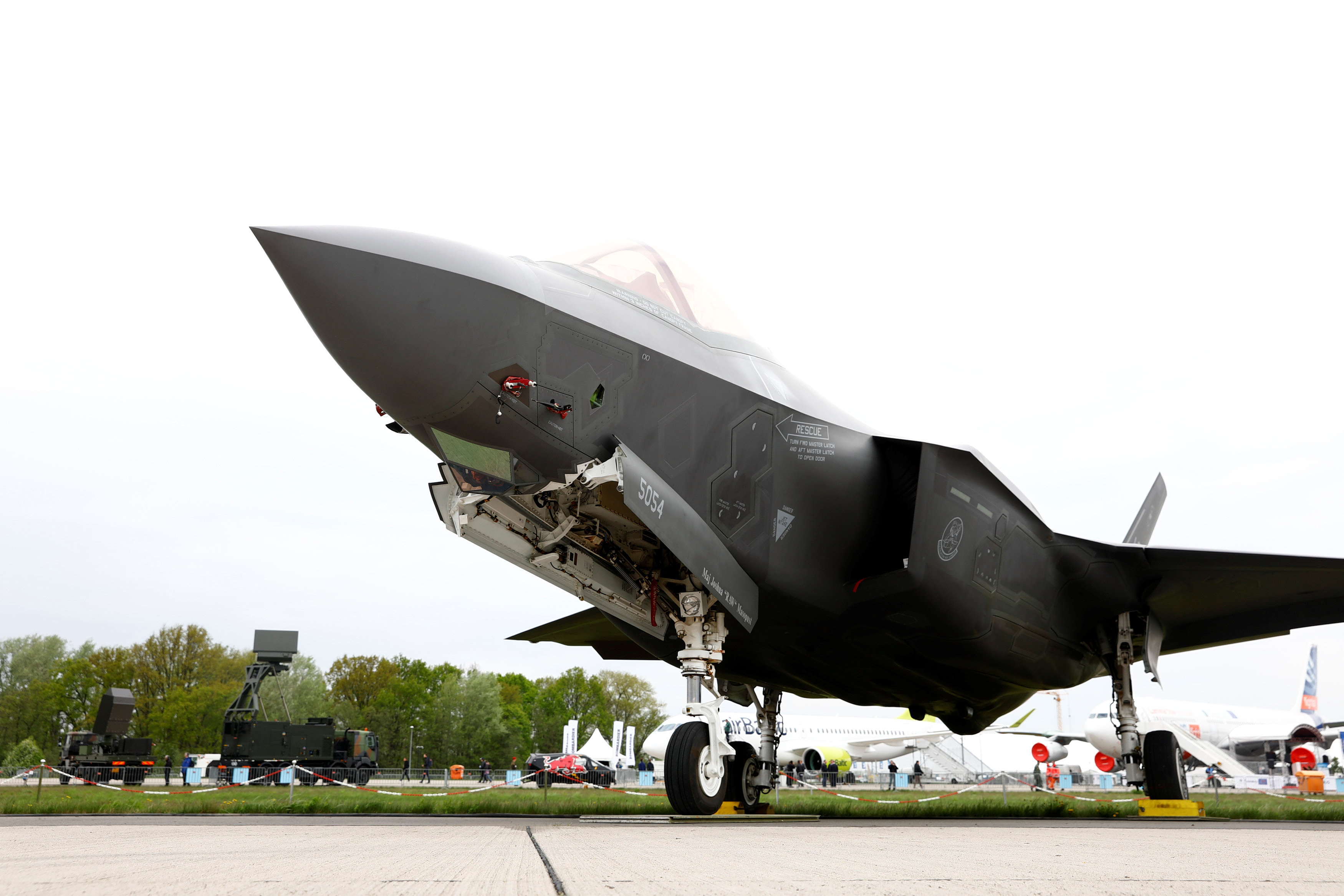
A Lockheed Martin F-35 aircraft is seen at the ILA Air Show in Berlin, Germany, April 25, 2018. REUTERS/Axel Schmidt
Aside from its technological superiority, the F-35 represents a strategic combination of a weapons system, an industrial policy, and a diplomatic tool. In practice, it is not an autonomous weapon that a state purchases and fully owns, but rather a node in a deeply integrated, cross-border network that includes software updates, logistical support systems, spare parts, mission data files, and maintenance infrastructure.
“Because the US sits at the center of this network, allies who operate the F-35 become dependent on systems and supply chains controlled by Washington,” explains Srdjan Vucetic, a professor at the University of Ottawa, International Security expert, and author of a book on the globalization of the F-35, in an interview with TO BHMA. Consequently, operating the fleet requires the purchasing country to maintain constant political and technological alignment with the United States.
The only known exception to this strict American protocol is Israel. The Israeli F-35 “Adir” is the sole variant licensed to run domestic software and undergo independent maintenance. For all other nations, rumors regarding the existence of an American “kill switch” remain unconfirmed. However, Washington does not need a literal switch to exert influence; its leverage is seamlessly exercised through delayed approvals, staggered software updates, and rigorous control over the supply of spare parts.
‘It is no longer as attractive’
Spurred by recent geopolitical shifts, some buyers are now questioning whether they truly want to relinquish so much control over their own defense forces. “Now that the US has turned against many of its allies and strategic partners, the F-35 is no longer as attractive as it once was,” Vucetic adds.
A prime example is Canada, which is weighing a drastic reduction of its initial 88-aircraft order down to just 16 to 30 units, looking instead to procure Swedish Saab Gripen fighters. Similarly, countries like Portugal and Spain have begun re-evaluating their long-term procurement plans.
At the same time, nations such as Thailand, Brazil, and Colombia are actively choosing the Gripen—which grants buyers access to its source code and technology development rights—precisely because they refuse to compromise their national sovereignty. However, this independence may only go so far. “The Gripen also depends heavily on American technology,” Vucetic notes.
For nations seeking alternatives, the European market offers three primary options: the Swedish Saab Gripen, the French Dassault Rafale, and the multinational Eurofighter Typhoon. Although these are 4.5-generation aircraft that lack the advanced stealth technology of the F-35, they offer significantly greater operational autonomy. “If someone had told me 10 years ago that the Gripen or Rafale would be competing head-to-head with the F-35 in these markets, I would have laughed. But the world has changed tremendously,” Vucetic notes.
Meanwhile, growing anxiety over long-term strategic independence is prompting several key partners to design their own sixth-generation fighters. The United Kingdom, Japan, and Italy are currently collaborating on the Tempest/GCAP program, with the goal of bringing the new aircraft into full operational service by 2035.
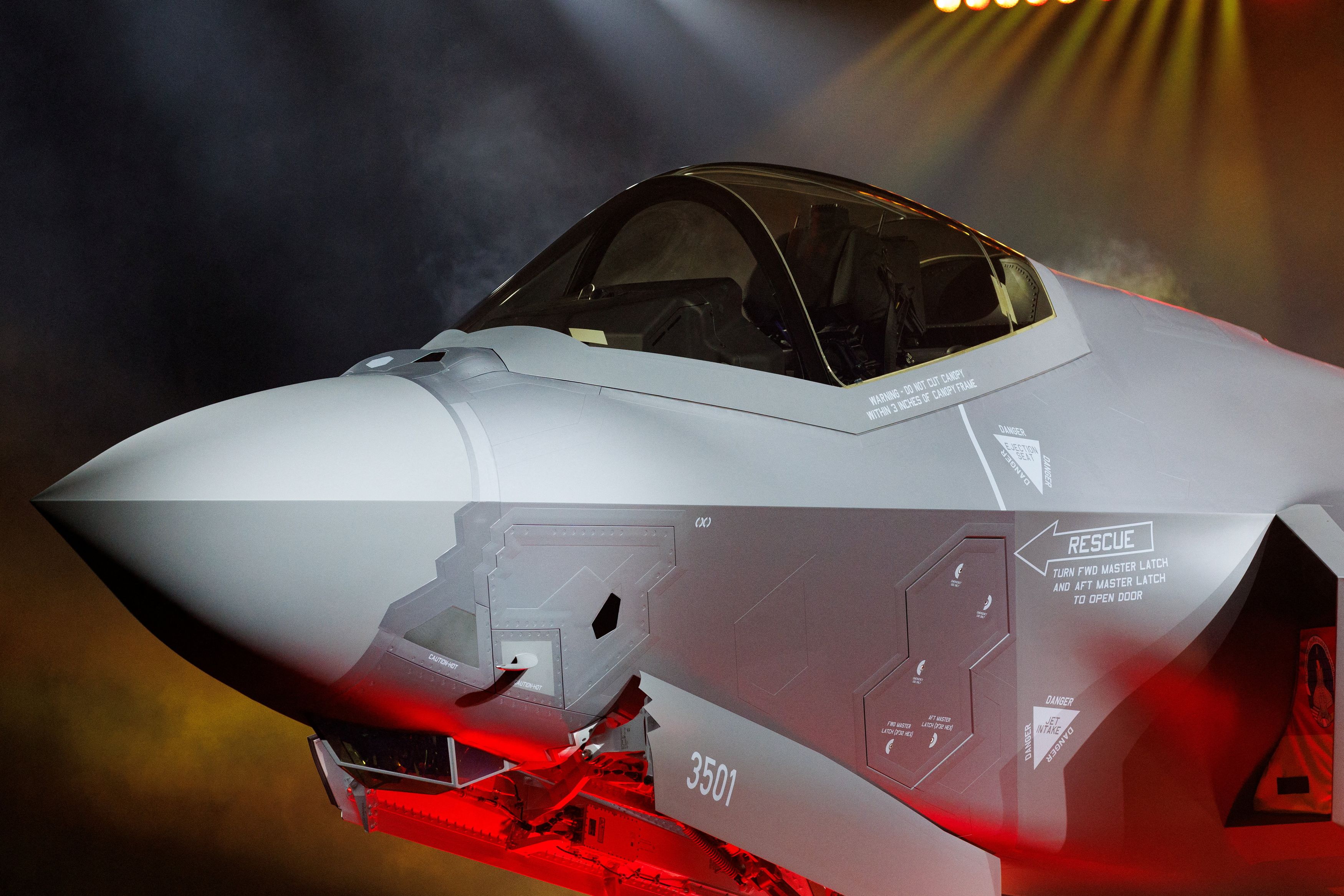
An F-35A Lightning II on display after an event celebrating its delivery to Germany in Fort Worth, Texas, US, September 18, 2026. REUTERS/Shelby Tauber
Nevertheless, Richard Aboulafia, the managing director of AeroDynamic Advisory, pointed out in an interview with TO BHMA that “most F-35 buyers, like Greece, continue to view the US as their most reliable security ally, despite any concerns.” However, he cautions that “it is concerning that two of the biggest F-35 partners—Japan and the UK—are now working with each other and additional countries, rather than the US, on the next generation of combat aircraft.”
Saudi Arabia and Turkey
In the Middle East, Saudi Arabia is seeking to acquire 48 F-35s. Although the State Department has cleared the sale, the agreement must still pass through Congress. “The deal could collapse, particularly due to concerns that selling to Riyadh might allow China access to this technology. A similar situation occurred with the United Arab Emirates—the State Department approved the sale, but it collapsed over concerns about a Huawei-run 5G network in the country,” explains Michael Marrow, an F-35 analyst at Breaking Defense.
Additionally, it remains unclear whether the sale is tied to Saudi Arabia’s potential normalization of relations with Israel through the Abraham Accords. Furthermore, US legislation explicitly mandates maintaining Israel’s Qualitative Military Edge (QME), adding another layer of complexity to the diplomatic equation.
At the same time, Turkey is actively trying to re-enter the program after being expelled in 2019 over its acquisition of Russian S-400 missile systems—a move that cost Ankara $1.4 billion and lucrative industrial manufacturing contracts. “If Turkey finds a way to remove the S-400s and meet the requirements under US law, approval would be much more likely under the Trump administration,” Marrow estimates.
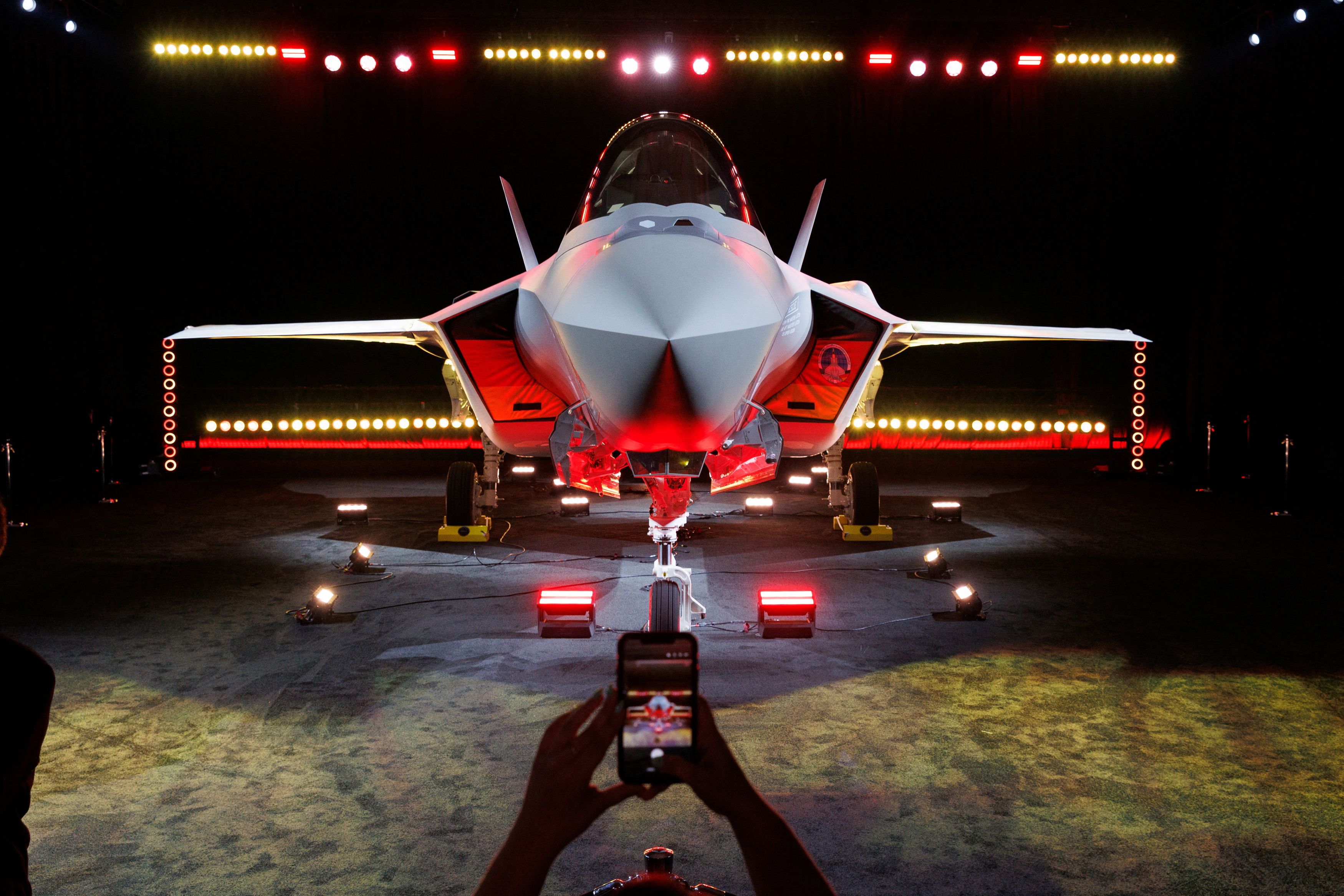
An F-35A Lightning II on display after an event celebrating its delivery to Germany in Fort Worth, Texas, U.S., September 18, 2026. REUTERS/Shelby Tauber