The war in Iran entered its second week on Sunday with no diplomatic off-ramp in sight, as U.S. and Israeli forces launched fresh waves of strikes on Iranian military infrastructure, oil depots and missile sites — and President Donald Trump raised the prospect that the conflict would end only when Iran had no military left and no leadership standing to negotiate a surrender.
“At some point, I don’t think there will be anybody left maybe to say ‘We surrender,'” Trump told reporters aboard Air Force One on Saturday, according to Reuters. The president said he had no interest in entering into negotiations with Tehran, suggesting the air campaign may render talks a moot point entirely.
A War That Is Spreading
What began as a U.S.-Israeli military operation has rapidly metastasized into a regional crisis. Iran’s apparent strategy of maximum chaos — retaliating against American military installations hosted by Gulf Arab states — has sent energy prices to multi-year highs and effectively shut down the Strait of Hormuz, with cascading consequences for global trade and logistics.
The governments of Saudi Arabia, Kuwait and the United Arab Emirates all reported Iranian drone attacks on their territory over the weekend. A huge fire engulfed a tower in Kuwait after a drone strike, and the Kuwaiti army said it was dealing with “a wave of hostile drones,” including an attack on fuel tankers at Kuwait International Airport, according to BBC reporting. In Dubai, a resident was killed after shrapnel from an aerial interception fell on a vehicle in the Al Barsha area.
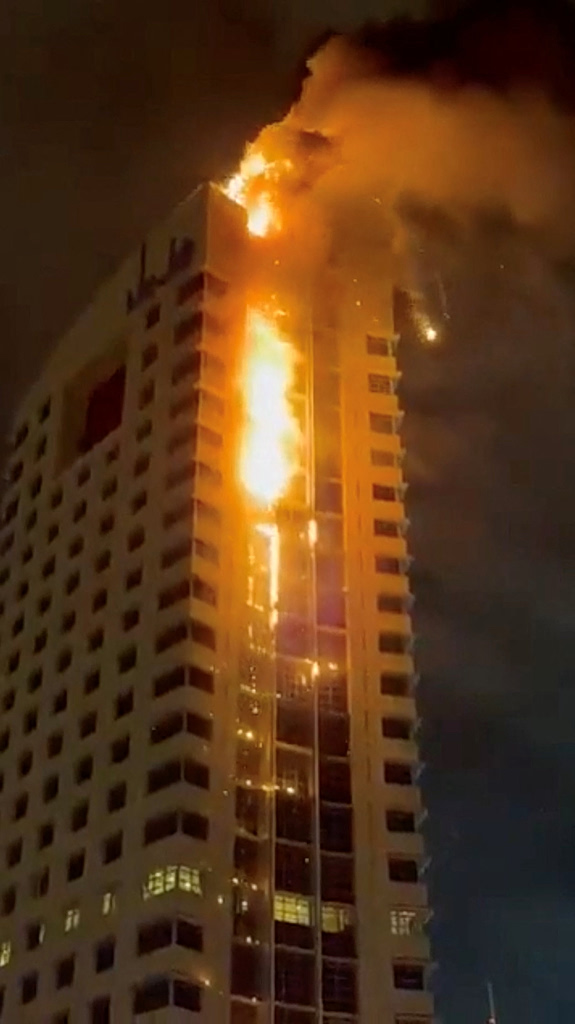
Smoke rises from a building on fire, in the aftermath of what the Kuwaiti Army says is a drone attack, amid the U.S.-Israeli conflict with Iran, in Kuwait City, Kuwait March 8, 2026 in this screengrab taken from a social media video. SOCIAL MEDIA/via REUTERS
Kuwait’s national oil company began cutting output on Saturday, adding to earlier reductions from Iraq and Qatar, Reuters reported.
Iran’s Revolutionary Guards also targeted U.S. forces at a base in Bahrain, according to Iranian state media.
In an unexpected development far from the region, the U.S. embassy in Oslo was struck by an explosion early Sunday morning, causing minor damage but no injuries. Norwegian police said the cause and those responsible had not yet been determined.
Iran’s President Apologizes — Then Walks It Back
Iranian President Masoud Pezeshkian triggered a domestic political storm after apologizing to neighboring countries for Iranian attacks on U.S. facilities in their territory — and announcing that Tehran’s temporary leadership council had agreed to suspend attacks on those states, provided strikes on Iran did not originate from their soil.
“I personally apologize to neighboring countries that were affected by Iran’s actions,” Pezeshkian said, urging Gulf governments not to join the U.S.-Israeli campaign.
The remarks were swiftly seized upon by hardliners at home. Pezeshkian’s office was forced to reiterate that Iran’s military would respond firmly to any attacks launched from U.S. bases. Ali Larijani, secretary of Iran’s Supreme National Security Council, went on state television to insist there was no rift among Iranian officials over the handling of the war.
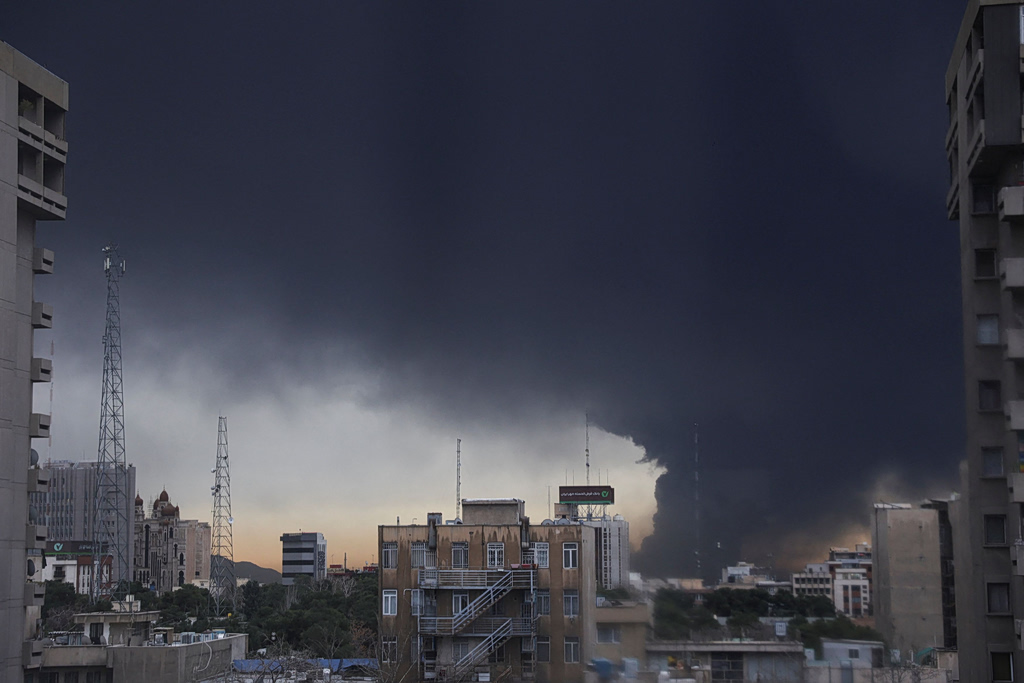
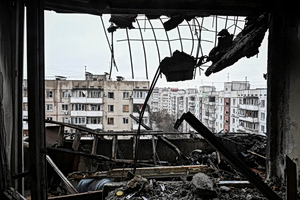
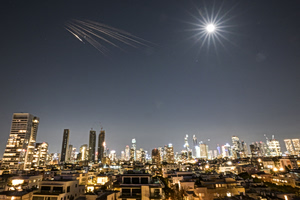
Smoke rises following an explosion, amid the U.S.-Israeli conflict with Iran, in Tehran, Iran, March 8, 2026. Majid Asgaripour/WANA (West Asia News Agency) via REUTERS
On Sunday, Pezeshkian walked back his comments further still, saying his words had been “misinterpreted by the enemy that seeks to sow division with neighbours,” state TV reported.
A Succession Question Looms
Behind the military crisis, a political one is quietly taking shape. An Assembly of Experts member, Ayatollah Mohammadmehdi Mirbaqeri, said Sunday that a majority consensus had more or less been reached over a successor to Supreme Leader Ayatollah Ali Khamenei, though “some obstacles” remain, according to Iran’s Mehr news agency. Iranian media reported a minor disagreement within the body over whether its final decision must be reached at an in-person meeting or could be issued without one.
Trump’s Nuclear Justification — and a Damaging Strike on a School
Trump has justified the U.S. military campaign by claiming Iran posed an imminent threat to the United States and was close to being able to build a nuclear weapon, though he has offered no public evidence to support the assertion.
The U.S. and Israel have also been in discussions about deploying special forces into Iran to secure its stockpile of highly enriched uranium, Axios reported, citing four people with knowledge of the talks. The White House did not immediately comment.
The conflict has already claimed a heavy toll on civilians. Iran’s ambassador to the United Nations said U.S.-Israeli strikes have killed at least 1,332 Iranian civilians and wounded thousands more. Six U.S. service members have also been killed; their remains arrived Saturday at an Air Force base in Delaware.
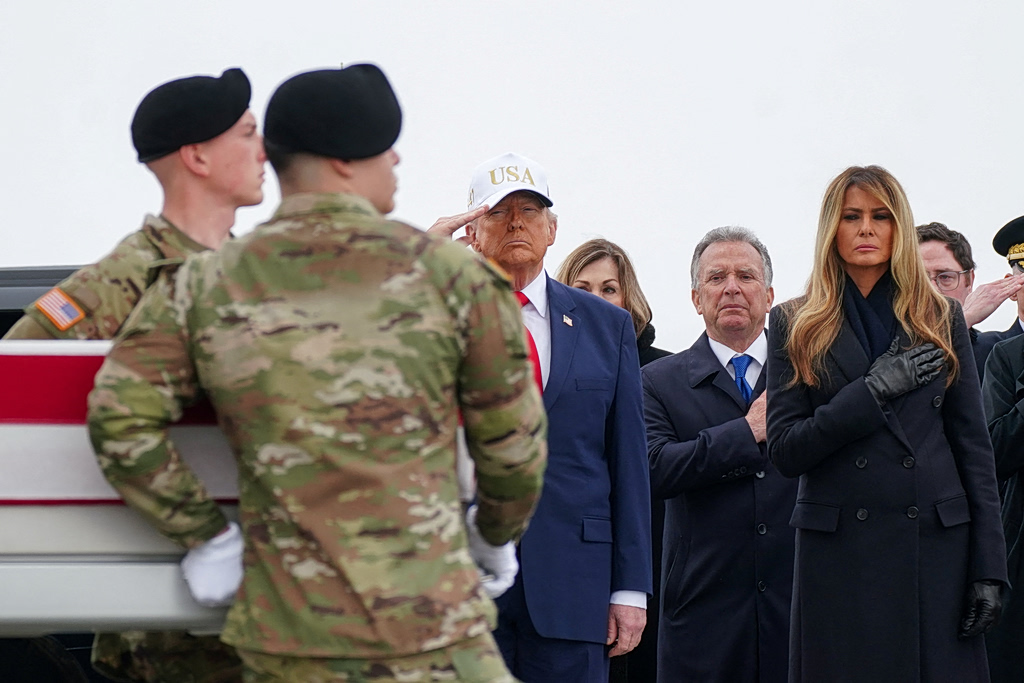
Members of the military carry a transfer case next to U.S. President Donald Trump, first lady Melania Trump and Special Envoy Steve Witkoff during a dignified transfer of the remains of six U.S. Army service members of the 103rd Sustainment Command, who were killed in Kuwait, Major Jeffrey O’Brien, Capitain Cody Khork, Chief Warrant Officer 3 Robert Marzan, Sergeant 1st Class Nicole Amor, Sergeant 1st Class Noah Tietjens and Sergeant Declan Coady, amid the U.S.-Israeli conflict with Iran, at Dover Air Force Base in Dover, Delaware, U.S., March 7, 2026. REUTERS/Nathan Howard
An apparent strike on an Iranian girls’ school that killed scores of children has added a deeply troubling dimension to the war. U.S. officials told Reuters that American forces were likely responsible. Trump, however, disputed this, claiming without evidence that Iran itself was responsible, citing what he described as the inaccuracy of Iranian munitions. Defense Secretary Pete Hegseth said the matter remained under investigation.
Israel Warns Lebanon; Beirut Counts Its Dead
Israel opened a second front on Sunday, launching fresh strikes across Iran targeting missile sites and command centers. It also carried out attacks on Hezbollah’s Quds Force in Lebanon, the overseas operational arm of the Islamic Revolutionary Guard Corps, after the militant group fired across the border from the north.
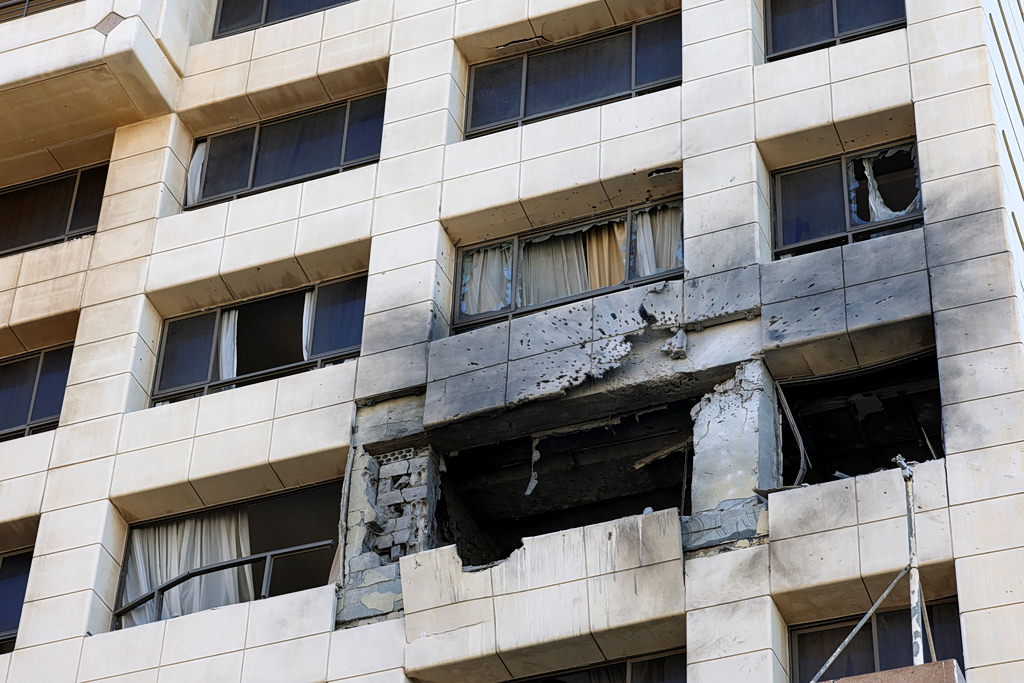
Damaged apartment in the Ramada Plaza hotel building in the aftermath of an Israeli strike, following an escalation between Hezbollah and Israel amid the U.S.-Israeli conflict with Iran, in central Beirut, Lebanon, March 8, 2026. REUTERS/Claudia Greco
Israel warned Lebanon it would pay “a very heavy price” if Beirut did not rein in Hezbollah. The death toll from Israeli strikes on Lebanon since Monday has risen to around 300, with nearly half a million people displaced, according to Lebanese officials cited by the BBC. A Lebanese official also reported that an Israeli airstrike struck a hotel, killing four people.
Saudi Arabia Draws Its Own Red Line
Saudi Arabia has privately warned Tehran that continued Iranian attacks on the kingdom and its energy infrastructure could prompt Riyadh to respond in kind, Reuters reported, citing four people familiar with the matter — a signal that the conflict risks drawing the region’s most powerful Arab state directly into the fighting.