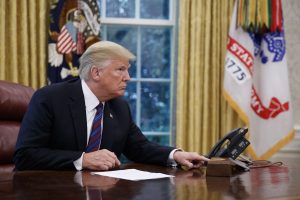
In a tense Oval Office meeting on Wednesday, U.S. President Donald Trump clashed with South African President Cyril Ramaphosa, pressing unsubstantiated claims of white genocide and land seizures in South Africa—accusations long debunked but popular in far-right circles.
According to Reuters, Ramaphosa, who had hoped to use the visit to reset strained U.S.-South Africa relations and discuss trade, found himself navigating a highly choreographed confrontation. Trump, flanked by South African-born billionaire Elon Musk and armed with printed articles and a video presentation, accused the South African government of persecuting white farmers and allowing their land to be “confiscated” and lives “threatened.”
“People are fleeing South Africa for their own safety. Their land is being confiscated, and in many cases, they’re being killed,” Trump said, repeating a conspiracy theory that has circulated in global extremist forums for more than a decade.
With the lights dimmed in the Oval Office—an unusual step—Trump played a video depicting white crosses and speeches by South African political figures, including opposition leader Julius Malema. Trump insisted the video was evidence of systematic anti-white violence, even though the crosses shown did not mark real graves and were part of a 2020 protest symbolizing farm murders over decades.
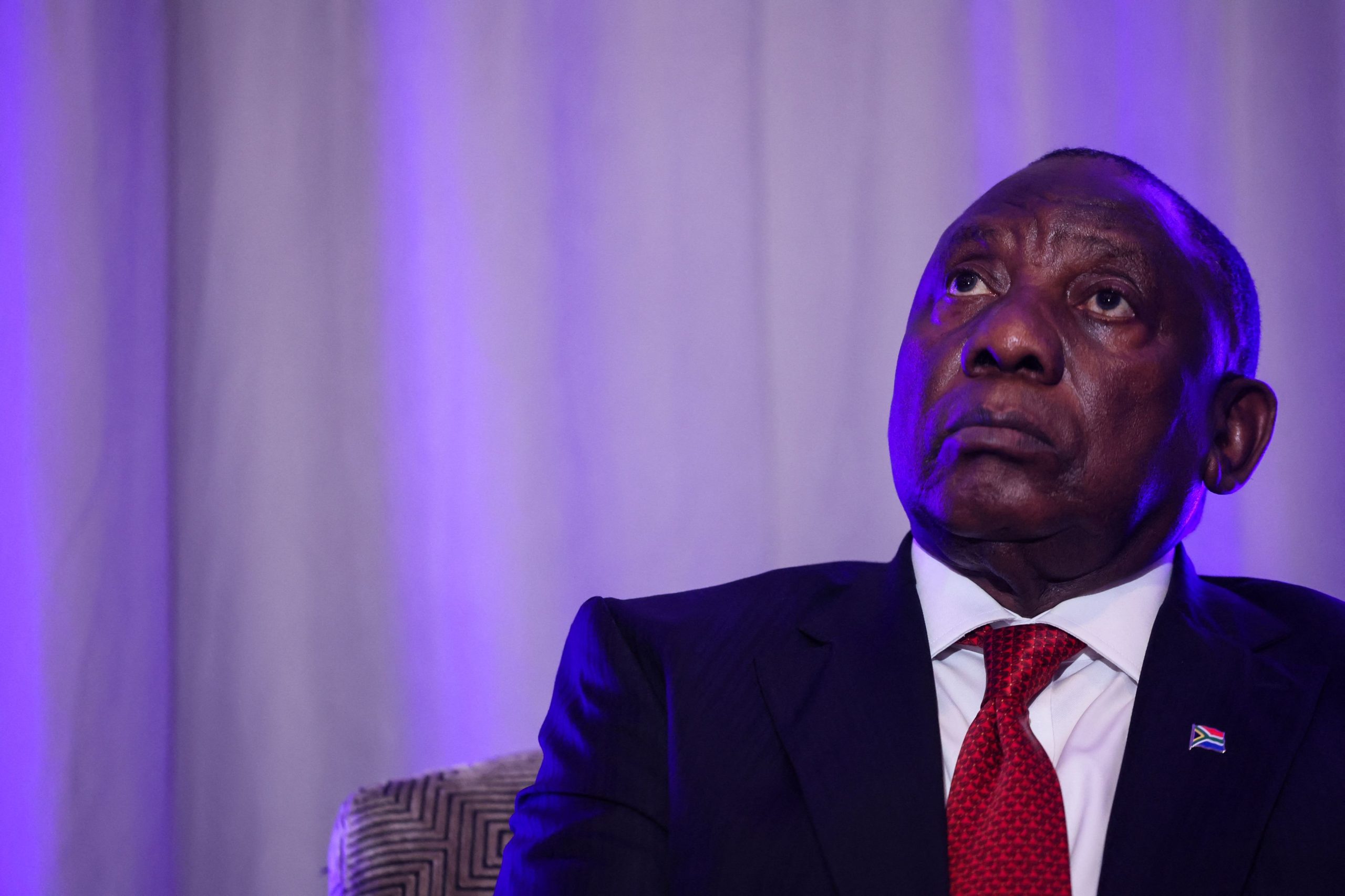
South African President Cyril Ramaphosa looks on during a press conference, after his White House meeting with U.S. President Donald Trump, in Washington, D.C., U.S., May 21, 2025. REUTERS/Leah Millis
Ramaphosa Pushes Back
Ramaphosa remained composed throughout the confrontation. Sitting beside Trump, he countered the narrative calmly but firmly.
“If there was Afrikaner farmer genocide, I can bet you these three gentlemen would not be here,” Ramaphosa said, pointing to the three prominent white South Africans accompanying him: golfers Ernie Els and Retief Goosen, and billionaire Johann Rupert.
Trump was unconvinced. He flipped through articles he claimed documented white farmer killings, repeating “death, death” as he handed the pages to Ramaphosa.
When Ramaphosa attempted to explain that South Africa’s crime problem disproportionately affects Black citizens, Trump interrupted: “The farmers are not Black.”
South Africa, which transitioned to a democracy in 1994 after decades of apartheid, has one of the highest crime rates in the world, but the overwhelming majority of murder victims are Black. In 2024, South African police recorded 26,232 murders—only 44 of which were linked to farming communities, and just eight involving farmers.
Ramaphosa emphasized that his government is addressing crime across all sectors and reiterated that there is no systematic targeting of white farmers.
“There is just no genocide in South Africa,” he told reporters after the meeting.
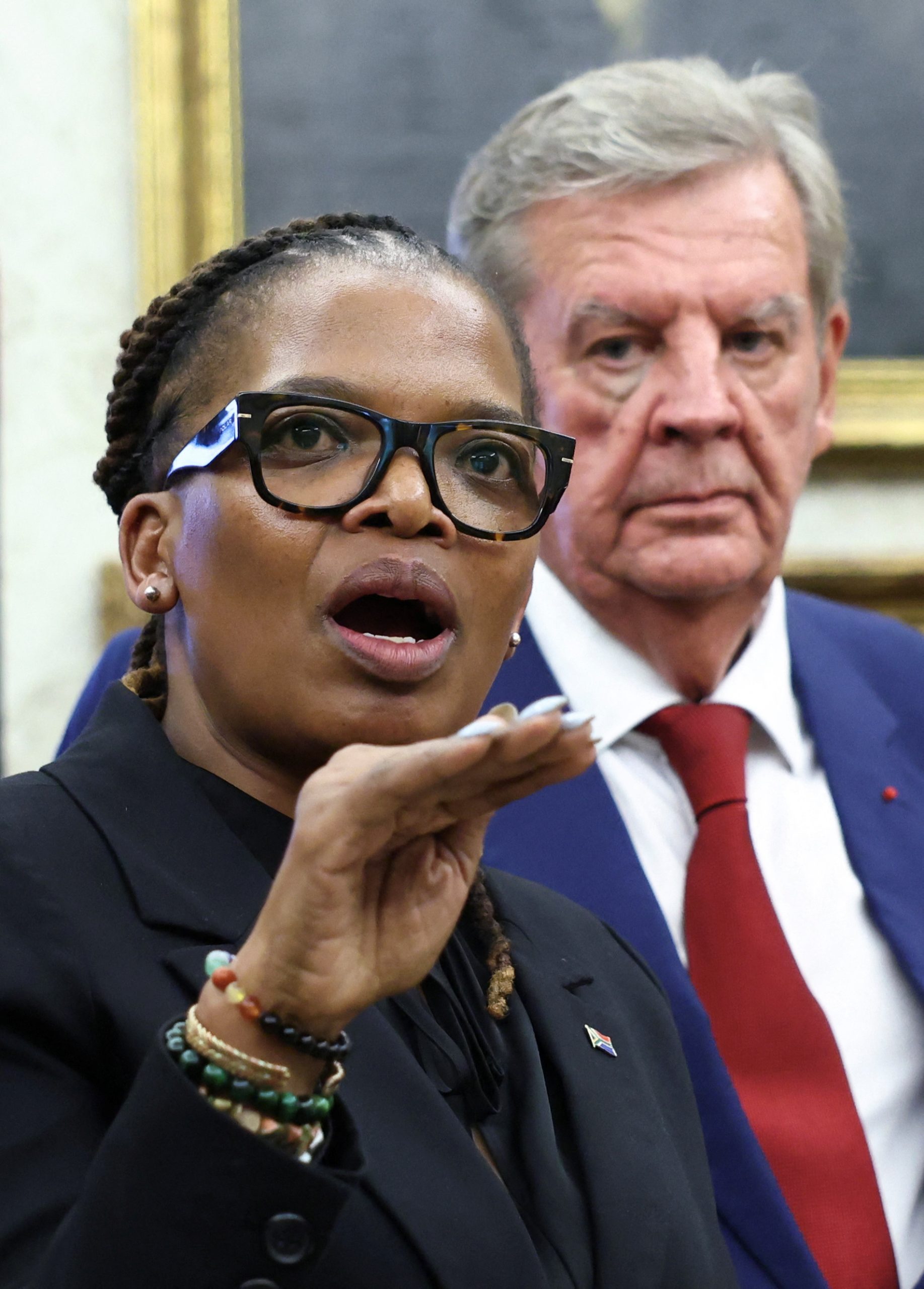
South African billionaire Johann Rupert listens as Zingiswa Losi, president of the Congress of South African Trade Unions, speaks during a meeting between U.S. President Donald Trump and South African President Cyril Ramaphosa in the Oval Office of the White House in Washington, D.C., U.S., May 21, 2025. REUTERS/Kevin Lamarque
Trade Talks Overshadowed
Ramaphosa had initially hoped to focus on trade and economic cooperation. The U.S. is South Africa’s second-largest trading partner, and Pretoria is facing a potential 30% tariff under Trump’s proposed, though currently suspended, import tax regime.
Ramaphosa’s delegation had included proposals on critical minerals and liquefied natural gas imports from the U.S. Despite the meeting’s confrontational tone, he later confirmed that the two countries would begin discussions on these trade issues.
South Africa also hopes to smooth tensions following recent friction: the U.S. canceled aid, expelled the South African ambassador, and criticized South Africa’s genocide case against Israel at the International Court of Justice.
A Pattern of Oval Office Confrontations
Wednesday’s encounter bore similarities to Trump’s February ambush of Ukrainian President Volodymyr Zelenskiy, where the U.S. leader berated his counterpart and derailed diplomatic discussions.
Trump’s focus on debunked claims of white genocide, backed by Elon Musk’s vocal support and right-wing pressure, could further alienate global leaders considering White House visits.
Despite the contentious meeting, Ramaphosa maintained diplomatic composure, even complimenting Trump’s gold-accented Oval Office decor and expressing hope for South Africa’s G20 presidency next year. Trump declined to say whether he would attend the G20 summit in Johannesburg this November.
Meanwhile, the South African president left the meeting reiterating a simple truth: “There is just no genocide in South Africa.”