The Trump administration’s decision to cancel a federal food security survey could make it harder to determine whether recent cuts to the U.S. food stamp program are contributing to rising hunger, particularly among children, experts say.
The U.S. Department of Agriculture’s survey had tracked household access to adequate food for 30 years and was widely considered the country’s most comprehensive measure of food insecurity.
The final report, released in December, found that 13.7% of U.S. households experienced food insecurity at some point during the year — the highest level in a decade.
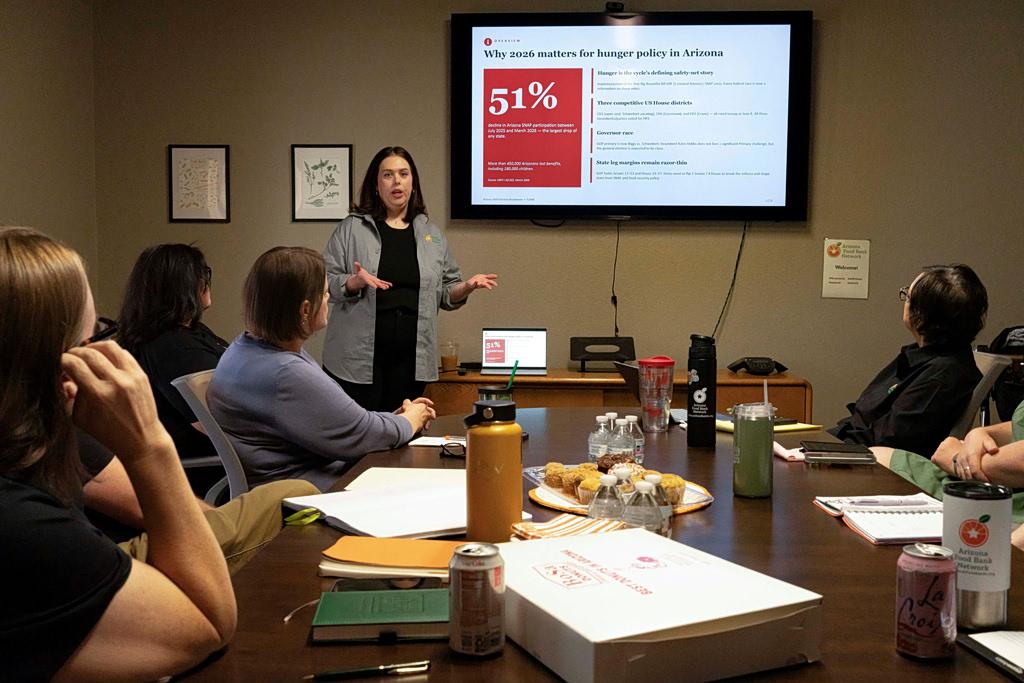
Arizona Food Bank Network employees discuss government policy during a “lunch and learn” at their office in Phoenix, U.S. May 29, 2026. REUTERS/Rebecca Noble
SNAP cuts increase pressure on food access
The survey’s cancellation comes as major changes to the Supplemental Nutrition Assistance Program (SNAP) begin to take effect.
A tax and spending law signed by President Donald Trump last July shifted more SNAP costs to states and expanded work requirements for recipients.
Since the changes were implemented, about 4.7 million people — around 11% of SNAP participants — have lost benefits, with the number expected to grow as states continue applying the new rules.
Experts say the lack of national food security data will make it difficult to evaluate whether the policy changes are increasing hunger levels.
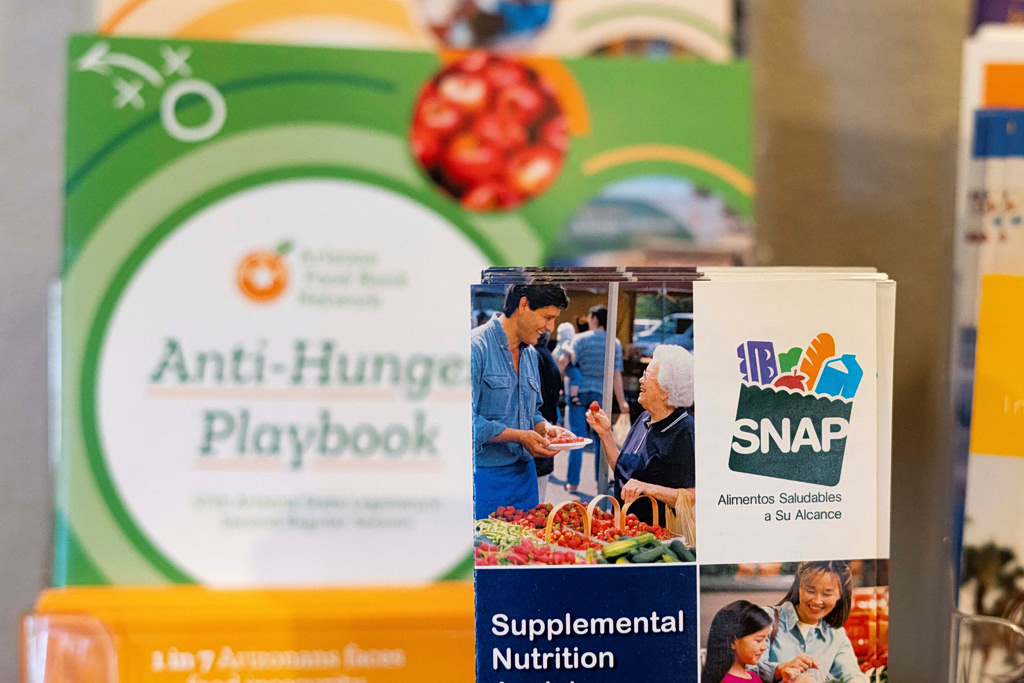
A brochure for the SNAP program is displayed at Arizona Food Bank Network in Phoenix, U.S. May 29, 2026. REUTERS/Rebecca Noble
“It’s definitely going to be a void in information on prevalence of food insecurity,” said Michele Ver Ploeg, a senior fellow at the National Center for Food and Agricultural Policy and a former USDA official.
Experts call USDA survey a key benchmark
The USDA survey, conducted by the Census Bureau between 1995 and 2025, asked households about issues such as skipping meals due to a lack of money and being unable to afford balanced meals.
Economist Craig Gundersen of Baylor University described the survey as the “gold standard” for understanding food access in the United States.
Other organizations, including the Urban Institute and the University of Southern California, continue to collect food security data, but researchers say those surveys do not provide the same level of coverage or comparability.
“It’s not like nobody is going to be reporting relevant statistics; it’s just that the statistics that they report won’t be as good,” said Parke Wilde, a food economist at Tufts University.
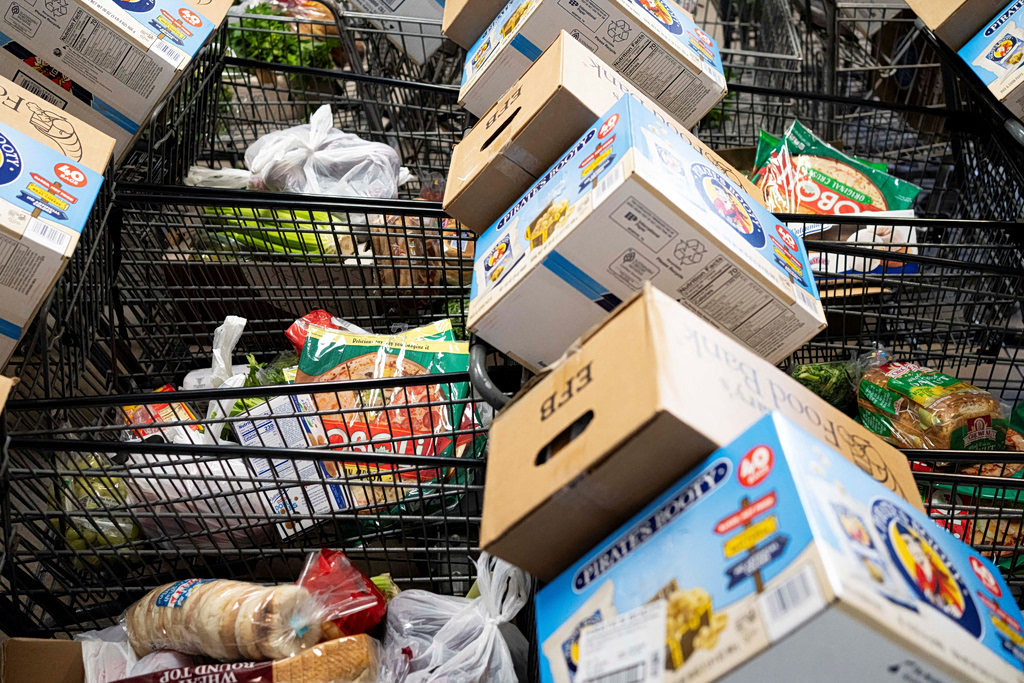
Packed carts wait to be distributed during a daily food distribution at St. Mary’s Food Bank in Phoenix, U.S. May 29, 2026. REUTERS/Rebecca Noble
Child hunger data could become harder to track
Researchers warned that measuring food insecurity among children may be especially difficult without the USDA survey.
Matthew Rabbitt, a visiting scholar at Cornell University who previously worked on the survey at USDA, said policymakers had lost an important tool for responding to hunger trends.
“If we don’t have measures of food insecurity at this point, we can’t make informed policy decisions,” Rabbitt said.
He added that existing surveys do not collect comparable information on children, meaning the country is no longer closely monitoring child food insecurity.
Calls grow to restore the survey
The USDA described the survey as “redundant, costly, politicized, and extraneous” when announcing its cancellation.
A USDA spokesperson said the federal government and some states still collect hunger-related data through other surveys, while noting that SNAP participation numbers do not directly measure food insecurity.
However, previous USDA-backed research has found that increases in SNAP benefits reduced food insecurity among low-income households, while benefit reductions were linked to higher levels of food hardship.
Efforts are now underway to restore similar tracking systems. Maine lawmakers approved a law in March creating an annual statewide food insecurity survey after the state lost access to the USDA benchmark.
Democrats in Congress have also introduced legislation seeking to reinstate the federal survey, arguing that accurate data is essential for directing resources to communities facing hunger.
“Accurate data is critical to ensure we target resources where they’re needed most,” said Democratic Senator Lisa Blunt Rochester, who co-sponsored one of the proposals.