U.S. President Donald Trump has imposed sweeping sanctions on Russia’s two largest oil companies, Rosneft and Lukoil, in what marks his administration’s first major confrontation with the Kremlin since returning to office. The move aims to choke off a crucial source of revenue funding Russia’s war in Ukraine.
“Now is the time to stop the killing and for an immediate ceasefire,” Treasury Secretary Scott Bessent said when announcing the sanctions. The US, placed these sanctions following the cancelled meeting between Trump and Putin, as it states that there is a lack of commitment and will to end the war.
The U.S. decision follows similar steps by the United Kingdom, which sanctioned both oil companies last week. The European Union already restricts dealings with Rosneft but has stopped short of targeting Lukoil due to exemptions for Hungary and Slovakia, both reliant on Russian crude.
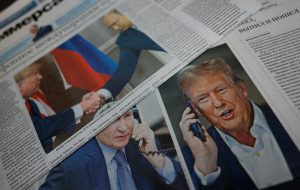
Trump Scraps Putin Summit
Speaking from the Oval Office alongside NATO Secretary-General Mark Rutte, Trump confirmed he had canceled a planned summit with President Vladimir Putin in Budapest, citing lack of progress in talks.
“I canceled the meeting. It didn’t feel right,” Trump said. “We’ll hold it in the future, but not now.”
The decision comes amid heightened tensions over Ukraine. The Wall Street Journal reported that Washington had quietly lifted restrictions on Ukraine’s use of British-made Storm Shadow cruise missiles to strike inside Russia. Trump denied the report, calling it “fake news,” and insisted that “the United States has nothing to do with these missiles or how Ukraine uses them.”
Russia Responds to EU Sanctions
Russia has blasted the European Union’s 19th sanctions package as largely ineffective and counterproductive, claiming the measures ultimately harm Europe itself.
The EU sanctions, adopted to pressure Russia over its ongoing war in Ukraine, include a ban on imports of Russian liquefied natural gas. Moscow’s Foreign Ministry criticized these moves, arguing that European elites cannot accept that their sanctions are not achieving the intended effect.
In addition, Russia condemned American energy sanctions, calling them highly counterproductive for efforts to find peace in Ukraine. Moscow reiterated that its objectives in the conflict remain unchanged and emphasized that resolving the underlying causes of the war is essential.
Foreign Ministry spokesperson Maria Zakharova, speaking from Moscow, told journalists that the core issues driving the conflict must be addressed for any meaningful resolution.
Oil Prices Surge After Sanctions
Global energy markets reacted immediately. Brent crude jumped over 3% to $64.66 per barrel, while U.S. crude rose 3.47% to $60.53, as investors weighed the impact of the new measures on Russian oil exports.
A senior White House official told NBC News the sanctions followed the failed plans for a Trump-Putin meeting and were designed to limit the Kremlin’s ability to fund its war machine.
Trump is also said to be pressuring India, one of Russia’s top crude buyers, to scale back imports of discounted oil.
Still, analysts warned that skepticism remains over how much the new measures can shift global supply and demand. “This looks more like a market knee-jerk than a structural change,” said Claudio Galimberti, global markets director at Rystad Energy, noting that previous sanctions had done little to reduce Russia’s output or revenues.
A Shift in U.S. Strategy
The sanctions mark a clear policy pivot for Trump, who had previously urged Kyiv to negotiate peace terms. Analysts see the move as growing frustration with Moscow’s maximalist demands and a signal that Washington may now adopt a tougher stance.
Former U.S. State Department sanctions official Edward Fishman noted that Rosneft had been “the most important Russian company not yet under full U.S. sanctions,” adding that further action could target “foreign traders, banks, and refineries still facilitating Russian oil sales.”
The European Commission President, Ursula von der Leyen, welcomed the announcement, saying it sends “a clear message from both sides of the Atlantic that collective pressure on the aggressor will continue.” The EU’s upcoming 19th sanctions package is expected to ban imports of Russian liquefied natural gas, blacklist ships in Moscow’s “shadow fleet,” and target Russian financial entities helping to evade sanctions.
Appreciated this evening’s call with @SecScottBessent and the Treasury decision to sanction major Russian oil companies in the face of Russia’s lack of commitment to the peace process.
With the imminent adoption of the EU’s 19th package, this is a clear signal from both sides…
— Ursula von der Leyen (@vonderleyen) October 22, 2025