Diplomats often call it the “World Cup of diplomacy.” With more than 140 world leaders, senior officials, and delegations taking part, the description feels fitting. This Monday, the annual UN General Assembly (UNGA) high-level week begins in New York, as the organisation is marking its 80th anniversary, an important milestone at a precarious time as the United Nations are under immense political and financial strain.
This year’s theme is “Better together: 80 years and more for peace, development and human rights” and it aims to rally the international community around the idea of “recommitting and reimagining our shared future”. Yet with seemingly endless wars ravaging Gaza, Ukraine and Sudan, stalled action on climate change and a funding crisis that has largely stemmed from President Trump’s decision to cut almost all foreign aid, the future of the UN has rarely looked so uncertain as it does now.
Newly-elected UNGA President Annalena Baerbock, Germany’s former foreign minister and only the fifth woman to hold the post of UNGA President, acknowledged the gravity of the moment: “We are at a crossroads, a make-or-break moment for the United Nations and multilateralism as a whole.”. UN Secretary-General António Guterres struck a similar note of urgency, warning of a “sense of impunity” among states. “ “We absolutely need leaders to come here, turn the tide, and understand that international cooperation is vital at a time like this,” he said ahead of the opening.
Despite the challenges, Guterres insists he is “neither optimistic nor pessimistic,” arguing that the task is to “build hope and never give up.” With over 150 meetings scheduled with world leaders from around the world he will attempt to corral the international community to find a consensus on a variety of issues. Amongst this week’s key priorities are: “the Israel-Palestine conflict, advancing gender equality, tackling climate change and setting global guardrails for Artificial Intelligence”.
Monday’s opening day will feature a special meeting to mark the UN’s 80th anniversary, while France and Saudi Arabia will co-host a summit on the “Question of Palestine and the Implementation of the Two-State Solution”.
On Tuesday, September 23, the General Debate begins, which will last through September 29. Despite the name, it’s less a debate and more of a gran stage for world leaders to deliver (preferably 15 minute) speeches with the right to reply if needed. Brazil traditionally speaks first, followed by the host country, the United States. U.S. President Donald Trump is scheduled to address the Assembly on Tuesday.
Greek Prime Minister Kyriakos Mitsotakis will take the podium of the iconic General Assembly Hall on Friday September 26. His speech is expected to focus on the “shifting international and regional geopolitical landscape, Greece’s role as a pillar of stability within it, and the challenges and risks stretching from Ukraine to the Middle East”.
The Greek PM will also participate in two side events. On Wednesday morning, September 24, he will speak at an Australian-hosted meeting on protecting children in the digital age. Later that day, he will join the central event of South Korea’s Security Council presidency, addressing “Artificial Intelligence and International Peace and Security.”
What is the UNGA
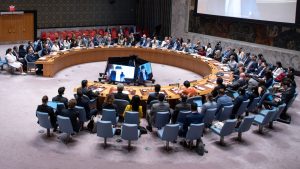
The United Nations General Assembly, or UNGA, is the “main deliberative, policymaking and representative organ of the UN” and the only place where all 193 member states are represented. It gives every country a platform, with Palestine and the Holy See present as observers rather than full members.
The Assembly has the task of discussing international peace and security, particularly when the UN Security Council isn’t taking the lead. Its agenda also covers more than conflicts. Human rights, international law, and cooperation on economic, social, cultural, educational and health matters all come under its remit.
Beyond debate, the Assembly has practical responsibilities. It signs off on the UN’s annual budget and, through one of its six main committees, oversees the funding of the organisation’s 11 ongoing peacekeeping missions worldwide.