Food aid deliveries into Gaza have improved but remain far from meeting urgent needs, the head of the World Food Programme (WFP) warned on Thursday, as growing hunger risks push hundreds of thousands closer to famine.
“We’re getting a little bit more food in. We’re moving in the right direction … but it’s not nearly enough to do what we need to do to make sure that people are not malnourished and not starving,” WFP Executive Director Cindy McCain told Reuters in an interview from Jerusalem.
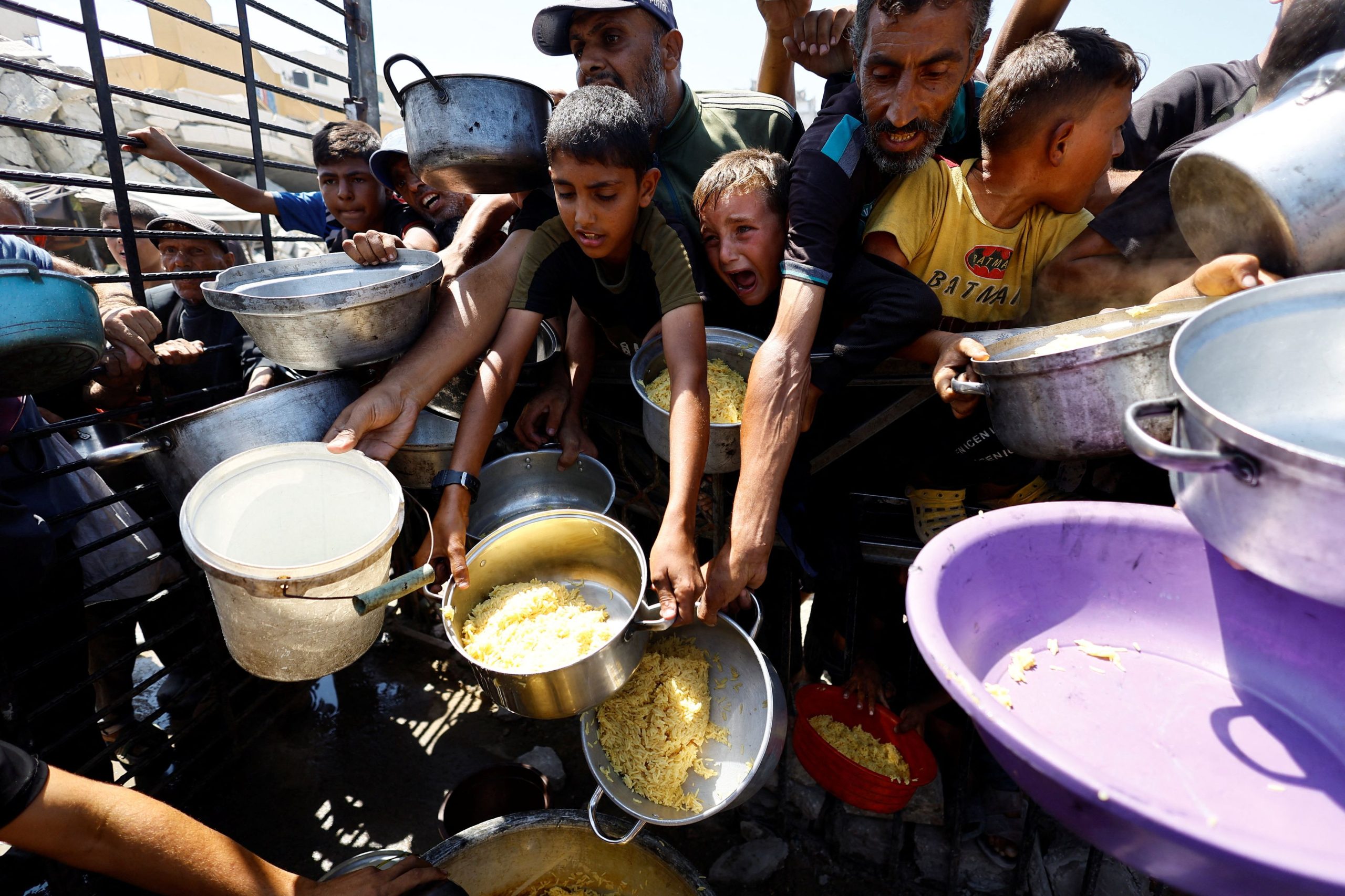
Palestinians wait to receive food from a charity kitchen after the global hunger monitor, Integrated Food Security Phase Classification (IPC), said that Gaza City and surrounding areas are officially suffering from famine that will likely spread, in Gaza City, August 28, 2025. REUTERS/Mahmoud Issa
According to McCain, around 100 aid trucks per day are now entering Gaza. That number, however, falls well short of the 600 trucks that crossed daily during the ceasefire. Israel’s military body overseeing aid flows, COGAT, was not immediately available to comment on her remarks.
A report released Friday by the Integrated Food Security Phase Classification (IPC), a global hunger monitoring initiative, found that about 514,000 people—nearly one in four residents—are experiencing famine conditions in Gaza City and surrounding areas. The IPC warned famine could spread further south, to Deir al-Balah and Khan Younis, by the end of September.
Israel has rejected the IPC’s findings, calling them “deeply flawed” and biased in favour of Hamas, and on Wednesday asked the organisation to retract its report. The IPC did not immediately comment.
McCain, who visited Deir al-Balah and Khan Younis earlier this week, described scenes of “utter devastation” and said many families are severely hungry and malnourished. “It proved my point that we need to be able to get deep into it (Gaza) so we can make sure that they can consistently have what they need,” she told Reuters.
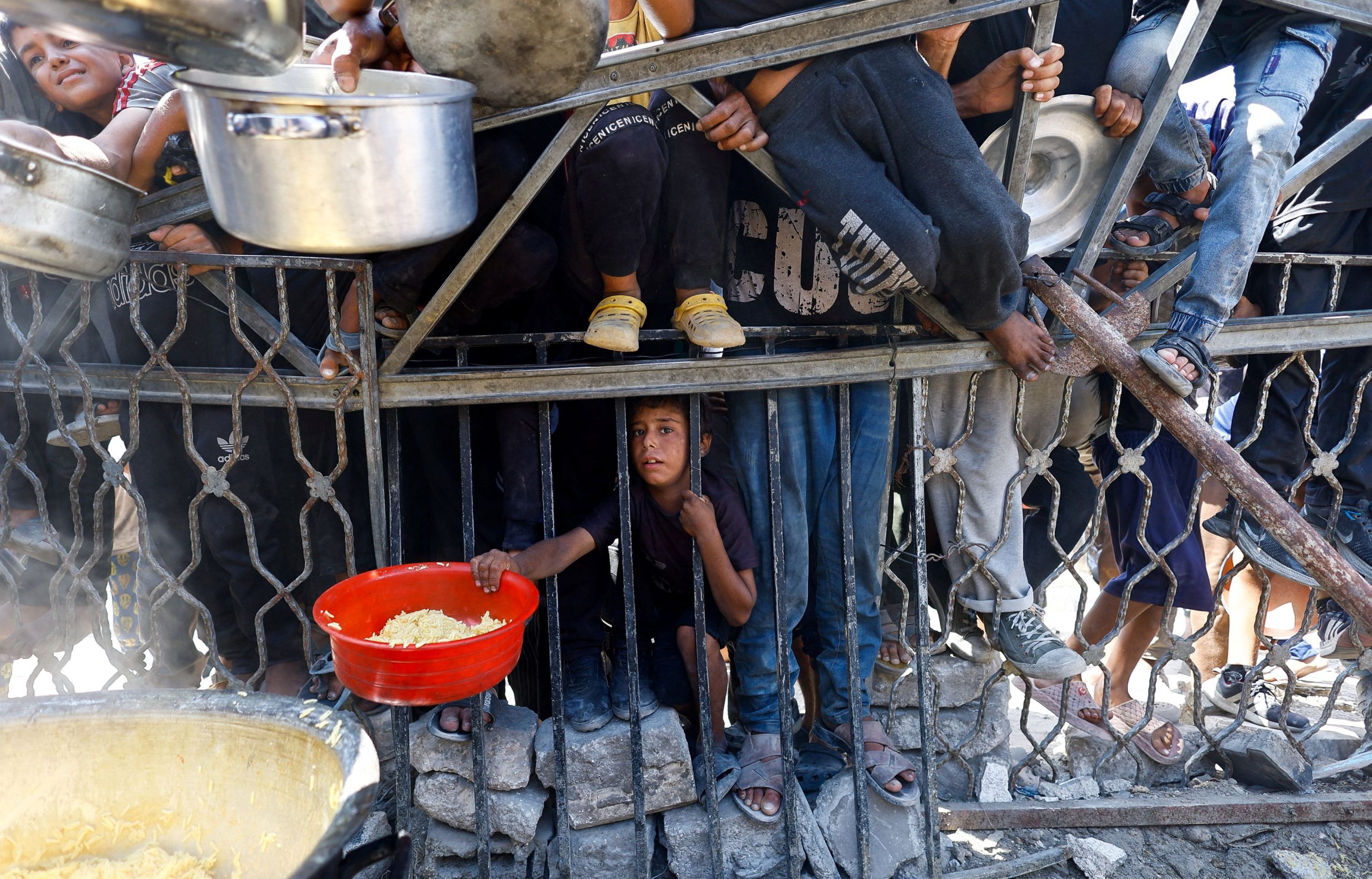
Palestinians wait to receive food from a charity kitchen after the global hunger monitor, Integrated Food Security Phase Classification (IPC), said that Gaza City and surrounding areas are officially suffering from famine that will likely spread, in Gaza City, August 28, 2025. REUTERS/Mahmoud Issa
She noted that modest increases in commercial food supplies have helped reduce prices but stressed most people still cannot afford basic goods. Following talks with Israeli military chief of staff Lieutenant General Eyal Zamir, McCain said she is hopeful access will improve.
A military statement said Zamir had reiterated Israel’s commitment to preventing famine and facilitating humanitarian aid.
McCain emphasised the urgency of scaling up relief, describing the IPC report as the “gold standard” for assessing food insecurity. “What we saw was utter devastation,” she said. “We saw people who are very seriously hungry and malnourished.”