Bruce Springsteen has a tradition: Each year on Aug. 25, he puts his 1975 album “Born to Run” on and goes for a drive.
“On its anniversaries, I get in a car and I play it from start to finish,” the musician told Peter Ames Carlin, author of “ Tonight in Jungleland ,” a new book on the album’s making. Springsteen, 75, says he cruises past old haunts along the Jersey Shore before queuing up the last track at his final stop: a cottage in Long Branch where he lived in the mid-1970s. “I sit by the curb and let ‘Jungleland’ play, all the way through, while I sit outside the little house I wrote it in,” he said.
This month marks the 50th anniversary of “Born to Run,” his landmark album. Few musicians are as closely associated with a place as Springsteen is with New Jersey. To honor the milestone, my friend Rafi and I took a cue from the Boss, got into a car and headed for the Shore.
Since 1999, music journalist Stan Goldstein has led Springsteen-themed tours . (A two-hour excursion starts at $175.) Goldstein was busy when we were in New Jersey, but we relied on his book, “Rock & Roll Tour of the Jersey Shore.”
BY MICHELLE GUSTAFSON FOR WSJ
Our first stop? Asbury Park. Springsteen started playing in bands in 1965, and by the early 1970s he’d spent so much time gigging in this beach town that he called his first album “Greetings from Asbury Park, N.J.” Back then, the city was recovering from race riots and weighed down by economic malaise. Today it’s in the midst of a condominium boom—one unit recently sold for $7.6 million. “I was expecting something more working-class, like in Bruce’s songs,” Rafi said.
Many of the venues Springsteen played in his 20s are long gone. The Student Prince is now Porta , a pizza and pasta joint. One night in 1971, saxophonist Clarence Clemons sat in with Springsteen’s band there. Four years later, a photo of Springsteen leaning on his shoulder graced the “Born to Run” album cover. As we dug into tagliatelle with ‘Nduja sausage and dandelion greens, Rafi and I tried to imagine the night they met.
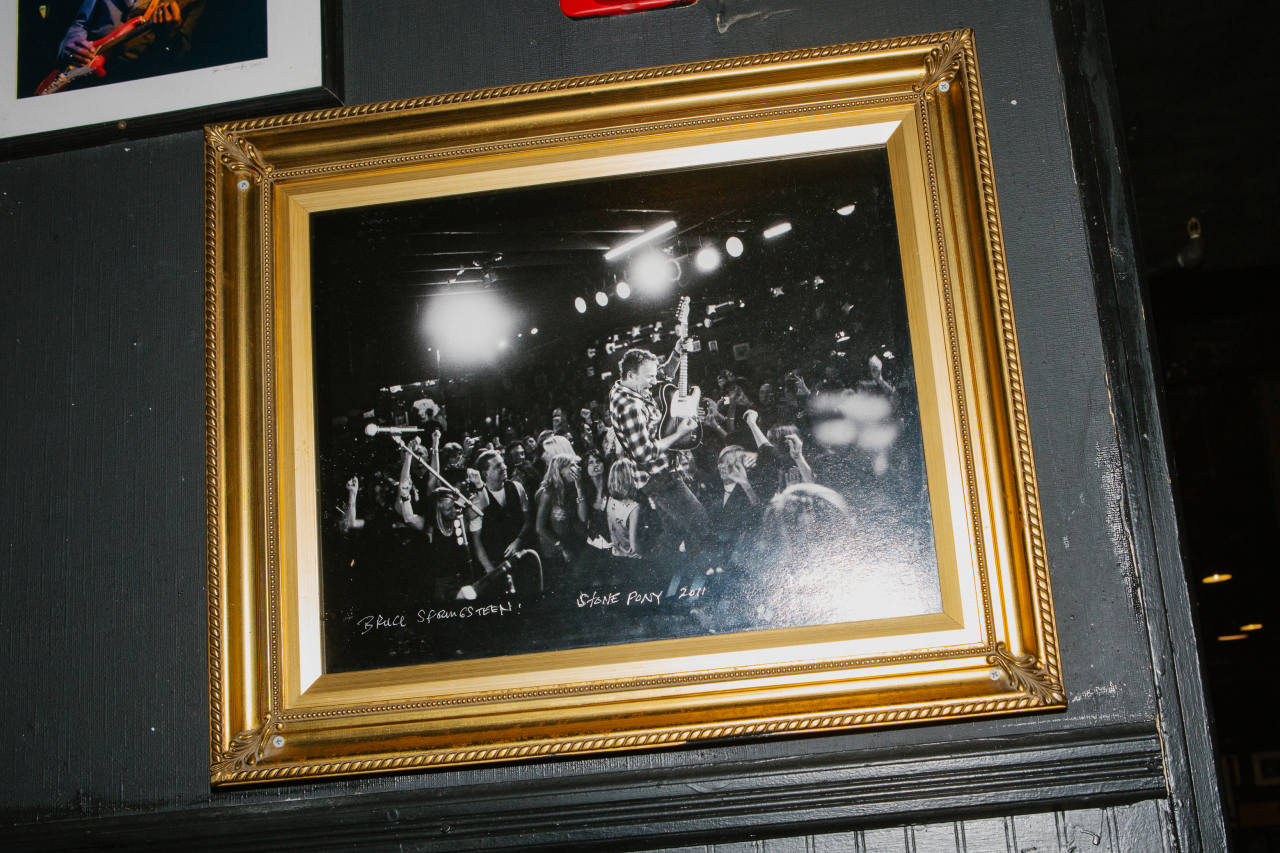
A block east lies the Stone Pony, where Springsteen has played 96 times, according to a fan-run database . (One local told me she keeps an eye out for Springsteen’s guitar tech, who arrives early before a surprise show.)
While an opening act played classic-rock covers, we lingered in the back bar where Springsteen met his wife and bandmate, Patti Scialfa, in the early 1980s. When the headliner took the stage, we lasted only a few songs: Either their amps were too loud or we’re just getting old.
We preferred the Wonder Bar, a smaller venue nearby with an outdoor space that welcomes dogs for a regular “Yappy Hour.” Springsteen filmed a music video here in 1988, and photos of his performances over the years are on permanent display. During our visit, an ebullient funk band called Sneezy showed that you can still stumble upon great music in Asbury Park.
One afternoon, at the Transparent Clinch Gallery , owned by rock photographer Danny Clinch, we browsed images of musicians ranging from Keith Richards to Jay-Z and posed in front of a giant portrait of Springsteen, Clinch’s most frequent subject.
BY MICHELLE GUSTAFSON FOR WSJ
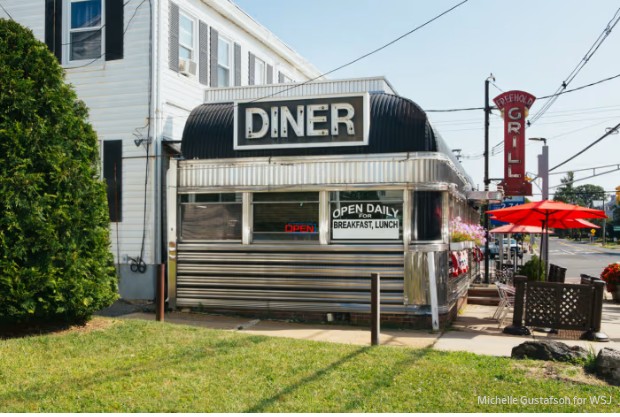
From there, we drove about 15 miles inland to Freehold, Springsteen’s hometown. We parked behind Roberto’s Freehold Grill , a diner where fans have frequently captured selfies with him. After lunch we walked east along broken sidewalks, past the site of the long-gone carpet mill Springsteen references in “My Hometown.” A few blocks away, we saw the Catholic grammar school he attended and the two surviving homes where the Springsteens lived in the 1960s. Then we ordered thin-crust pizza at Federici’s Family Restaurant , where Goldstein says he ran into the singer while leading a tour in April.
In a speech about Freehold, Springsteen once said, “Everything I learned of deep importance, I learned in this town.” It retains the blue-collar feel so prominent in his music. He’s often joked that though he’s famous for writing a song about running away, today he lives just a few miles up the road.
To finish our tour, we ended where “Born to Run” began, in Long Branch, an oceanfront community north of Asbury Park. On the edge of Monmouth University, a construction fence surrounds what will be the Bruce Springsteen Archives and Center for American Music, due to open next spring. The $48 million project will feature five exhibition spaces and a 250-seat theater.
In September, the university is hosting a full weekend of events celebrating “Born to Run.” A walking tour will take visitors to 7½ West End Court, the blue stucco cottage where Springsteen lived while writing the album. We located the house, and stopped for a quick photo. The current residents told Goldstein they’re used to people stopping in front of their house—and understand the impulse. This is sacred ground for Springsteen fans.
“I can’t believe there’s not a plaque,” Rafi said. We cued up the record for yet another listen and drove on.