To the world, Hamas said it has accepted major parts of President Trump’s peace plan. Internally, Hamas remains bitterly divided over how to proceed.
On Friday, the U.S.-designated terrorist group said it was willing to release hostages and hand over Gaza, a landmark statement boosting Trump’s push for an end to the war. But Hamas used hedged language that some observers saw as problematic to clinching a final peace.
Breaking | Important Statement On Hamas’ Response to U.S. President Donald Trump’s Proposal
In light of the ongoing aggression and genocidal war waged against our steadfast people in the Gaza Strip, and stemming from our national responsibility to uphold the principles, rights,… https://t.co/Pfz5aO3Jpk
— Quds News Network (@QudsNen) October 3, 2025
A big reason is that Hamas hasn’t reached consensus about disarming and under what conditions to let the hostages go, said Arab officials from countries mediating with Hamas. Those are the two most important demands in Trump’s plan.
Khalil Al-Hayya, Hamas’s top negotiator, and several other senior political officials support accepting the proposal despite significant reservations, Arab mediators said. But those Hamas officials, based outside Gaza, have limited sway over the group’s armed wing, which remains in the enclave.
Ezzedin al-Haddad, who rose to lead Hamas in Gaza after Israel killed Yahya and Mohammed Sinwar, has told mediators he is open to compromise. Mediators said Haddad is willing to give up rockets and other offensive weapons to Egypt and the United Nations for storage but wants to retain small arms such as assault rifles, which Hamas considers defensive.
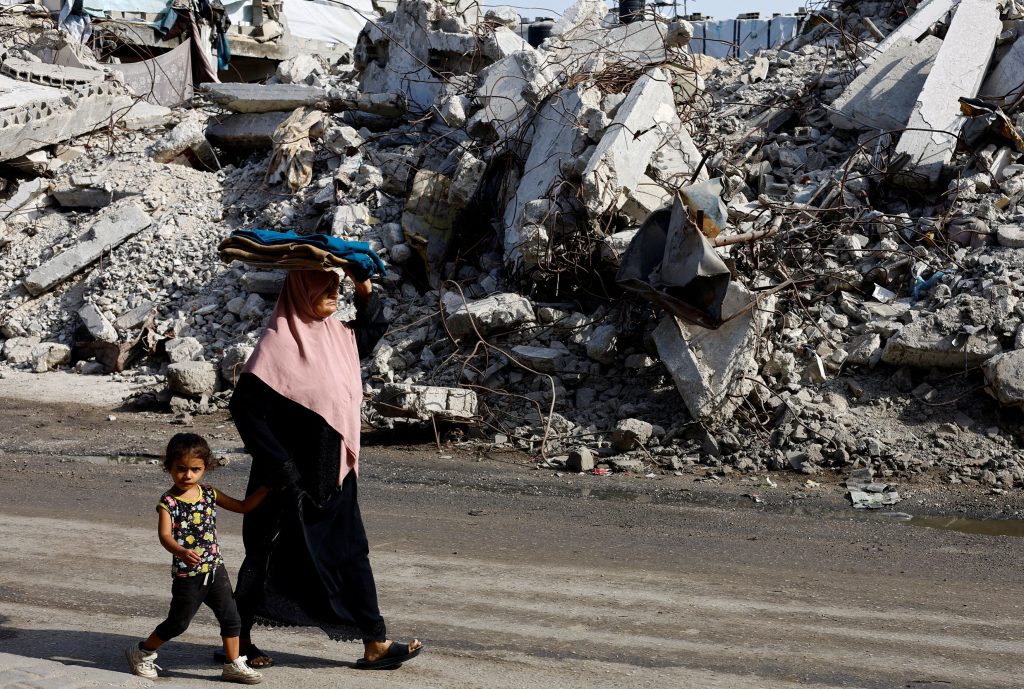
Palestinians walk past a residential building destroyed in previous Israeli strikes, after Hamas agreed to release hostages and accept some other terms in a U.S. plan to end the war, in Nuseirat, central Gaza Strip October 4, 2025. REUTERS/Mahmoud Issa
But Hamas commanders inside Gaza fear they won’t be able to enforce compliance with disarmament demands among fighters if they accept a deal that amounts to surrender, the mediators said. The organization has recruited many young men since the war began, often those who saw their homes destroyed or family members killed. Such fighters might be unwilling to lay down their arms.
The plan’s most contentious points are requirements that Hamas disarm, hand over its weapons and release the 48 Israeli hostages it still holds—alive and dead—within 72 hours of agreeing.
Critics within the group dismiss the proposal as “a 72-hour truce” rather than a genuine peace agreement, reflecting their lack of trust in Israel. Hamas on Friday said it wanted more “negotiations to discuss the details,” which appears to include the release of hostages.
Trump weighed in Friday on social media, saying he believed Hamas “is ready for a lasting PEACE.” He called on Israel to “immediately stop the bombing of Gaza” to ensure safe conditions for hostages to be released. His statement reflected agreement in the White House that Hamas had accepted the plan.
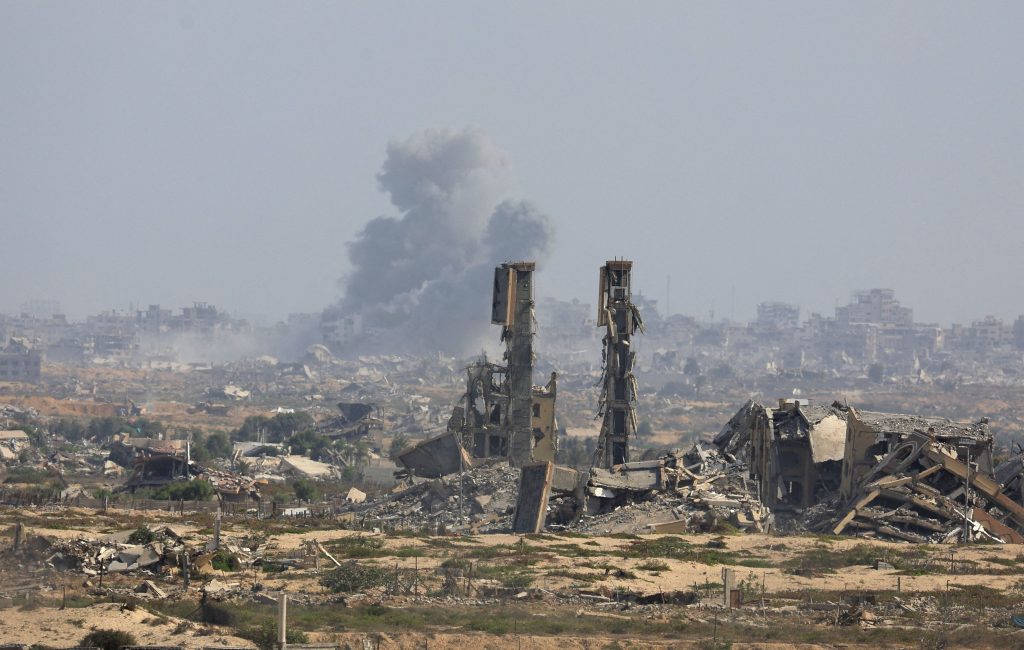
Smoke rises following explosions in Gaza City after Hamas agreed to release hostages and accept some other terms in a U.S. plan to end the war, as seen from central Gaza Strip October 4, 2025. REUTERS/Dawoud Abu Alkas
But Hamas’s military leaders insisted that any release of hostages must be tied to a clear timeline for Israeli withdrawal from Gaza, mediators said. That was reflected in a caveat in Hamas’s response Friday, in which it said hostages would be released “with the provision of necessary field positions.”
Israel might be reluctant to end hostilities after Hamas left the disarmament issue unaddressed in its statement, and with significant conditions on the release of hostages.
On X, Sen. Lindsey Graham (R., S.C.) called Hamas’s response “unfortunately predictable. A classic ‘Yes, but.’”
“No disarmament, keeping Gaza under Palestinian control, and tying hostage release to negotiations, along with other problems,” Graham said. “This is, in essence, a rejection by Hamas of President Trump’s ‘take it or leave it’ proposal.”

FILE PHOTO: U.S. President Donald Trump gives a thumbs up as he welcomes Israeli Prime Minister Benjamin Netanyahu at the White House in Washington, D.C., U.S., September 29, 2025. REUTERS/Kevin Lamarque/File Photo
Israeli Prime Minister Benjamin Netanyahu delivered a qualified reaction of his own to Hamas’s response, saying Israel would begin preparations for the release of hostages held in Gaza and work with Trump to end the war—on Israel and the president’s terms.
Israel’s military didn’t specifically commit to stopping attacks but indicated it was moving to a more defensive posture, saying it would prepare for the release of the hostages and react quickly to any threat.
Some observers said Hamas’s statement was intended to buy time for the group to resolve long-running tensions between its political and military wings. Disagreements over strategy have dogged the group throughout its war with Israel, which began with Hamas’s deadly attacks on southern Israel and the kidnapping of about 250 hostages almost two years ago.
On the battlefield, Hamas is battered but still fighting. The armed wing has lost most of its senior leadership and thousands of experienced fighters. Many of its newer recruits lack training, and Israel’s tightened control over Gaza has strained the group’s ability to communicate and coordinate operations.
To adapt, Hamas has devolved command to smaller units, Arab mediators and Israeli military officials said. These units often act independently, making their own decisions about when and how to attack Israeli forces.
Israeli military officials say Hamas hasn’t given up the fight. They see the group’s command and control as shattered, with small groups acting independently through guerrilla warfare, mainly using explosives, snipers and rocket-propelled grenades.
Haddad and other senior leaders exercise limited control over these units, a problem exacerbated by a financial crunch that has hindered Hamas’s ability to pay salaries. The Wall Street Journal has previously reported that the cash shortage is weakening Hamas’s hold over its rank and file.
Israel has taken over large portions of Gaza City since launching its offensive in mid-September. Many of Hamas’s fighters have already fled southward and most civilians have evacuated. Israel’s key dilemma is what to do if it takes over Gaza City but Hamas refuses to surrender.
Several thousand Hamas fighters remain in Gaza City, a senior Israeli military official said. Those forces are constantly observing the Israeli troops and looking for vulnerabilities, the official said. Two weeks ago, the official added, an RPG killed a company commander.
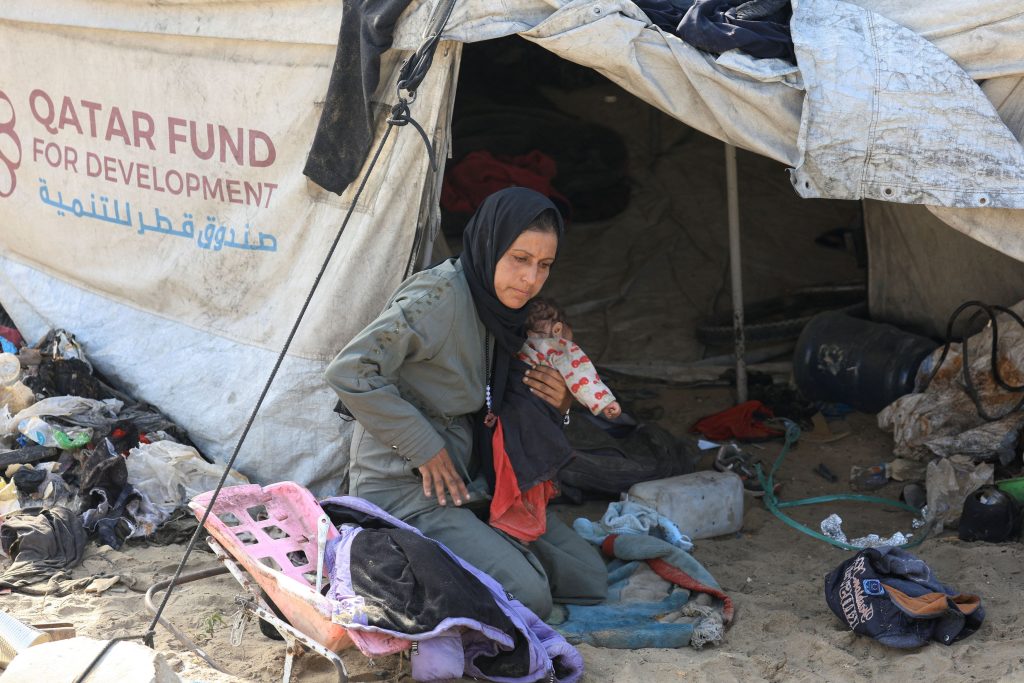
A displaced Palestinian sits next to a tent, after Hamas agreed to release hostages and accept some other terms in a U.S. plan to end the war, in the central Gaza Strip, October 4, 2025. REUTERS/Dawoud Abu Alkas
The Israeli official described Hamas’s remaining forces as mostly young and inexperienced but still determined. Acts of surrender are rare and usually occur only when militants are surrounded, the official said.
“This is why these negotiations are starting to become real. Maybe it’s the first time throughout the war that Hamas is starting to understand that they will be eradicated,” said Amir Avivi, a former senior Israeli defense official.
Mediators warn that if Hamas’s leaders accept Trump’s plan, some fighters could defect to other Palestinian militant groups. Many have already threatened to join factions such as Palestinian Islamic Jihad or the Palestinian Liberation Front. Coordination among these groups has largely collapsed, leaving uncertainty over whether a deal with Hamas alone could halt the fighting.
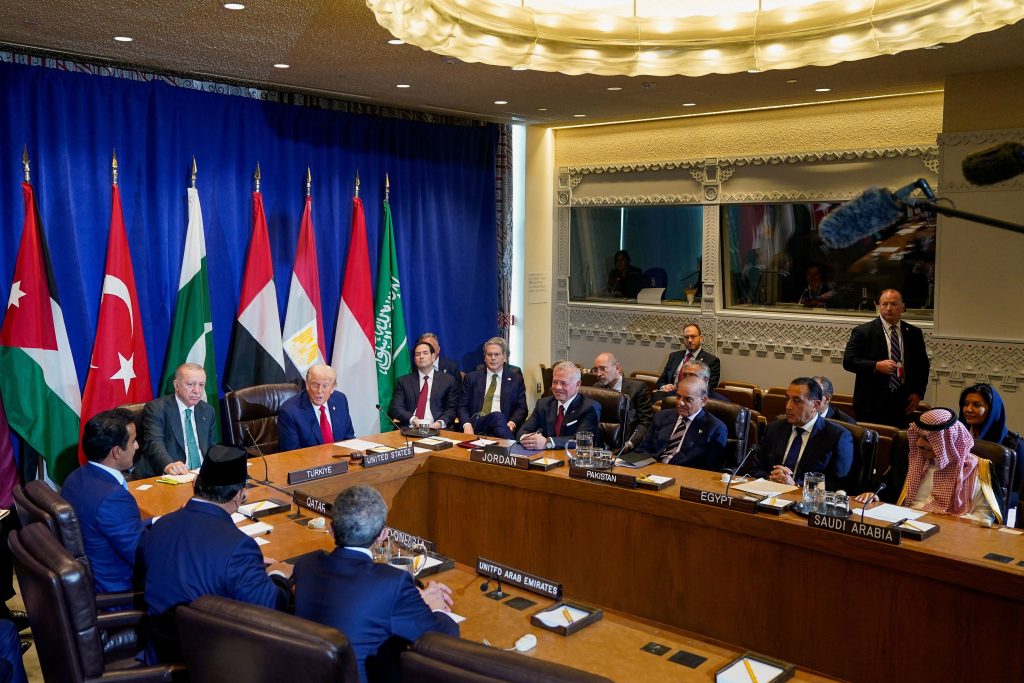
U.S. President Donald Trump speaks next to U.S. Secretary of State Marco Rubio and U.S. Treasury Secretary Scott Bessent during a multilateral meeting with Turkey’s President Tayyip Erdogan, Jordan’s King Abdullah, Pakistan’s Prime Minister Shehbaz Sharif, Egypt’s Prime Minister Mostafa Madbouly, Saudi Arabia’s Foreign Minister Faisal bin Farhan Al-Saud, Qatar’s Emir Sheikh Tamim bin Hamad Al Thani, Indonesia’s President Prabowo Subianto and United Arab Emirates’ Deputy Prime Minister and Minister of Foreign Affairs Abdullah bin Zayed Al Nahyan, during the 80th United Nations General Assembly, in New York City, New York, U.S., September 23, 2025. REUTERS/Al Drago
Qatar, Egypt and Turkey have tried to pressure Hamas leaders, warning them that this is their last chance to end the war in Gaza, Arab officials say. They have told Hamas that if the group rejects the deal, they will no longer be able to continue providing them with political or diplomatic support, the officials said.
In his social-media post, Trump said: “We are already in discussions on details to be worked out. This is not about Gaza alone, this is about long sought PEACE in the Middle East.”
Write to Summer Said at summer.said@wsj.com and Dov Lieber at dov.lieber@wsj.com