SHARM EL SHEIKH, Egypt—Israel’s government was set to vote Thursday on an agreement brokered by the Trump administration that would free the remaining hostages held by Hamas and establish a cease-fire in Gaza, a diplomatic breakthrough after months of failed talks.
The hostage deal , which President Trump announced from the White House on Wednesday, promises to close a major wound opened by the Oct. 7, 2023, Hamas-led attacks in southern Israel and give momentum to the effort to end a two-year war that has left tens of thousands of Gazans dead and the enclave in ruins.
The administration hopes the deal will be the first step toward a longer-term settlement that will involve talks over the disarmament of Hamas and the formation of an interim government to oversee Gaza.
Israeli Prime Minister Benjamin Netanyahu , who has faced resistance to ending the war from far-right members of his coalition government, welcomed the deal to bring home Israeli hostages, which his government is expected to approve.
“This is a diplomatic success and a national and moral victory for the state of Israel,” he said early Thursday.
Credit: WSJ
The deal would go into effect once Israel’s government approves it, people familiar with the matter said. Trump said Thursday that the hostages would be released Monday or Tuesday, as “getting them is a complicated process.” He said the hostage deal has been signed and that he is working on making a trip to the region for an official ceremony.
Israeli polling for months has shown strong majorities in support of ending the fighting to free the hostages, including among voters on the right. Tel Aviv was buzzing with hopes for a deal.

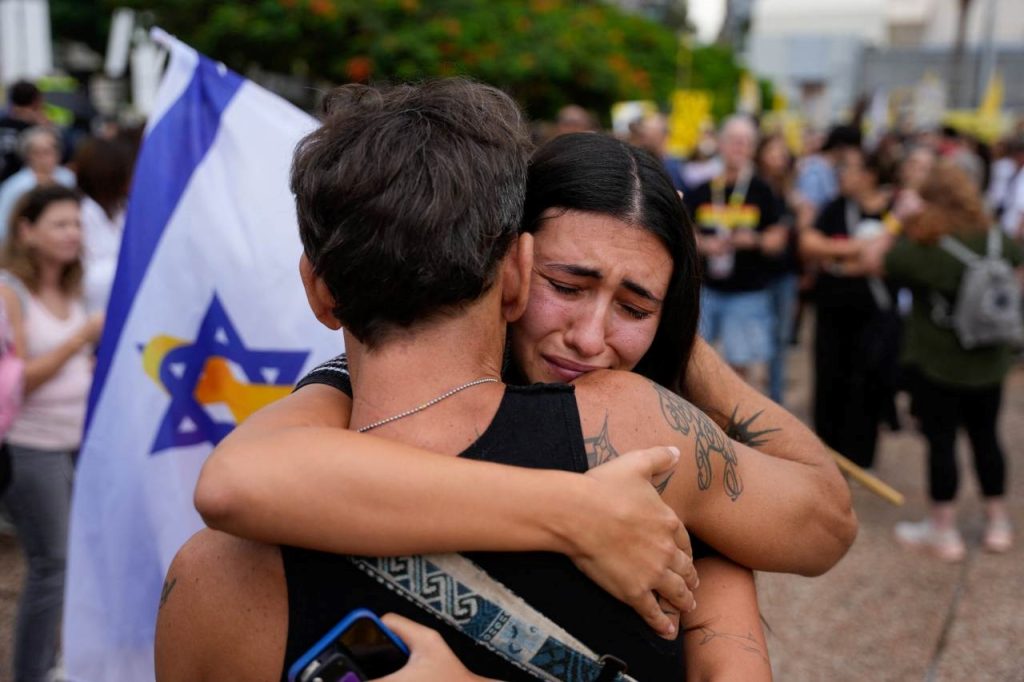
People stayed up through the night following developments in the talks. On Thursday, thousands of people—whole families with their dogs and children, soldiers in uniform, individuals and groups of friends—gathered at a courtyard in Tel Aviv known as Hostage Square to celebrate the deal.
Unlike most days at Hostage Square, where gatherings are typically somber, people sang, beat drums, and waved Israeli and American flags.
“Finally, we can breathe,” said Merav Geva Grumer, a 39-year-old actress whose husband serves in the army and has spent much of the past two years in Gaza.
Gaza civilians, too, are desperate for an end to a war that has brought hunger and repeated dislocation as the fighting spread. Many have said they understand Hamas’s reservations about the terms but want the group to accept them and end the war anyway . Hopeful Palestinians also stayed up through the night, glued to their phones for news of a deal.
Egyptian officials and others briefed on the deal said mediators are still hashing out the arrangements for Hamas to return the roughly 20 hostages believed to be alive in Gaza, in addition to the bodies of around 28 others. In exchange, Israel has to agree to a list of Palestinian prisoners it will set free.
A critical task in the coming days will be getting Israel and Hamas to agree on the exact lines for Israel’s initial military withdrawal under the hostage deal. Trump’s plan called on Israeli forces to pull back to a line marked in yellow on a map. Hamas has asked for the precise demarcation of the line.
Hamas wants Israel to withdraw from around 70% of Gaza in return for the release of hostages, Arab mediators said. Israel wants to withdraw from less territory and the two sides are still negotiating this detail, according to people briefed on the negotiations.
Israel’s military said Thursday morning that it had begun to prepare for redeployment under the agreement. Live television footage from Gaza showed plumes of smoke rising over the ruins of buildings in northern Gaza, suggesting some fighting continued.
The bigger challenges will come as negotiators eventually turn to the latter phases of Trump’s 20-point proposal to end the war, secure Gaza and begin reconstruction.
The presence of significant gaps is obvious, but the Trump administration has been pushing the plan through despite the reservations and daring both sides to say no, a person briefed on the talks said.
Israel and a range of Arab and Muslim countries publicly expressed support when Trump announced his broad plan from the White House, reflecting international pressure on both Israel and Hamas to end a war that has threatened to destabilize the wider region. Regional powers, including Egypt, Turkey and Qatar, have pressured Hamas to accept the American plan, reflecting their leaders’ eagerness to please Trump and contain the fallout from the war.
The hostage deal was struck on the third day of talks in Egypt. Trump’s Middle East envoy, Steve Witkoff , and son-in-law Jared Kushner arrived Wednesday, along with Qatar’s prime minister, Sheikh Mohammed bin Abdulrahman Al Thani, and his senior adviser, Ali Al Thawadi. Israel’s team was led by Netanyahu confidant Ron Dermer.
The talks come after Israel and Hamas expressed their initial acceptance of Trump’s peace plan last week. If the plan is adopted, Trump would chair a “Board of Peace” that would oversee a committee of Palestinian technocrats who would administer Gaza. Former British Prime Minister Tony Blair would play a role in that effort. An international force led by Arab countries would secure the enclave.
Talks on that broader plan will have to tackle a number of difficult issues where Hamas and Israel remain far apart. Among them is Israel and Trump’s insistence that Hamas be disarmed, and the group’s demand that a deal include a path to a Palestinian state. That issue is important as well to Arab countries, which worry about being painted as flunkies if they send troops in to police an area that ultimately will remain under Israel’s sway.
There are also broader drivers pushing against continuing the fighting. Israel has come under increasingly severe international pressure to end the war, and many of its own citizens no longer see the purpose of further fighting. Its military is facing serious challenges, with reservists exhausted from two years of fighting in Gaza as well as other places such as Lebanon.
Hamas has little capability left for fighting. The group has been battered militarily in Gaza, with almost all of its prewar senior leadership dead and Israel expanding deeply into what it says are the group’s last remaining strongholds.
While there is still a lot of work to be done to realize Trump’s peace plan for Gaza, the president said in his remarks Thursday that the fighting was coming to an end.
“We ended the war in Gaza, and really on a much bigger basis created peace,” he said during a Cabinet meeting. “All Americans should be proud of the role that our country has played in bringing this terrible conflict to an end.”
Write to Summer Said at summer.said@wsj.com , Jared Malsin at jared.malsin@wsj.com and Anat Peled at anat.peled@wsj.com