The U.S. and Israel began pounding Iran from the sea and skies on the morning of Feb. 28, triggering a fierce response from Tehran that has sent thousands of missiles and drones toward Israel, U.S. bases in the Middle East and countries across the Gulf.
As the conflict—which President Trump expects to last for weeks—expands, we’re keeping track of the sites that have been drawn in across the region.
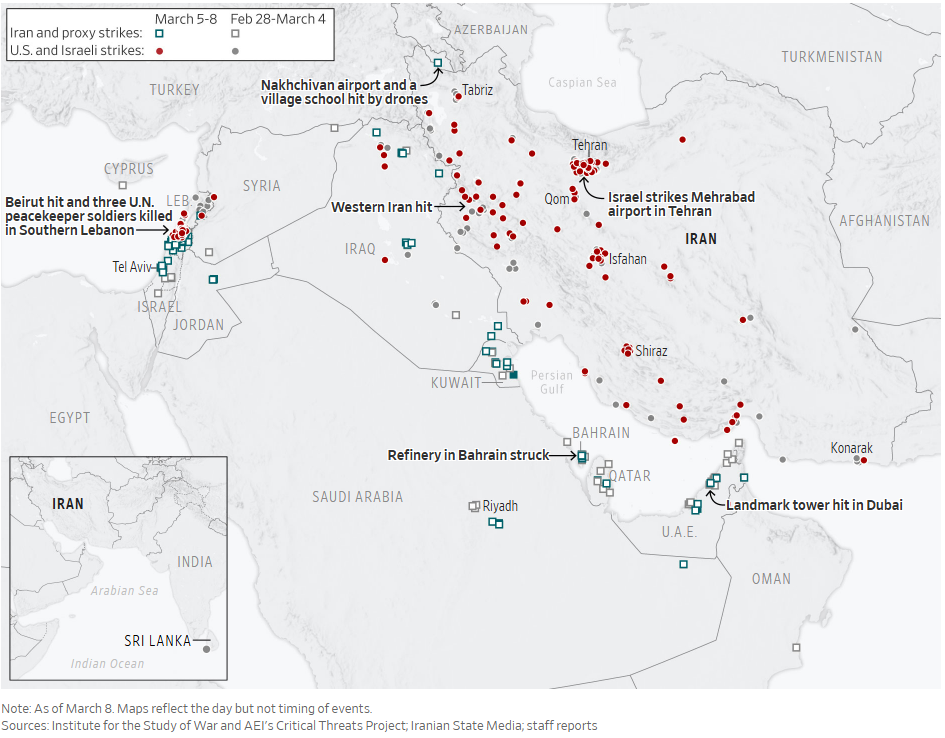
March 5-8: Drones strike Bahraini oil refinery; landmark tower in Dubai hit by debris
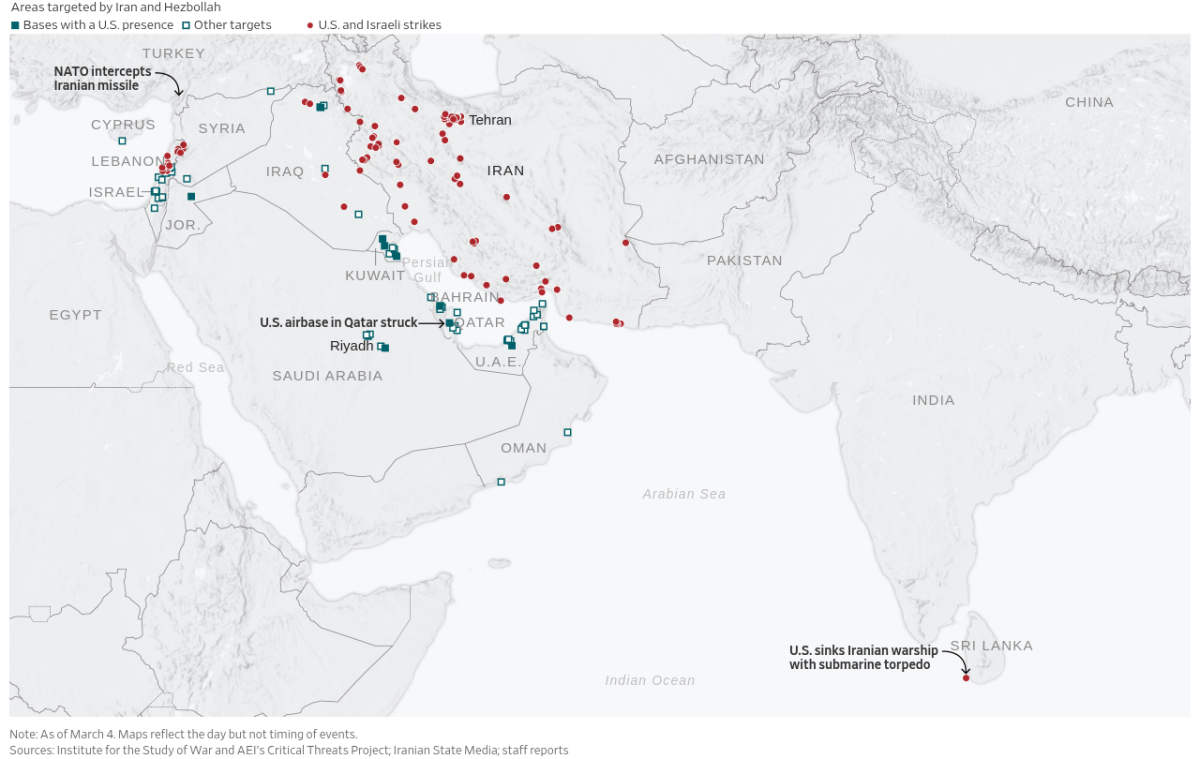
March 4: U.S. submarine torpedo sinks Iranian ship off Sri Lanka; NATO intercepts Iranian ballistic missile headed toward U.S. base in Turkey
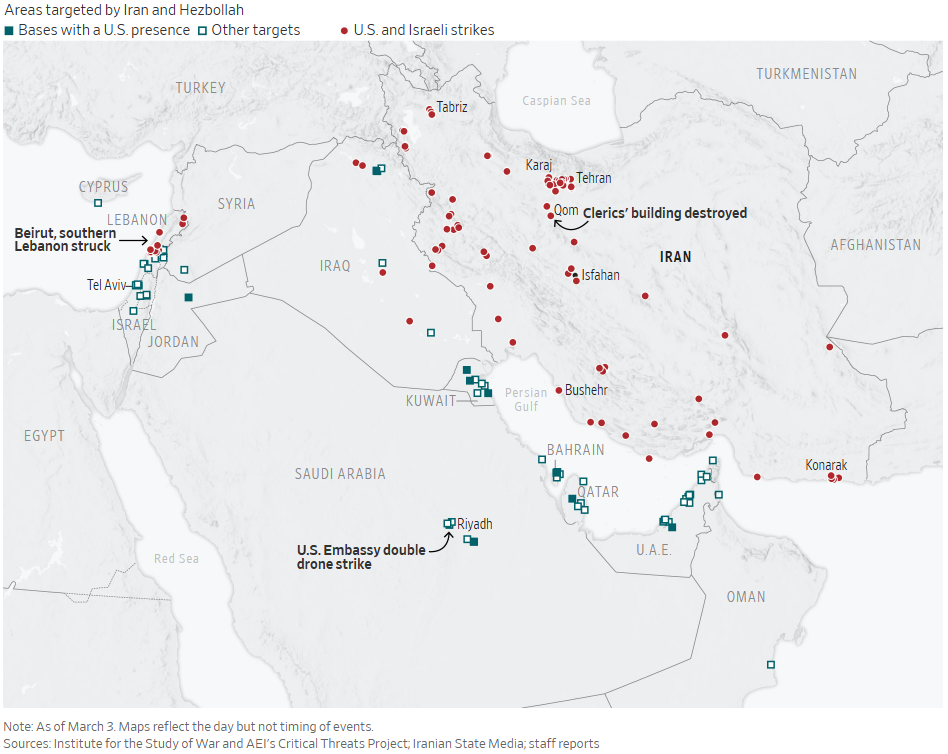
March 3: Strikes on Iran target key government and security compounds
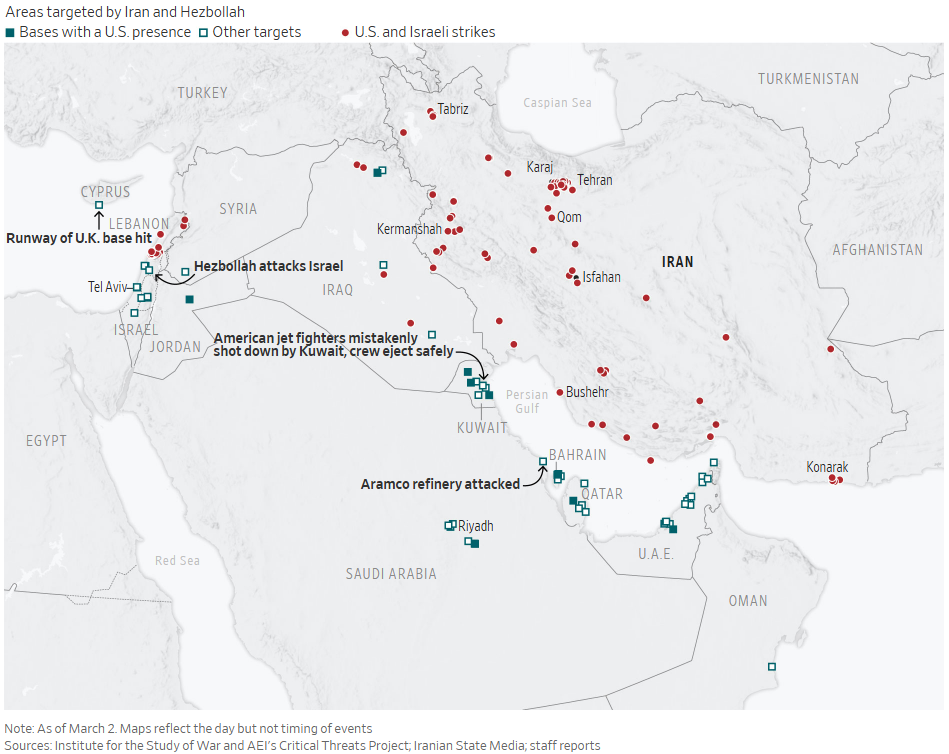
March 2: Conflict widens to Lebanon
The fighting expanded to Lebanon, from where Hezbollah had launched rockets into Israel , as Israeli forces struck the militant group’s sites, shattering a fragile cease-fire in place since 2024.
Iran targeted American bases for the third-day running. The challenge for U.S. forces is handling Iranian attacks across a swath of the Middle East while trying to coordinate air defense with local allies .
March 1: Iran targets shipping, signature locations in Dubai
Feb. 28: Opening minute kills dozens of senior Iranian commanders
In the first minute of its attack, Israel said it killed 40 senior Iranian military commanders . Iran’s Supreme Leader Ayatollah Ali Khamenei was killed by 30 bombs pummeling his office in the opening strikes on Tehran, as senior political and military leaders held a meeting there.
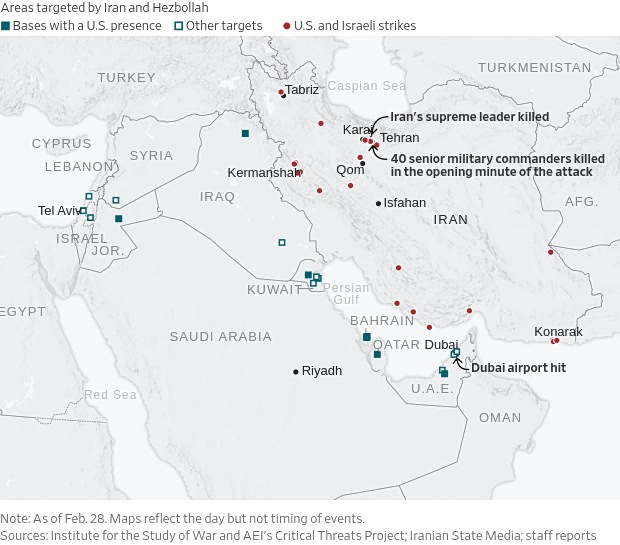
Iran retaliated by striking at targets not only in Israel but throughout the Persian Gulf, with explosions in Dubai, Bahrain and Qatar—countries that aren’t usually caught up in the region’s wars. Israeli air defenses intercepted missiles over northern Israel, Tel Aviv and Jerusalem.
Trump had threatened to take military action if Iran didn’t agree to make meaningful concessions to halt its nuclear program. After a week of negotiations, Trump said the U.S. and Iran weren’t close to such an agreement. On Friday Feb. 27, he gave his generals the so-called go order. According to Gen. Dan Caine, the U.S.’s most senior uniformed officer, at 3.38 p.m. that day Trump said: “Operation Epic Fury is approved. No aborts. Good luck.”