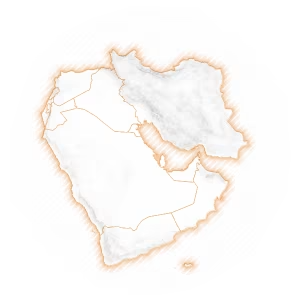
Iran is exporting more oil through the Strait of Hormuz than before the war, showing it is in control of a strategic waterway that it has closed off to the rest of the region’s oil producers.
As Gulf Arab oil producers from Saudi Arabia to Iraq cut production and scramble for new routes that bypass the strait, Iran is conducting business as usual, according to data from tanker-tracking firm Kpler, throwing a financial lifeline to Tehran as it comes under blistering attack from the U.S. and Israel.
Since the war started on Feb. 28, seven tankers have loaded oil off the Iranian coast, according to Kpler. At least two of the most recent loadings are out of the Persian Gulf, Kpler said. Over the past six days, tankers have loaded a daily average of 2.1 million barrels of Iranian oil, higher than the 2 million barrels a day Iran exported in February, according to Kpler.
Iran’s export levels can vary week to week, but the recent increase shows that, unlike other producers, their shipments are unimpeded and that China hasn’t lost its appetite for Tehran’s crude.
Iran’s Islamic Revolutionary Guard Corps threatened to attack any ship trying to cross the strait since the U.S. and Israel launched airstrikes at the start of the conflict, scaring off ships carrying oil and goods between the wider world and the Persian Gulf, where about a third of global oil production takes place. Iran has fired drones and missiles at Gulf Arab oil producers and warned that it would set fire to ships crossing the strait.
The crisis has sparked fears that a doomsday scenario was finally coming to pass, with millions of barrels of oil coming off the market every day. Markets have whipsawed in recent days, with oil prices near $120 a barrel Monday before sliding below $80 a barrel on Tuesday after President Trump said the war would end “very soon.”
If the strait remains blocked for two weeks, Gulf oil supplies could be cut by about 3.8 million barrels a day, according to JPMorgan, more than 3% of global production.
Much of the Iranian oil moving across or toward the strait appears to be headed for China on tankers that are part of the so-called shadow fleet , based on Kpler data. These are old tankers used by Iran and Russia, often sanctioned by the U.S., to covertly ship crude.
“Almost all ships crossing the Strait are linked to Iran or China,” said Christopher Long , head of intelligence at U.K. maritime-security company Neptune P2P Group. “We are advising all shippers not to cross.”
Homayoun Falakshahi , head of crude-oil analysis at Kpler, said only military escorts, a U.S.-Israeli cease-fire or an Iranian capitulation would prompt shippers to resume transits. He said he expected exports would restart gradually and often while still dark.
Trump last week announced plans to escort ships through the Strait of Hormuz, but there has been no such assistance so far. Ali Reza Tangsiri , the commander of the Revolutionary Guard navy, warned against such escorts.
“Any passage of the U.S. fleet and its allies will be halted by the net of Iranian missiles and suicide drones,” he said in a post on X.
Since the war began, around 15 ships have crossed the strait with most being dark-fleet vessels moving Iranian oil to China and India, according to Lloyds List Intelligence. Many are small Chinese tankers that make their presence and origin known to the Revolutionary Guard through loudspeakers and shortwave radio.
“We are a Chinese ship. We are coming through; we are friendly,” the Chinese ships transmit in English to the Revolutionary Guard. The messages can be monitored by other vessels and were heard by The Wall Street Journal.
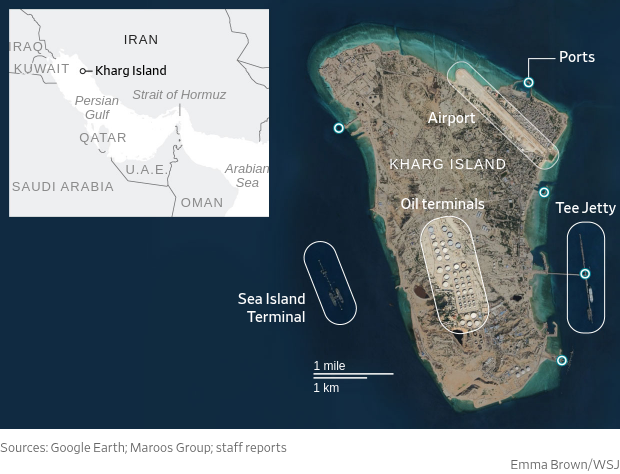
Kpler said one tanker called the Skywave bound for China took on oil last week from Iran’s Kharg Island, a small enclave in the Gulf’s far northwest where most of Iran’s crude is shipped.
The vessel is owned by an Indian shell company sanctioned by the U.S. last year as part of a network it said was directly funding the Iranian armed forces through billions of dollars of crude allocations.
As of Tuesday, the Skywave, which is flying a fake Comoros flag, was close to crossing the Strait of Hormuz, according to Marine Traffic.
Another China-bound ship, the Cume, is owned by a Dubai entity sanctioned by the U.S. and is flying a fake Guyana flag, according to European Union database Equasis. It loaded 2 million barrels of Iranian crude on Feb. 19, crossed the Strait of Hormuz last week and is currently in the Gulf of Oman, according to Kpler. The owners of the Skywave and the Cume didn’t respond to requests for comment.
Ping Shun, another sanctioned vessel owned by a company based in Shandong in China which normally exports to that country, loaded 600,000 barrels of oil from Kharg and is also in the Gulf of Oman. The Ping Shun’s owner couldn’t be reached.
The shadow-fleet tankers’ decision to run the Strait of Hormuz is still a calculated gamble, even if they bear Iranian oil. At least two shadow-fleet tankers have been hit by Iran so far.
While Iran ships oil, other operators are struggling.
Danish containership major A.P. Moller-Maersk has had 10 ships trapped in the Persian Gulf. Maersk said it would take at least a week to 10 days to resume normal operations in the event of a cease-fire.
“We won’t put our colleagues in harm’s way,” Maersk CEO Vincent Clerc told the Journal.
Write to Benoit Faucon at benoit.faucon@wsj.com and Costas Paris at costas.paris@wsj.com