The sudden outbreak of war in the Middle East has led to tens of thousands of evacuations from Gulf countries. Among the most complicated were some of the world’s most valuable horses.
When Iranian missiles lit up Gulf skies in retaliation for U.S. and Israeli strikes, nearly 150 of the world’s elite horses were in Qatar for the Longines Global Champions Tour of Doha, part of the world’s top show-jumping circuit.
Qatar immediately closed its airspace to commercial traffic. The competition was suspended on March 2, two days before it was set to begin.
“It was weird being stuck there,” said French rider Lara Tryba , who was in Doha with her horses Memphis and Shot Gun. “We felt a bit helpless.”
The Iran war had turned one of the world’s most rarefied sports into a high-stakes evacuation mission—one that would be filled with logistical obstacles.
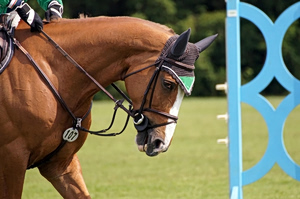
Show jumping pits a horse and rider against an obstacle course, where they clear fences against the clock. At the top level, it is as much a test of precision and nerve as speed. The Longines Global Champions Tour jumps around the globe, from Miami Beach to Paris and Shanghai.
The riders and their teams knew they needed to get their prized horses, which can carry price tags of up to several million dollars each, out of harm’s way. “As soon as the bombing started, we wanted to send the horses on the first flight home,” Tryba said.
The logistical obstacle course they would need to navigate for the evacuation included soothing jumpy horses, scrambling for last-minute cargo flights and navigating Belgian bureaucracy.
Transporting elite horses across borders is usually a carefully choreographed exercise demanding weeks of meticulous planning. Before takeoff, shippers deal with complex veterinary clearances, quarantines and equine paperwork. Upon landing, the animals face strict customs inspections before resting at waypoint stables.
This time, the whole playbook had to be ripped up.
“Transporting horses is already a highly complex operation under normal circumstances,” said Mohammed Jaber Al Khayareen , director of the local organizing committee for the Longines Global Champions Tour event in Doha. “Organizing an operation of this scale under such unusual conditions required an exceptional level of coordination.”
With reports of attacks spreading, much of the equestrian world was anxiously following the horses’ ordeal. In one popular post on Facebook, a fan sent prayers to “all those trapped with their horses in the Middle East.”
On the ground in Qatar, the horses were moved into indoor halls to protect them from falling debris. The soothing hum of the venue’s air conditioning helped mute the jarring sound of missile interceptions, keeping the naturally reactive animals calm. One of the horses in Qatar found comfort with the help of an emotional-support stuffed bunny.
Still, changing a horse’s routine poses a health risk. Because horses are creatures of habit with highly sensitive digestive systems, abrupt shifts in their management can disrupt the delicate balance of the gut microbiome, increasing the risk of colic, a potentially life-threatening form of abdominal pain.
To mitigate the risk, grooms took the animals out for a few minutes at a time for light exercise.
“The first day when the bombings started we were all very scared so we didn’t really take them out of the stables,” Tryba said. “As the days went by, we just tried for them to have a normal life.”
The cancellation of the event itself changed how the horses behaved, she said.
“I could really see that they were not as excited as before to be there,” Tryba said. “They were a bit more lazy, knowing they were at the show but not competing.”
Meanwhile, with Qatar starting to allow a limited number of flights, the event organizers were hunting for available options to transport the animals.
Qatar could draw on its experience of airlifting 4,000 Holstein dairy cows during a 2017 trade blockade. Doha’s Hamad International Airport is a major global hub for animal transport. There, Qatar Airways operates the Live Animal Center, a massive temperature-controlled facility featuring dedicated quarters for cats, dogs, birds and reptiles, alongside 24 horse stables.
Nearly 3,000 miles away, in Liège, Belgium, Christian Jaucot was in a hurry.
Jaucot, the manager of the Horse Inn, Europe’s premier equine hotel, received a call that in less than two days the horses trapped in Doha would be coming his way.
Horse Inn serves as a crucial node in the global equestrian transport network. Every year, as many as 7,000 horses pass through the equine hotel. It is especially in demand ahead of the Summer Olympics and other major competitions. A night goes for 85 euros, or around $98, per horse.
Jaucot would usually have weeks or even months of notice, especially for such a large batch of horses.
“I thought, this is a tremendous amount of horses,” Jaucot said. “But we decided that due to the war, we would push the walls if necessary.”
He set up extra collapsible stables instead and called in additional staff.
But then a new logistical hurdle emerged: Belgian authorities require health certificates to be approved several days in advance. That sparked an administrative sprint, with organizers and bureaucrats working overtime to clear the horses in time.
On Sunday and Monday, the 147 horses were finally loaded onto trucks, driven to the airport, and secured inside special air stables for their flights to the Horse Inn.
With most commercial flights still suspended, some riders, including Tryba, took the seven-hour road journey from Doha to Riyadh, Saudi Arabia, where the airspace remained open.
On Monday, the Longines Global Champions Tour announced that the two flights had landed in Belgium.
“All 147 horses are safely home,” the organization said.