WASHINGTON—The White House on Monday released a 20-point peace plan for Gaza, calling on Hamas to release all remaining hostages within 72 hours and leaving open the possibility of Palestinian statehood.
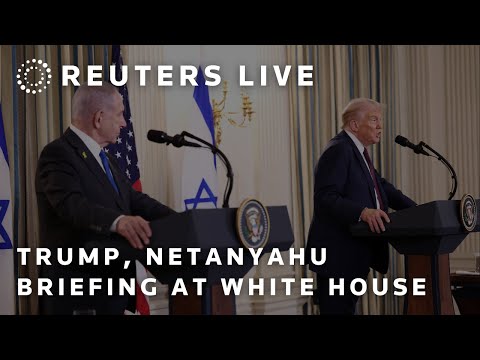
The proposal, released shortly after President Trump and Israeli Prime Minister Benjamin Netanyahu met at the White House, is billed as the U.S. vision to end the almost two-year war in Gaza. Trump has said that stopping the fighting in the enclave is a pillar of his peacemaking efforts since returning to the Oval Office in January.
Speaking at a joint press conference, Trump said they were “very close” to achieving a peace deal. The proposal hasn’t yet been accepted by Hamas.
“I’m hearing that Hamas wants to get this done, too, and that’s a good thing,” Trump said, though he noted the possibility of Hamas’s rejecting the deal. “If not, as you know, Bibi, you’d have our full backing to do what you would have to do,” Trump said, using Netanyahu’s nickname.
Since the start of the war, U.S. administrations have often said they were close to achieving a deal, with progress later falling apart.
The proposal also calls for more humanitarian aid for the enclave while a “Trump economic development plan to rebuild and energize Gaza” is completed.
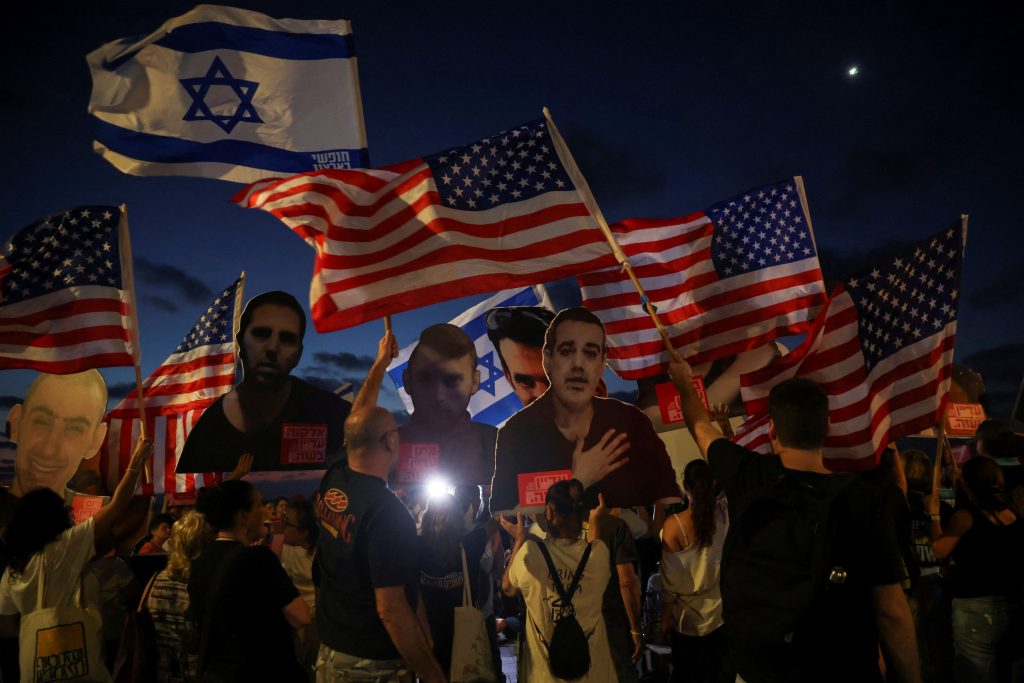
People hold flags and cutouts of hostages, as hostage families and a women protest group call for the implementation of a U.S. plan to end the war in Gaza and release all hostages, on the day U.S. President Donald Trump and Israeli Prime Minister Benjamin Netanyahu meet at the White House, near the U.S. Consulate in Tel Aviv, Israel, September 29, 2025. REUTERS/Shir Torem
There are some points that would be hard for Hamas to accept, analysts say, especially those insisting Hamas can’t have any control of Gaza and that its infrastructure, including tunnels, must be destroyed.
Leading up to the announcement, Israel and Arab countries pushed for amendments to the text. The final version of the proposal displayed several changes that Israel had asked for, including softened language on the two-state solution.
Asked during Netanyahu’s arrival at the White House if there would be a Gaza peace deal, Trump responded: “I am very confident.” Both leaders then walked inside to participate in roughly 90 minutes of scheduled discussion before the joint press conference.
As part of the meeting with Trump, Netanyahu apologized during a phone call to the Qatari prime minister for violating Qatari sovereignty in a strike on Doha earlier this month that targeted a number of Hamas leaders. The Israeli leader expressed regret during the call for the killing of a Qatari security guard, according to a person familiar with the matter.
He also expressed regret that the strike on Doha took place during cease-fire negotiations, according to a White House readout of the call. Netanyahu promised that “Israel will not conduct such an attack again in the future,” the White House said.
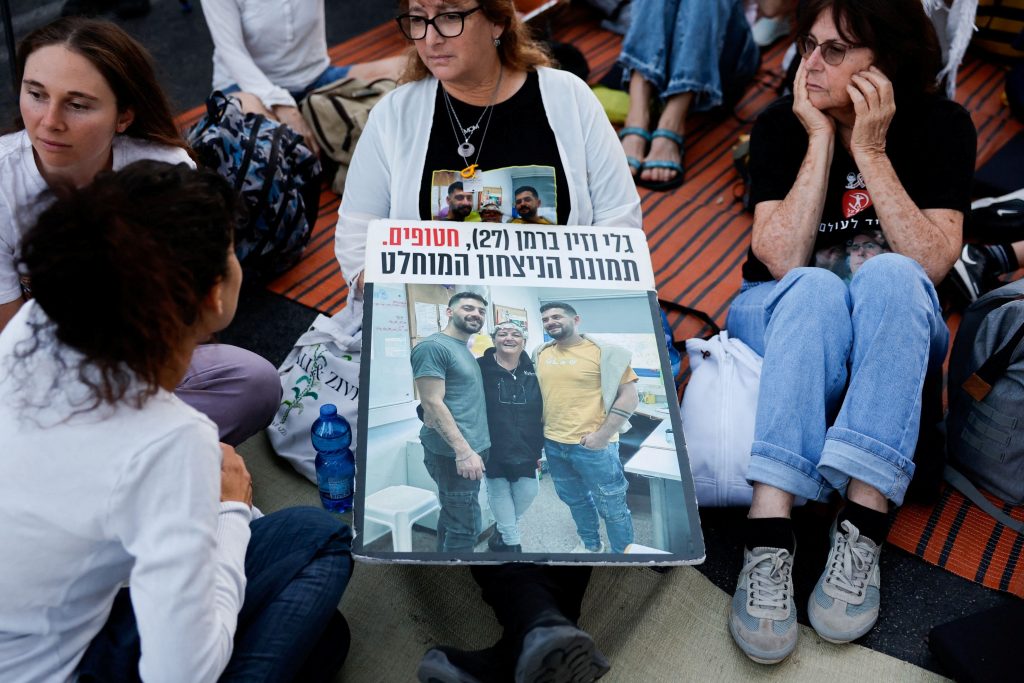
A woman with an image of hostages Gali and Ziv Berman sits, as families and supporters of hostages attend a protest to call for the implementation of a U.S. plan to end the war in Gaza and release all hostages, on the day U.S. President Donald Trump and Israeli Prime Minister Benjamin Netanyahu meet at the White House, near the U.S. Consulate in Jerusalem September 29, 2025. REUTERS/Ammar Awad
Netanyahu met with U.S. special envoy Steve Witkoff and Trump son-in-law Jared Kushner, a former adviser to Trump, in New York several times on Sunday to reach agreement on key points, according to people familiar with the matter.
Israel raised several issues it wants to see amended in the proposal, including over the mandate of the international force and what role—if any—the Palestinian Authority can have in postwar Gaza, according to Arab officials and a person familiar with the matter.
Meanwhile, Saudi Arabia and Egypt want to see a clear path to a two-state solution and also for the PA to play a significant governance role in the enclave. Without a clear pathway to a two-state solution, Saudi Arabia is unlikely to fund the plan, Arab officials say. Officials from several Arab countries, including Qatar, Saudi Arabia and the United Arab Emirates, will be taking part in related meetings on the sidelines of the Trump-Netanyahu summit on Monday, according to Arab officials.
Netanyahu has repeatedly said that there will never be a Palestinian state. Trump said he would prevent Israel from annexing the West Bank, a move that U.S. and some Israeli officials assert would harm any prospects of a two-state solution and complicate efforts to expand the Abraham Accords, which normalize relations between Israel and Arab countries.
Hamas opposes disarming or destroying its weapons as laid out in the text. The group also previously said that it would be difficult to release all the hostages within 48 hours, as it has lost contact with some of the groups holding them for weeks, according to Arab officials.
U.S. officials say Trump wants to announce a peace deal to compel Netanyahu to end the war, as the Israeli leader has shown little desire to stop the fighting on his own. Trump’s desire to get an agreement intensified after Netanyahu ordered airstrikes on Hamas political representatives in the capital of Qatar, a U.S. ally.
Israel has expanded the war by launching a takeover of Gaza City, a dense population center in the enclave’s north, which Netanyahu has called one of Hamas’s last strongholds. Over 700,000 people have evacuated from the area, according to Israel, as Israeli airstrikes and ground operations closed in on the city’s center.
Netanyahu’s critics in Israel, including families of hostages, say he is prolonging the war for political survival, as his ruling coalition relies on far-right parties that oppose ending the fighting. Netanyahu denies the allegations. A large majority of Israelis support ending the war and tens of thousands of people take to the streets in Israel every week to call for a deal to bring the conflict to an end.
One of the officials said pushing Netanyahu to say he agrees with the plan will essentially force a wind down of the war, adding that Hamas’s compliance remained a crucial unknown.