KYIV, Ukraine—As the Trump administration grasps for a way to reopen the Strait of Hormuz without sending in ground troops, attention is turning to the United Nations-backed deal struck with Ukraine and Russia in 2022 to try to restart critical grain exports.
Months of negotiations led to the deal that unblocked the vital maritime export channel for a time, but in the end it took military force to keep it open. Ukraine’s sea drones pushed the Russian Navy to retreat from shipping lanes in 2024, allowing agricultural exports to return to near prewar levels.
That history exposes the limits of diplomacy in wartime and points to the need for a military gamechanger in such a standoff. It is a cautionary tale for President Trump as he seeks a quick end to the war.
“Terrorist regimes share best practices. What Iran is doing today in the Strait of Hormuz, Russia did yesterday in the Black Sea,” Ukrainian Foreign Minister Andrii Sybiha said Thursday at an international meeting about the strait. “The problem is that Iran has studied Russia’s mistakes and learned from them.”
The Strait of Hormuz was a conduit for a fifth of the world’s oil supplies before the war. Iran has effectively closed it through the threat of drones, missiles and small speedboats, sending shock waves through the global economy.
Last month, the European Union’s foreign-polcy chief, Kaja Kallas , said she discussed the idea of replicating the Black Sea model in the Strait of Hormuz with U.N. Secretary-General António Guterres , who helped broker that deal. Iran has stuck to its position that aims to bar non-friendly countries from the Persian Gulf and would require vessels passing through the strait to pay for the journey.
Trump has pushed other nations to wrest back control over the strait from Iran. “Build up some delayed courage, go to the Strait, and just TAKE IT,” Trump wrote on his Truth Social network last week. In another post on Friday, he said the U.S. can easily open the strait “with a little more time,” then “TAKE THE OIL,& MAKE A FORTUNE.”
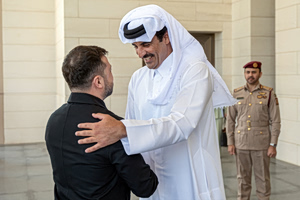
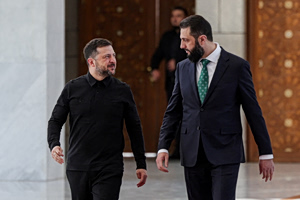
The Emir of Qatar, Sheikh Tamim bin Hamad Al Thani, meets President of Ukraine, Volodymyr Zelenskiy, in Doha, Qatar, March 28, 2026. Amiri Diwan/Reuters
Ukrainian President Volodymyr Zelensky said the Gulf countries wanted to learn more about his country’s experience in creating the Black Sea corridor during his Middle East visit last week, but that Kyiv wasn’t directly involved in unblocking the Strait of Hormuz. He noted that diplomatic solutions leave the other side with leverage.
“You remember how it was with the Russians—we reached an agreement, unblocked it, it worked for a year, and then it stopped working. So the issue is not only unblocking, but also maintaining it, setting the rules, and ensuring protection,” Zelensky said.
When Russia launched its full-scale invasion in 2022, its navy menaced Ukraine’s main port of Odesa and shut off the flow of grain and other exports that fuel Ukraine’s economy. Kyiv had to urgently find alternatives, so it turned to more expensive land transit via its Western neighbors and diverted some of the exports to more shallow river ports.
“It was necessary to keep critical sectors functioning…and to keep the economy from collapsing,” said Yuriy Vaskov, deputy infrastructure minister at the time.
Despite the stopgap measures, the consequences still radiated from the paralyzed sea ports in Ukraine’s Odesa region to the developing world, which relied on Ukrainian grain and saw a hike in prices that exacerbated food shortages .
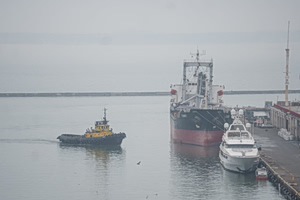
Ukraine’s port of Odesa is a major hub for its grain exports. Serhii Korovayny for WSJ
In April of that year, visits by Guterres to Ukraine, Russia, and Turkey kicked off a three-month process to figure out wording that would satisfy all sides and allow grain exports to restart from the sea via the Black Sea Grain Initiative. When the U.N.-brokered deals were struck with each side, they covered agricultural products, as the rest of the goods continued to be shipped from the river ports which weren’t subject to the deal.
At first, exports recommenced, but Russia began delaying inspections that it was authorized to carry out under the deal, Vaskov said. When Russia declined to renew the deal in 2023, sea exports again halted, as no outside authority was able to guarantee the security of ships.
Then Ukraine’s sea drones got to work. They targeted Russia’s Black Sea Fleet, destroying or damaging one-fifth of its ships, according to the British defense ministry, and forcing Russia to pull back its fleet.
In August, the first vessel transited the corridor, slowly reopening the flow. The total goods that pass through Ukrainian ports shot up to 97.2 million metric tons in 2024 from 62 million tons in 2023, according to the Ukrainian Sea Ports Authority.
Russia continues to mount long-range attacks on Ukraine’s export hubs with explosive drones and missiles. But around 90% of Ukraine’s agricultural produce is now exported by sea, nearing the prewar level of 94%, according to the Ukrainian government.
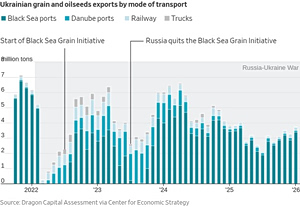
Source: Dragon Capital Assessment via Center for Economic Strategy
Differences in geography and the sides’ military capabilities mean that not all lessons can be translated from the Black Sea to the Strait of Hormuz. Experts and officials have said that naval escorts for tankers through the waterway in a war zone would be nearly impossible with the narrow strait expanding the arsenal of weapons Iran could use and complicating any military response.
In unlocking its own exports, Ukraine has aimed at the Russian Black Sea Fleet. Iran, after the U.S. and Israeli strikes on its naval assets, went for an asymmetrical approach which relies on land-based antiship missiles, drones and swarms of small attack craft.
Even so, Sybiha said Ukraine’s forceful breaking of the blockade held a strategy lesson for the Middle East. “We succeeded because we acted decisively—and that is exactly the kind of mindset the world needs today,” he said.