On the mountain slopes above Kalavryta in southwestern Greece, the once-thriving Greek fir forests are turning red and brittle. Hundreds of dying trees stand out against the green hills, their faded needles a disturbing symbol of climate stress and ecological decline.
Experts warn that a lethal combination of prolonged drought and rising temperatures is decimating the native Abies cephalonica fir species, leaving trees increasingly vulnerable to pest infestations.
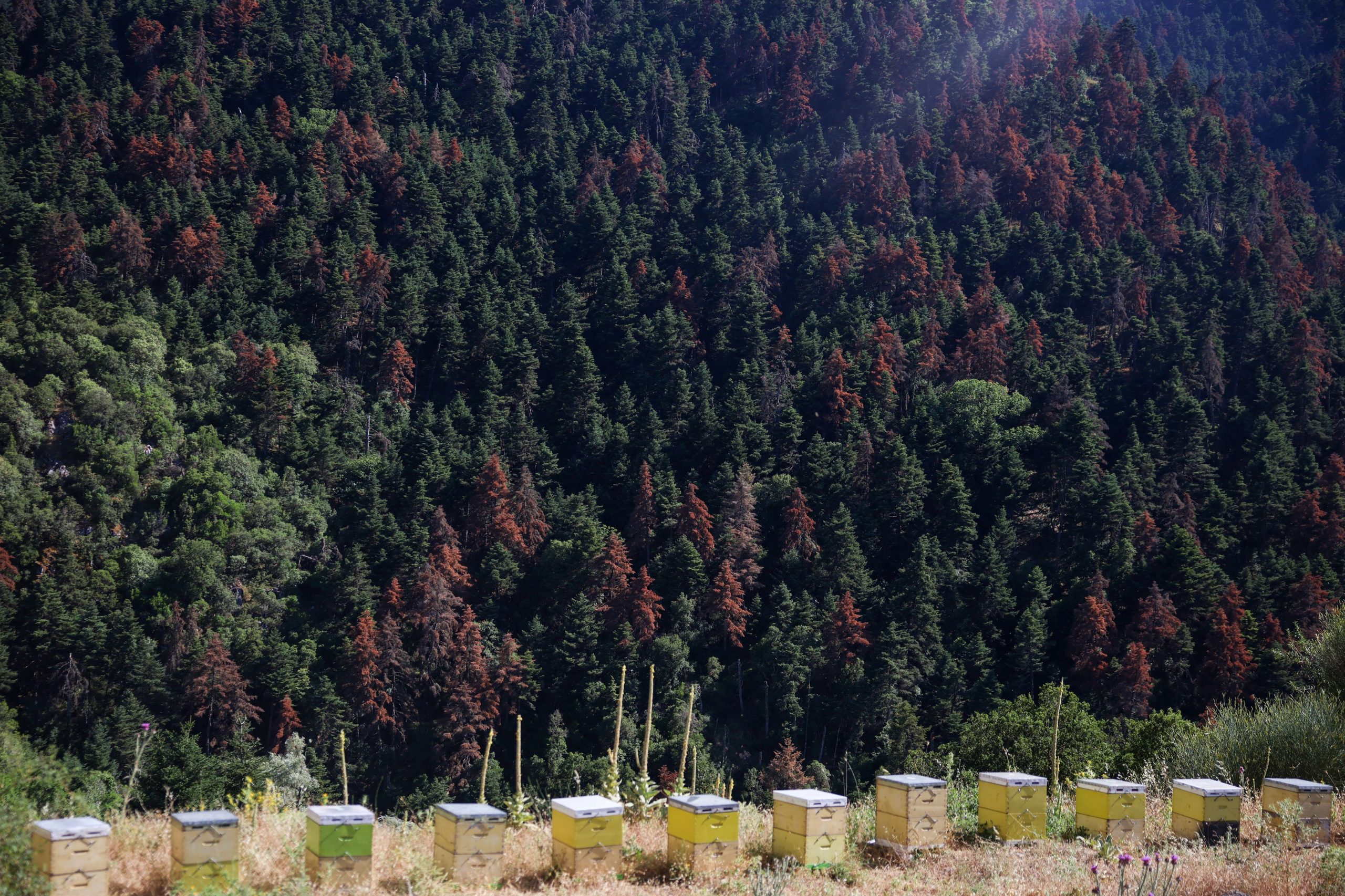
Infested fir trees stand out against the green forest, due to prolonged droughts leaving them exposed to pest infestations according to scientists and locals, near the village of Kalavryta, Peloponnese region, Greece, July 9, 2025. REUTERS/Louisa Gouliamaki
“In the past, we used to see a few dead trees scattered amongst the healthy ones,” Katerina Kolirou, head of the Kalavryta forest service, told Reuters. “Now, unfortunately, among the dead ones, we try to spot the few remaining healthy green firs.”
According to Reuters, fir trees depend on cool, moist conditions to survive. But with drought conditions worsening across Greece, the soil is drying out, snow cover is declining, and the trees’ natural defenses are weakening.
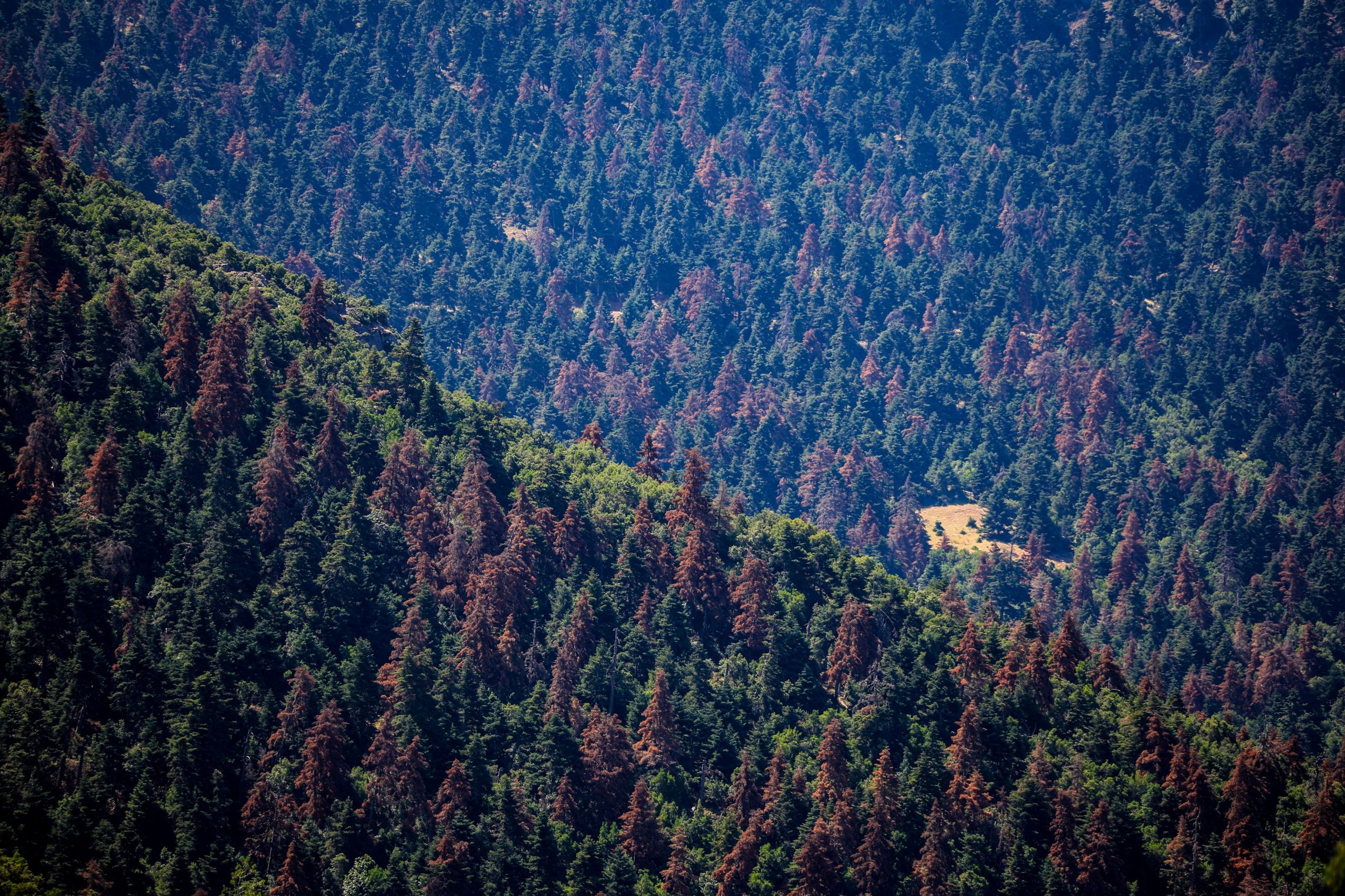
A view shows slopes with dying reddish fir trees, among the healthy ones, due to prolonged droughts leaving them exposed to pest infestations according to scientists and locals, as seen near the village of Kalavryta, Peloponnese region, Greece, July 9, 2025. REUTERS/Louisa Gouliamaki
The main threat comes from wood-boring beetles, which tunnel through the bark and interrupt the tree’s ability to transport nutrients. “They don’t form populations as large as bark beetles,” said Dimitrios Avtzis, a forest entomologist at the Greek Agricultural Organization Demeter, “but they are just as destructive.”
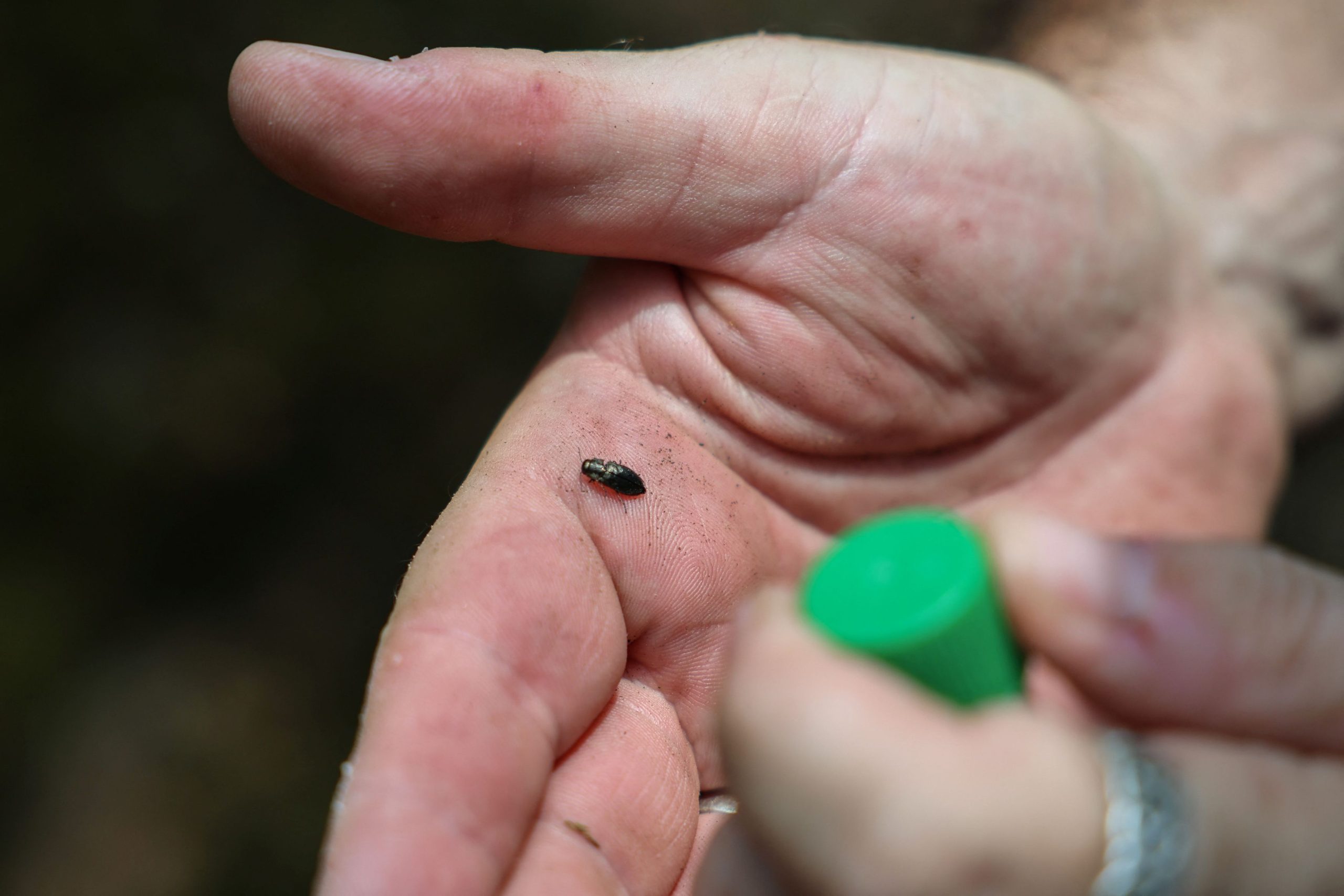
Dimitrios Avtzis, a forest entomologist and research director at the Greek Agricultural Organization Demeter examines a beetle from an infested fir tree, near the village of Kalavryta, Peloponnese region, Greece, July 9, 2025. REUTERS/Louisa Gouliamaki
Global warming’s impact is becoming increasingly visible in Greece. According to Kostas Lagouvardos of the National Observatory of Athens, temperatures across the country rose by 1.5°C between 1991 and 2020, with mountain regions seeing increases as high as 2°C. His research also shows a 30-40% reduction in snow cover, further cutting off vital moisture supply for fir ecosystems.
The crisis extends beyond Kalavryta. Fir forest decline has also been observed on the Greek mainland, the Ionian Islands, and even in Spain’s Pyrenees, where another fir species, Abies Alba, is showing signs of stress under similar climate conditions.

Dimitrios Avtzis, a forest entomologist and research director at the Greek Agricultural Organization Demeter, places a bug in a vial for examination, from an infested fir tree, near the village of Kalavryta, Peloponnese region, Greece, July 9, 2025. REUTERS/Louisa Gouliamaki
In Kalavryta, local authorities plan to remove dead and infected trees to slow the spread of damage. However, the long-term survival of these forests remains uncertain.
“We cannot stop climate change,” Lagouvardos said. “What we can try to do is mitigate it or find solutions. But we cannot create snow.”