In 2025, Europe experienced an extraordinary surge in temperatures, with at least 95% of the continent recording annual averages above normal. Prolonged heatwaves swept across vast regions—from the Mediterranean to the Arctic—underscoring the accelerating pace of climate change.
According to the latest State of the European Climate report, compiled by the European Centre for Medium-Range Weather Forecasts (ECMWF), which operates the Copernicus Climate Change Service, in collaboration with the World Meteorological Organization (WMO), the consequences of this temperature spike were profound. Rising temperatures significantly reduced snow and ice cover—natural regulators that play a vital role in slowing global warming by reflecting solar radiation.
Much of Europe endured an unusually high number of days marked by severe heat stress. Southern and eastern Spain, for instance, recorded up to 50 additional days above 32°C compared to the long-term average.
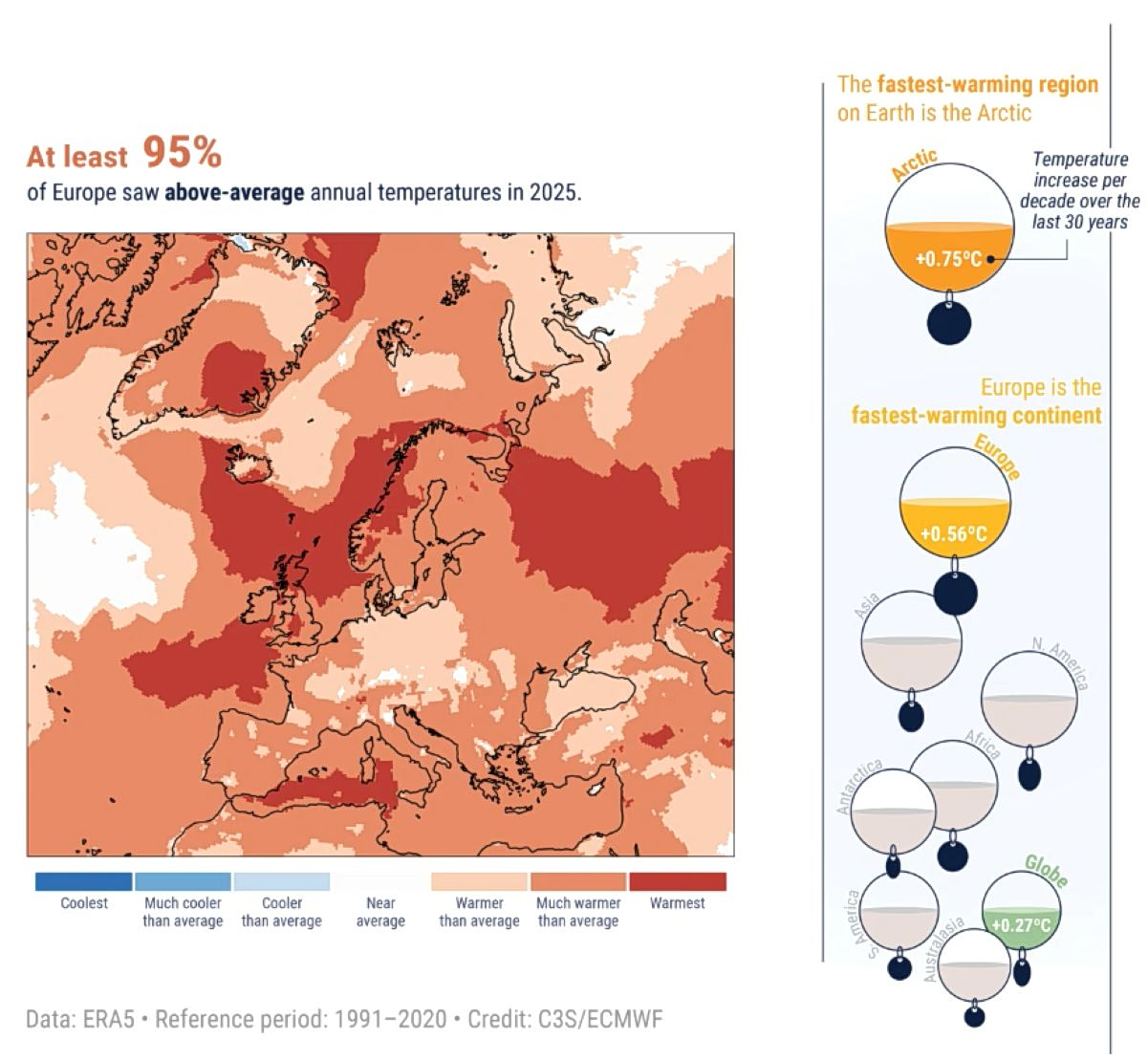
In a striking anomaly, subarctic regions of Norway, Sweden, and Finland were hit by a record-breaking three-week heatwave. Temperatures near and even within the Arctic Circle exceeded 30°C, with the Norwegian area of Frosta reaching a peak of 34.9°C. Southeastern Europe was similarly affected by extreme heat during July and early August.
Greece faced particularly severe conditions, with an estimated 85% of the population exposed to extreme temperatures approaching or surpassing 40°C. The highest recorded temperature reached 44°C.
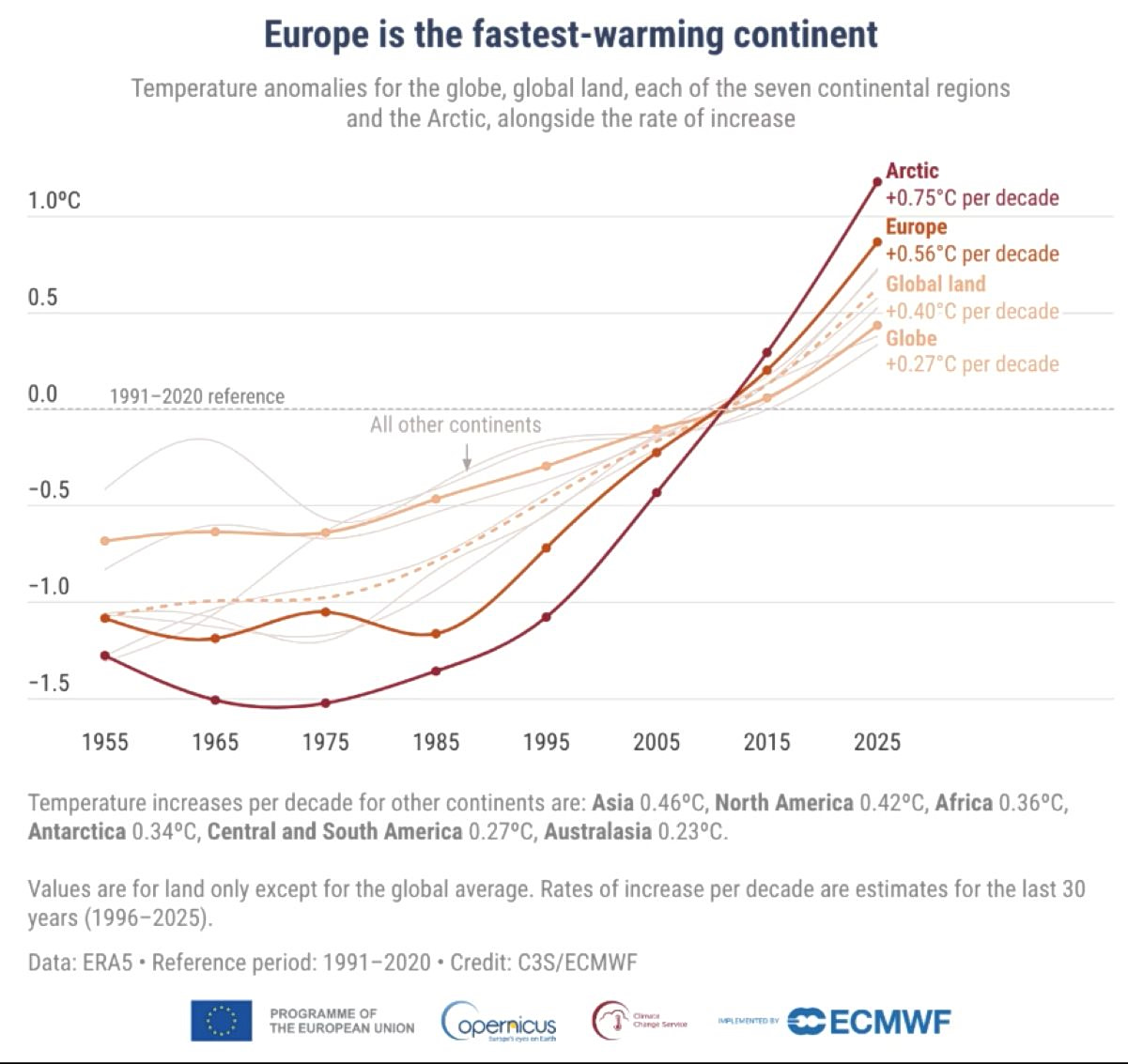
The report highlights a broader and deeply concerning trend: over the past three decades, Europe has warmed at twice the global average, making it the fastest-warming continent on Earth. Eastern and southeastern regions are heating more rapidly than western Europe, while the Svalbard archipelago in the Arctic stands among the fastest-warming areas worldwide.
Shrinking Snow and Ice
Above-average temperatures combined with reduced rainfall in 2025 triggered a sharp decline in Europe’s snow and ice. By March, snow cover was 1.32 million square kilometers below average—a 31% shortfall—marking the third lowest level since records began in 1983.
Glaciers continued to shrink across the continent, with Iceland recording its second-largest loss on record, while Greenland lost an estimated 139 billion tons of ice, further driving sea-level rise. Each additional centimeter of rising seas exposes another six million people to coastal flooding.
The findings highlight a rapid warming trend in Europe’s coldest regions, including the Arctic and the Alps. As snow and ice diminish—key elements in reflecting solar radiation—their loss not only signals environmental strain but also accelerates climate change itself.