In central Greece’s fertile plain of Thessaly — often described as the country’s breadbasket — thousands of hectares of farmland have been left scorched and unproductive this summer. Farmers say their crops dried out after water promised from the nearby Lake Plastiras never arrived in time, a failure they blame on mismanagement by authorities.
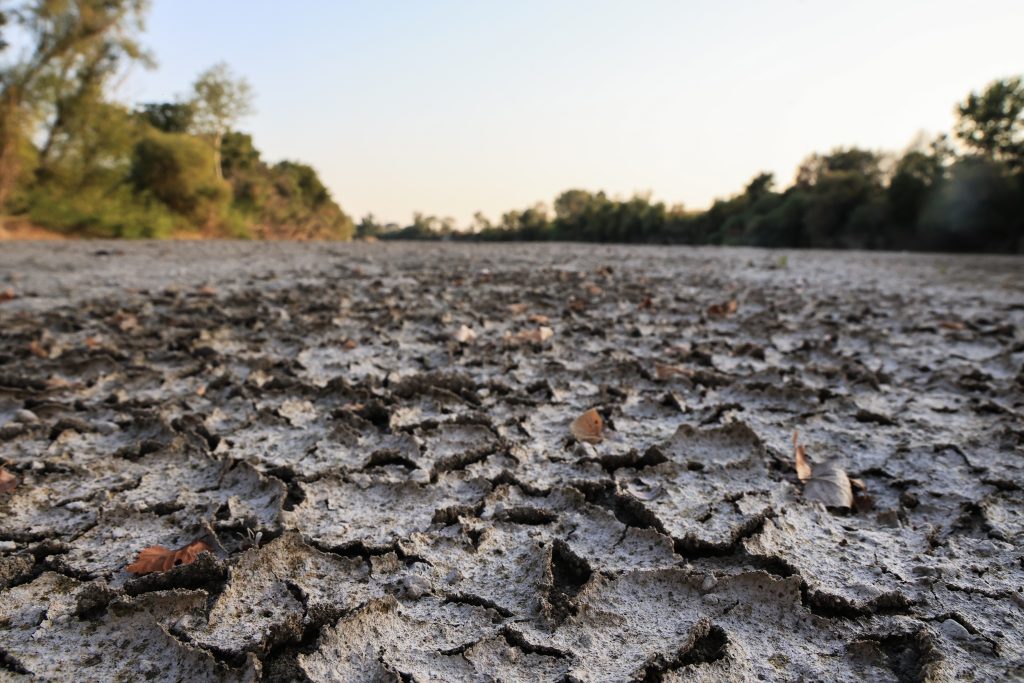
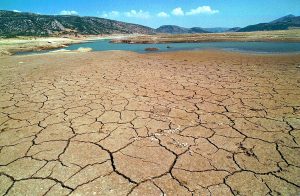
Snapshot taken on July 25, 2025, of the Pineios River outside the city of Larissa, specifically at the Pineios dam near the facilities of the Larissa Municipal Water and Sewerage Company (DEYAL). Prolonged drought combined with the preceding heatwave has led to a dramatic drop in water levels.
In several places, the riverbed of the Pineios in the prefectures of Larissa and Trikala resembles desertification, while farmers see their fields left unirrigated due to water shortages. Thessaly is experiencing one of the most difficult irrigation seasons in recent years, as the amount of available water falls far short of demand.
In Greece, 86% of total water consumption is used for irrigation, and nearly 25% of that is in Thessaly. Following the catastrophic floods of 2023, this past winter brought neither sufficient snowfall nor rainfall, leaving water resources at a critical point.
(EUROKINISSI)
The disaster comes just two years after storm Daniel, one of the most destructive floods in Greek history, submerged large parts of Thessaly under water. At the time, entire villages were evacuated, thousands of livestock were lost, and fields lay fallow for months. Now, instead of too much water, the region faces the opposite: parched land and ruined harvests.
“Farmers lost their crops. Larissa is heading into a difficult winter”, said Christos Souliotis, president of the Agricultural Cooperative of Thessalian Tomato Producers.
He added that despite timely meetings and a shift in planting toward legumes that require less water, irrigation from Lake Plastiras came far too late.“The agreement foresaw 10 million cubic meters for the prefecture of Larissa. If we had that, the damage would have been almost zero”.
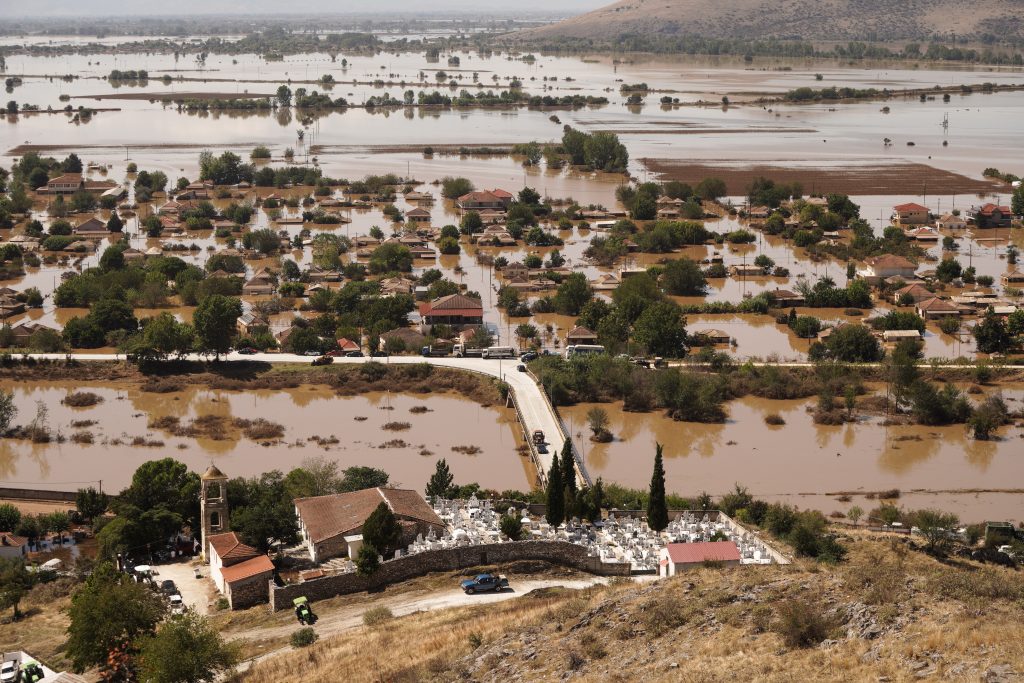
Flooded land in the village of Vlochos 7 days after the storm Daniel, in Karditsa, Greece on September 11, 2023.
Thessaly is Greece’s most important agricultural region, producing cotton, industrial tomatoes, corn, wheat, and legumes that feed the domestic market and supply exports. But the combination of climate extremes and weak water governance has left local producers increasingly vulnerable.
According to estimates, at least 500 hectares were completely destroyed and another 500 hectares severely damaged this season, with the livelihoods of thousands of families at risk. Farmers point to delays in releasing water from Lake Plastiras — a reservoir that serves as a lifeline for the area’s irrigation system. Although 80 million cubic meters were released in total, Souliotis says that by mid-August, “only 1.5 million cubic meters of water reached the TOEB Pineios pumping station” — far too little, far too late.
“In early July, we asked the authorities to send water for the first irrigation needs. Unfortunately there was a huge delay, and when it finally arrived after 15 days, it was already too late and the first damage had been done”, he recalled.
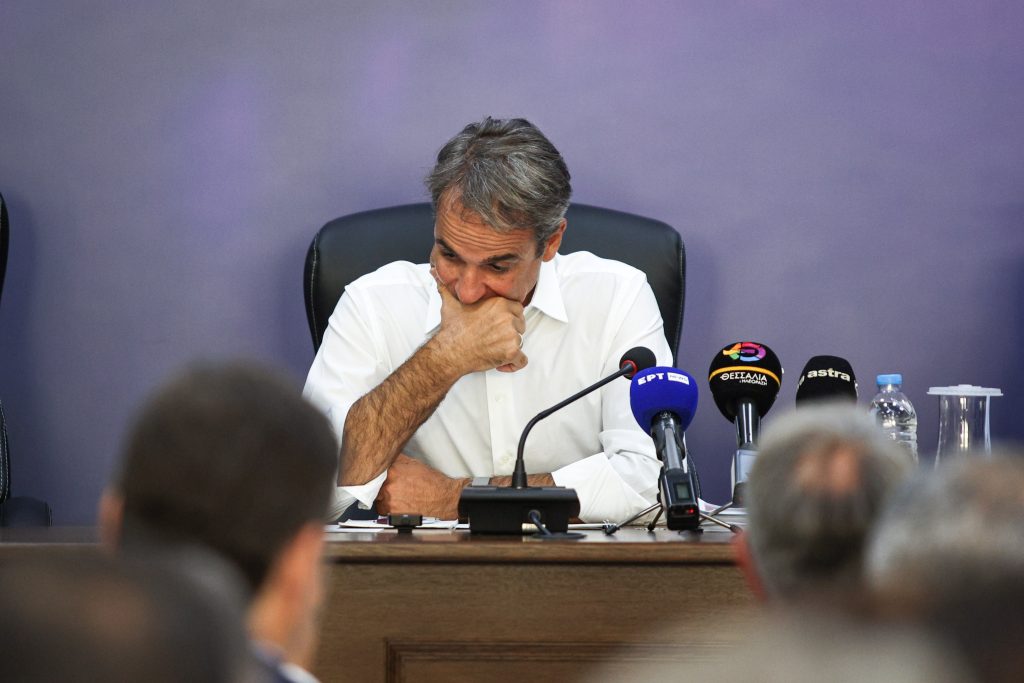
Event entitled “Strategic plan for the reconstruction of Thessaly – dams, infrastructure and hydrology projects”, at the Kilelere Town Hall, in the presence of Prime Minister Kyriakos Mitsotakis and government ministers, Nikaia,Larisa on September 2, 2024.
Four agricultural cooperatives have now filed a criminal complaint with the prosecutor in Larissa, demanding an investigation into whether negligence, mismanagement, or vested interests played a role in the failure to supply water.
“Because water is a social good, we asked the prosecutor of Larissa to investigate what exactly happened — how water left Lake Plastiras, but the fields of Larissa could not be irrigated”, said Souliotis.
In their joint statement, the four cooperatives — “representing the thousands of members of our organizations” — demand both financial support for their losses and the completion of long-promised irrigation projects in Thessaly (including the Acheloos diversion, Mouzaki, and Skopia dams).
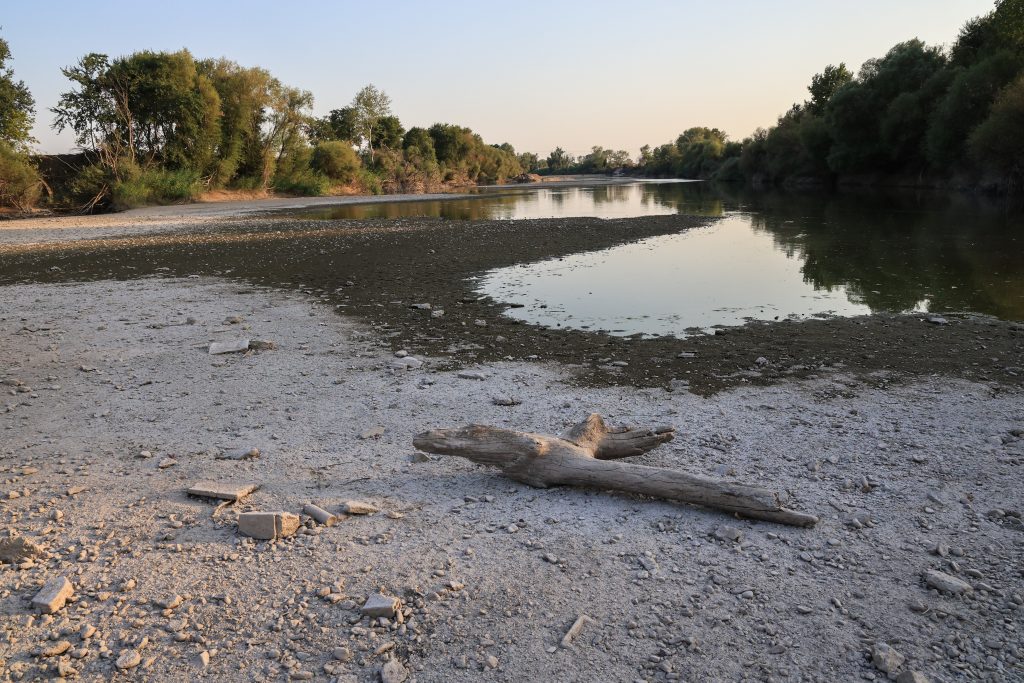
Snapshot taken on July 25, 2025, of the Pineios River outside the city of Larissa, specifically at the Pineios dam near the facilities of the Larissa Municipal Water and Sewerage Company (DEYAL), where prolonged drought combined with the preceding heatwave has led to a dramatic drop in its water levels. (EUROKINISSI)
“We believe that the rational management of water resources and the prevention of disasters in key crops are a guarantee for the development of the primary sector, which is a pillar of our economy and a matter of national strategy”, the statement concluded.
As climate change makes extreme weather in Greece more frequent, the case of Larissa underscores how governance failures are compounding environmental shocks — leaving the country’s most important farmland caught between floods and drought.