Populations of local fish species are declining dramatically, while some species have completely disappeared from Greek waters. The dense forests of Mainalo, home to the beautiful Cephalonian fir—a species found only in Greece—are being destroyed irreversibly due to extensive drying. Hundreds of thousands of acres of land are consumed by fire during the summer, the country faces water shortages, and dozens of people lose their lives each year due to increasingly frequent extreme weather events in Greece. These grim observations are only some of the impacts of the climate crisis, which is not “ahead of us” but is already here, with dramatic consequences for the country.
This reality was confirmed by the 2025 Climate Assessment from the scientific information hub Climatebook, a comprehensive and detailed review of the past year. The report was released yesterday with revealing data.
Concern
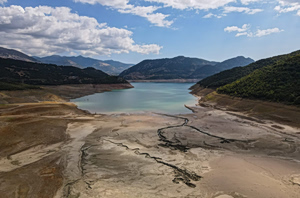
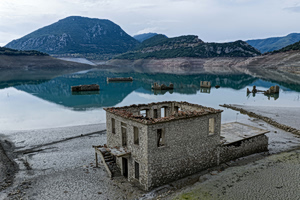
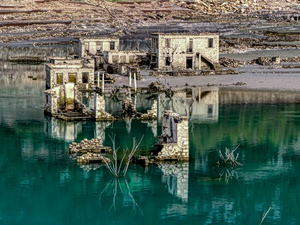
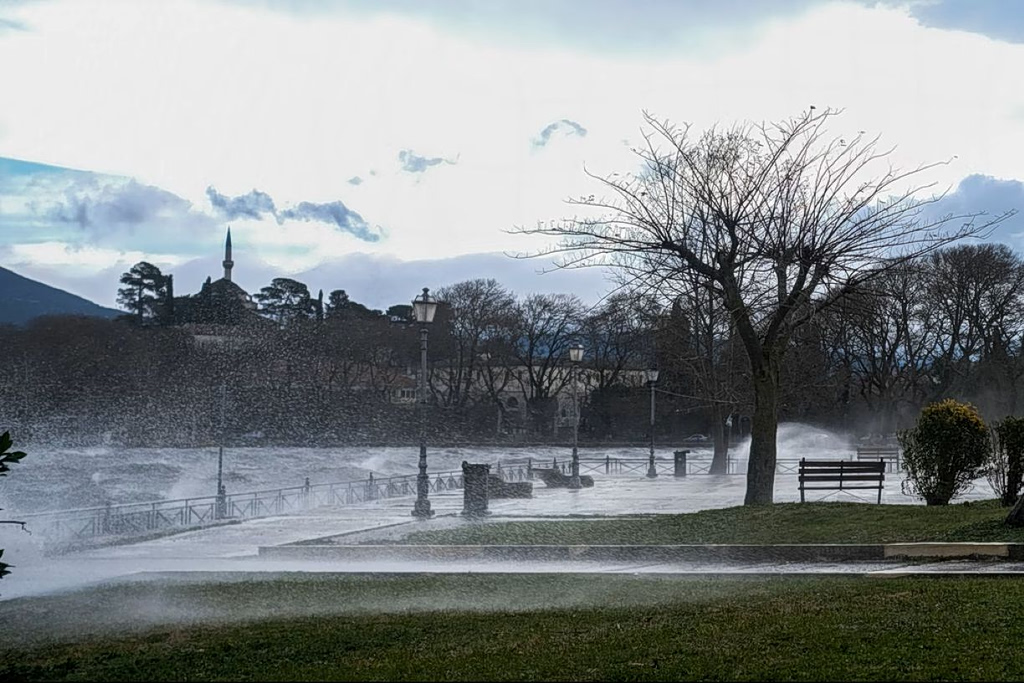
According to the assessment, 2025 exhibited all the characteristics that worry scientists: it was the second warmest year in the last 30 years in Greece, it was very dry, and the number of snow cover days during the year was reduced by 30%. It was also the year in which the surface area of the Mornos artificial lake, the main water source for Attica, was reduced by half. Additionally, 2025 saw 19 extreme weather events with significant social and economic impacts, all related to floods, and some caused by strong winds and land-based tornadoes.
As meteorologist Dr. Kostas Lagouvardos noted during yesterday’s presentation: “2025 was the second warmest year in our country since 1991, with an average annual temperature of 15.3°C. 72% of the year’s days showed positive deviations from the average. And all this while six of the seven warmest years in Greece have been recorded in the last seven years.”
Sea temperatures in the Greek seas were also high, with maximum values reaching 28–29°C in summer, and deviations from the mean temperature locally reaching +1.4 to +1.6°C. Additionally, “2025 was among the very dry years of the past 30 years in the eastern and southern parts of the country.”
Water Reserves
A significant factor analyzed in the report, related to Greece’s water reserves, is snow cover levels. In 2025, the number of snow-covered days in Greece was 30–35% below the average, while in Northern Greece and the Pindus mountains, it was 25–30% below the average of the 2005–2024 period.
Scientists also highlighted that in 2025 the total burned area in Greece reached 478,000 acres, with the largest fire occurring in Volissos, Chios, which is estimated to have burned about 66,000 acres. In total, 114,600 acres of the island were burned last year, or 13.6% of its total area.
Finally, as researcher Dr. Giorgos Kyros noted: “Notably, during 2025, the shrinking of Mornos Lake peaked, with its surface area on January 9, 2026, reduced to 8.3 km², corresponding to a decrease of approximately 49% compared to October 2022, and marking the smallest recorded area in the last four years.”
The annual Climatebook report was curated by Drs. Kostas Lagouvardos, Giorgos Kyros, Stavros Dafis, Katerina Papagiannaki, Vassiliki Kotroni, and Giorgos Fragoulidis.