 Μake us preferred on Google
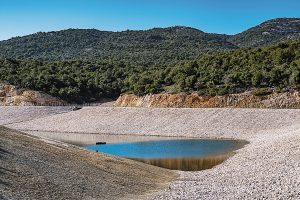
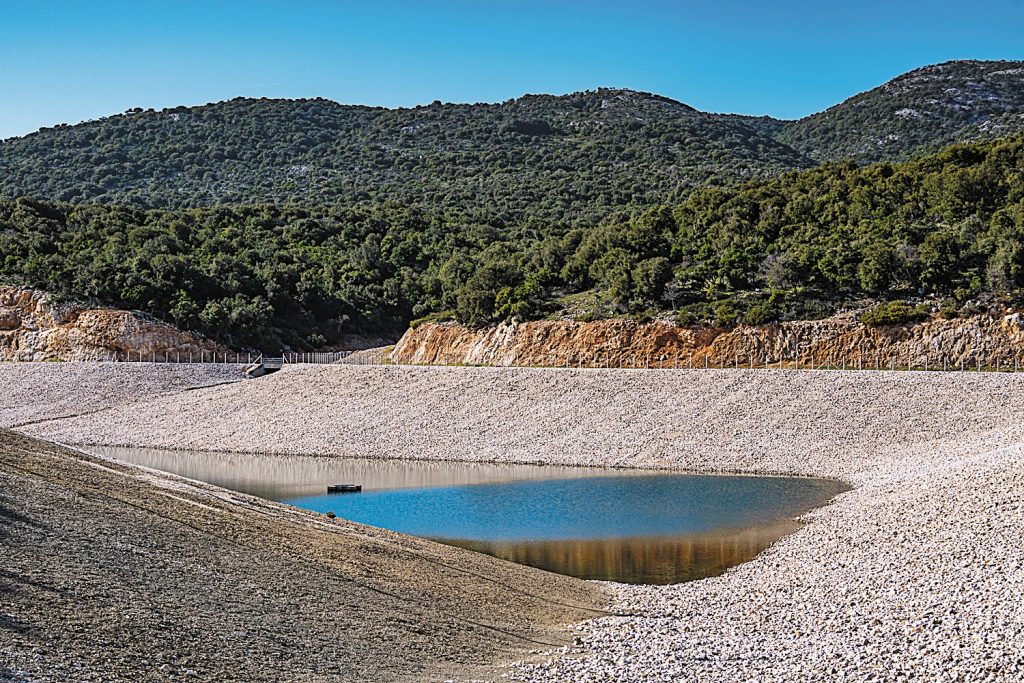
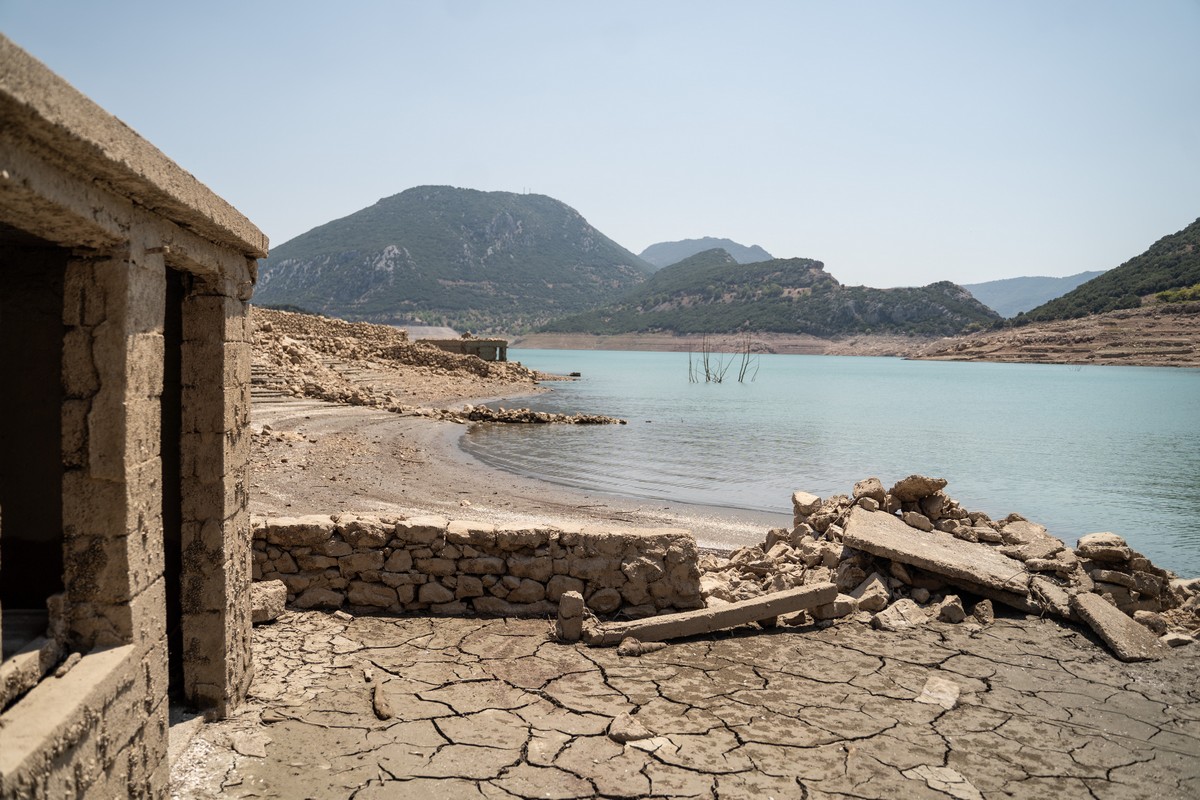
 The Mornos Reservoir, a primary source of water for the Athens metropolitan area, has reached historically low levels, intensifying concerns over drought and water scarcity in the region.
According to official measurements by the Athens Water Supply & Sewerage Company (EYDAP) on October 29, 2025, water reserves in the reservoir stand at just 152.9 million cubic meters. The lake’s surface area has shrunk to 8.3 square kilometers—44% below the 2016–2024 average of 14.9 km².
This marks the lowest water level for this period in the past 15 years, representing a nearly 45% drop compared to approximately the same time last year, when reserves were 285 million cubic meters.
Historical and Visual Impact
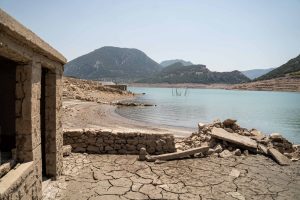
The decline has revealed a striking landscape, including the submerged village of Kallio, which has reemerged, evoking images reminiscent of the severe droughts of the early 1990s. Drone footage captured in mid-September 2025 highlights the dramatic shrinkage of the reservoir.
Expert Analysis
Kostas Lagouvardos, Director of Research at the National Observatory of Athens, told Orange Press Agency that 2025 is shaping up to be one of the driest years of the last decade. Satellite imagery and rainfall measurements indicate that rainfall in the Mornos region remains well below the 2015–2024 average. Snowfall during the past winter was also far below average, limiting the reservoir’s replenishment during the melt season.
“It’s understandable to be concerned, especially if this winter brings limited rain and snow. We hope autumn and winter precipitation can help recover the deficit,” Lagouvardos added.
Government Response
The Greek government, alarmed by the situation, appears to be reconsidering its original plan to create a super-agency to manage the country’s water resources. Officials are now urgently exploring alternative measures to address the reservoir’s decline and mitigate potential water shortages for Athens.
Data Trends
A 15-year comparison of Mornos’ water reserves on October 23 each year shows the sharp decline:
- 2025: 157 million m³ (15-year low)
- 2024: 285 million m³
- 2023: 496 million m³
- 2022: 601 million m³
- 2021: 524 million m³
- 2020: 490 million m³
- 2019: 533 million m³
- 2018: 606 million m³ (15-year high)
The ongoing drought underscores the urgency of effective water management and highlights the vulnerability of Athens’ water supply amid changing climate conditions.