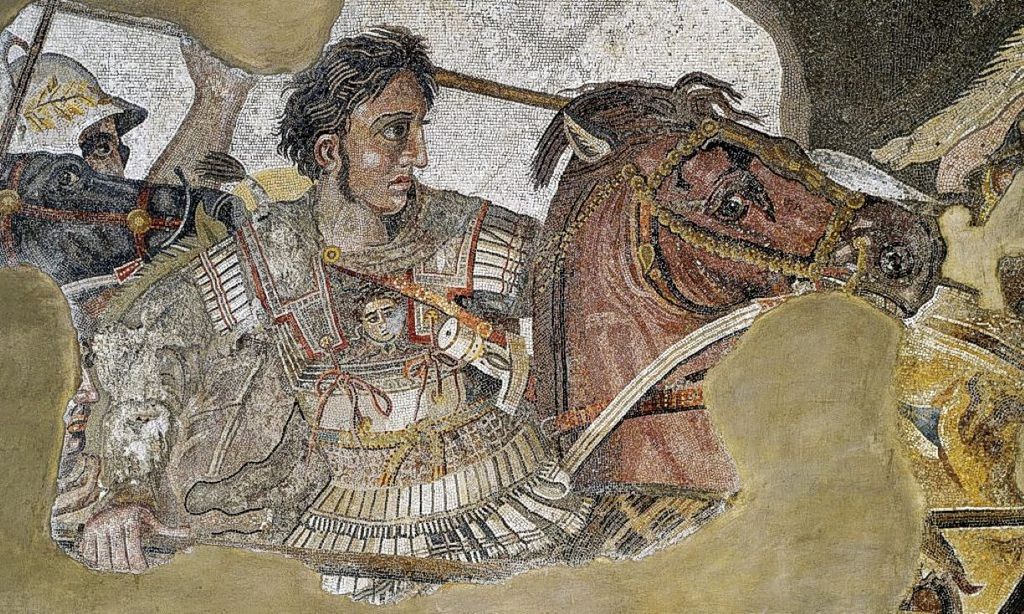
Alexander the Great, considered by many the greatest military genius in history, had left a trail of cities – some put the number at over 70 – named after him across Asia during his legendary campaigns and the conquest of the Persian Empire. Archaeologists have confirmed the location of a city lost for over 2,000 years, founded by the Macedonian leader.
The ancient city, located at a strategic point in southern Iraq near the Persian Gulf, is named Alexandria on the Tigris. The river in Iraq is the eastern of the two great rivers that defined ancient Mesopotamia
The port city was founded in the fourth century BC by Alexander the Great and acted as a trading hub connecting India and Mesopotamia with the Mediterranean world.
Archaeologists, who worked on the site for 16 years, managed to map the city’s walls and street grids, using high-resolution imagery and drones, revealing the large size of a thriving metropolis.
According to the Professor of archaeology from the University of Konstanz in Germany, Stefan R. Hauser, the city had been flooded many times. He said that despite the floods, the city “has been miraculously preserved.”
Researchers unearthed temples and workshops with kilns and furnaces.
“The size of the city blocks is extraordinary,” he said. “It surpasses even those of the major capitals of the time, like Seleucia on the Tigris or Alexandria on the Nile.”
Hauser added, “The quality of the geophysical evidence is absolutely stunning… The preservation of buildings is surprisingly good, and we started identifying the walls immediately beneath the surface, which also accounts for the good results in geophysical exploration.”
The archaeologist said he was surprised by the city’s size at 2.5 square miles, which he called “enormous for an ancient city.”
with information from Foxnews.com