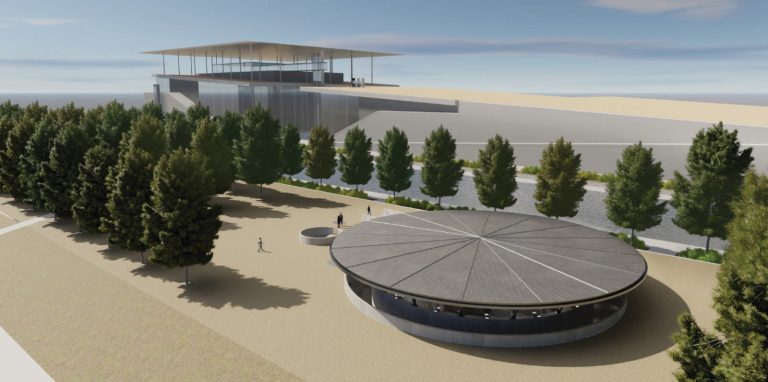
The Greek Ministry of Culture is moving ahead with the creation of a permanent exhibition dedicated to the “Shackled Skeletons of Faliro,” one of the most significant archaeological finds of recent decades. The remains will be displayed in a protective museum structure on the Faliro Esplanade, next to the Stavros Niarchos Foundation Cultural Center (SNFCC).
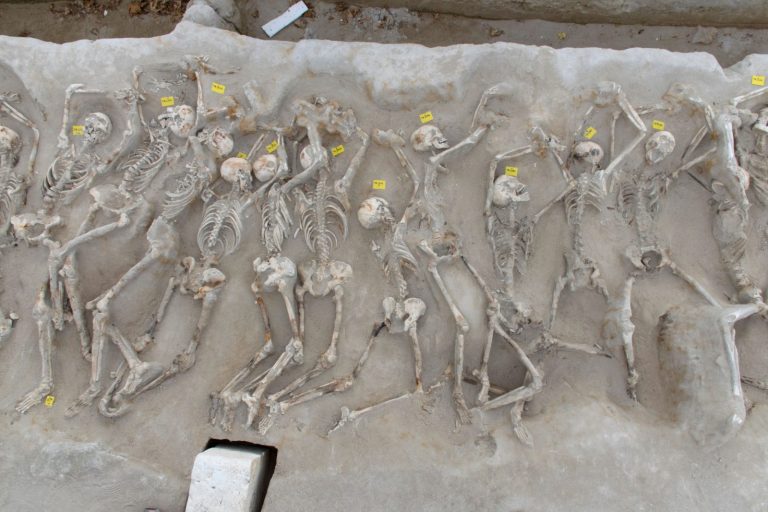
The €6.5 million project, funded by the Recovery Fund, is proceeding on schedule and is expected to be completed in 2026. According to archaeologists, the burials date to the turbulent second half of the 7th century BC and represent a discovery of global significance.
A meeting of archaeology and history
The aim of the exhibition is to help visitors understand a unique historical episode in Athens’s past without focusing solely on the violence of the images. The site and the find will be presented together, where archaeological research meets history.
Culture Minister Lina Mendoni emphasized the importance of the discovery: “The Shackled Dead of Faliro concern a mass burial uncovered in March 2016 during the construction of the SNFCC. The execution appears to have taken place on site, with the victims buried still wearing their iron shackles. From 2016 to 2020, the site was not adequately protected, and part of the find was lost.”
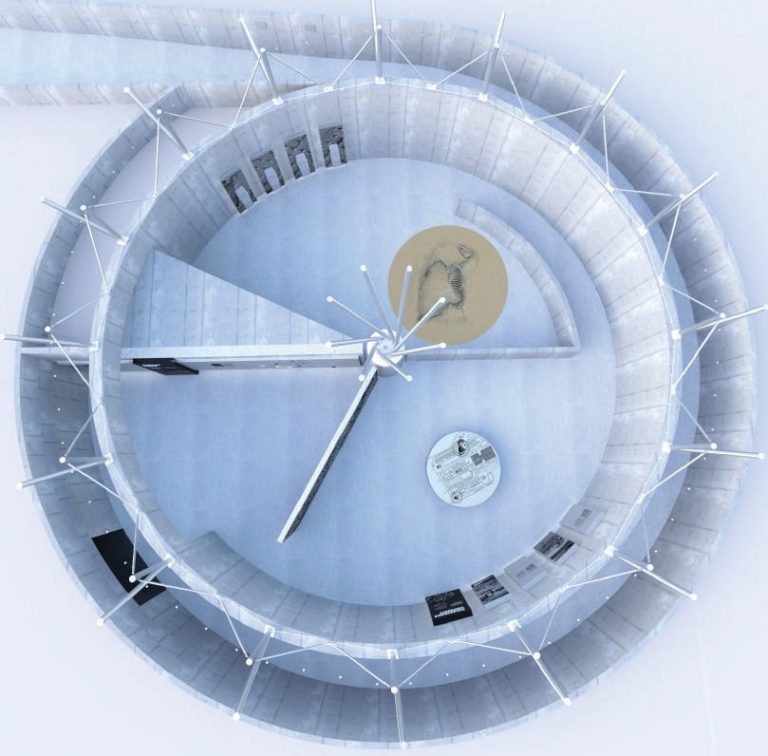
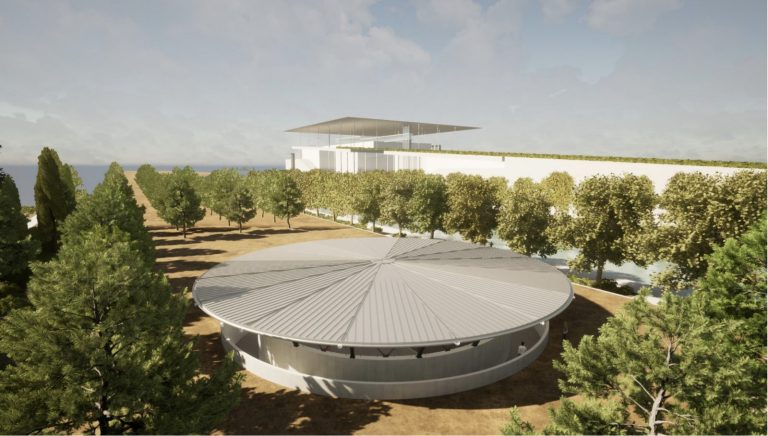
To safeguard what remained, the skeletons were temporarily removed and will be reinstalled in their original position after ground stabilization. The permanent museum shell is being built as an underground structure within the landscaped Esplanade, allowing visitors optimal viewing conditions. Its design leads guests on a gradual transition “from present to past, from light to darkness,” preparing them emotionally and intellectually for the encounter with the “Shackled Dead.”
A carefully designed exhibition
The museum’s spatial and conceptual design is tailored to the sensitive nature of the remains. It aims to convey both the historical context and the emotional weight of the discovery. The exhibition also places the burials within the broader social and political upheavals of the time, which contributed to the birth of Athenian democracy.
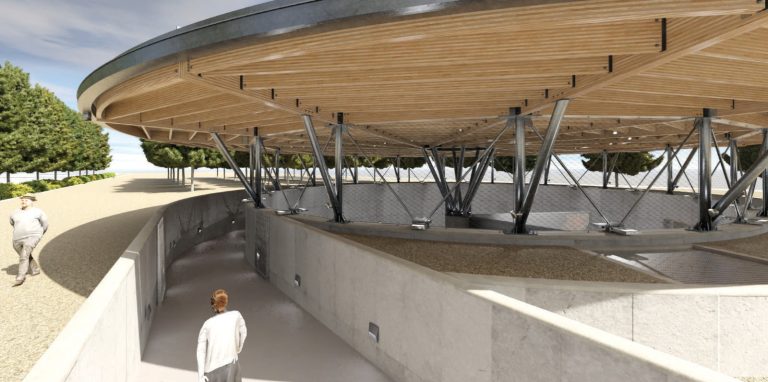
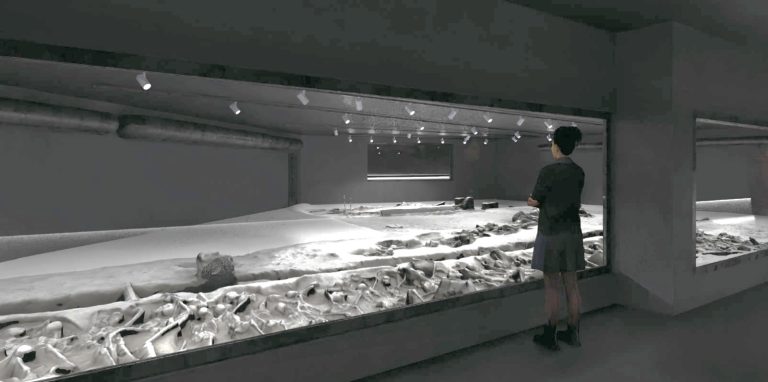
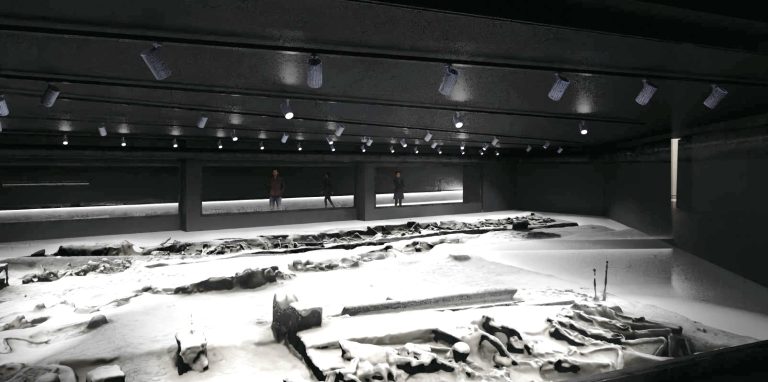
The protective building, covering roughly 920 square meters, guides visitors downward through a semi-open cylindrical structure that gradually descends below ground level. Two large glass openings will allow viewing of the skeletal remains at 3.75 meters below ground, though the burial chamber itself will not be accessible in order to ensure controlled preservation conditions.
Visitor experience
The exhibition unfolds in thematic stages:
1. Entrance: Visitors are informed about the sensitive nature of the human remains and can decide whether to continue.
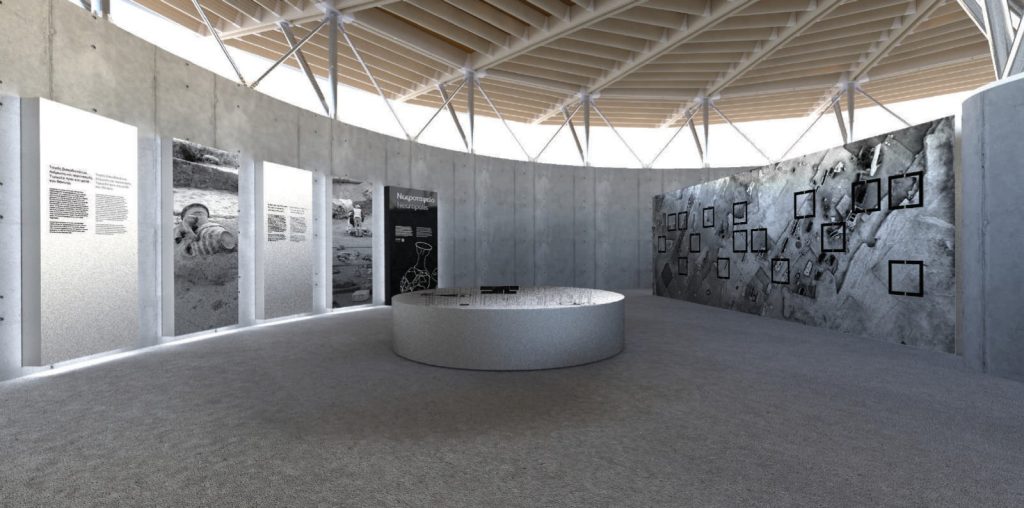
2. Descent/Time: The ramp descent symbolizes travel back in time, away from the modern SNFCC to the ancient world.
3. Transition to Faliro: The spatial setting of the ancient Faliro bay and its relationship to Athens is introduced.
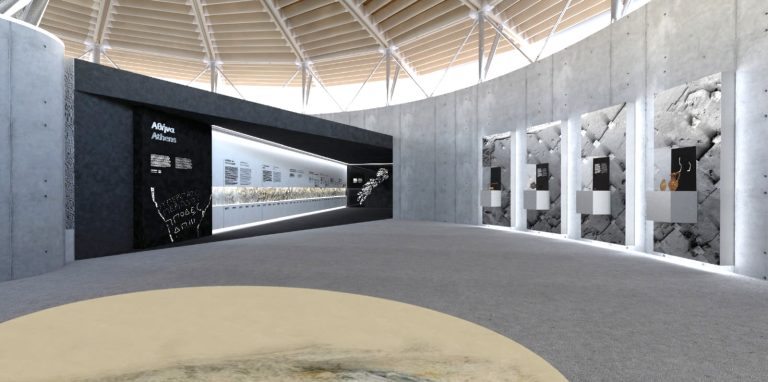
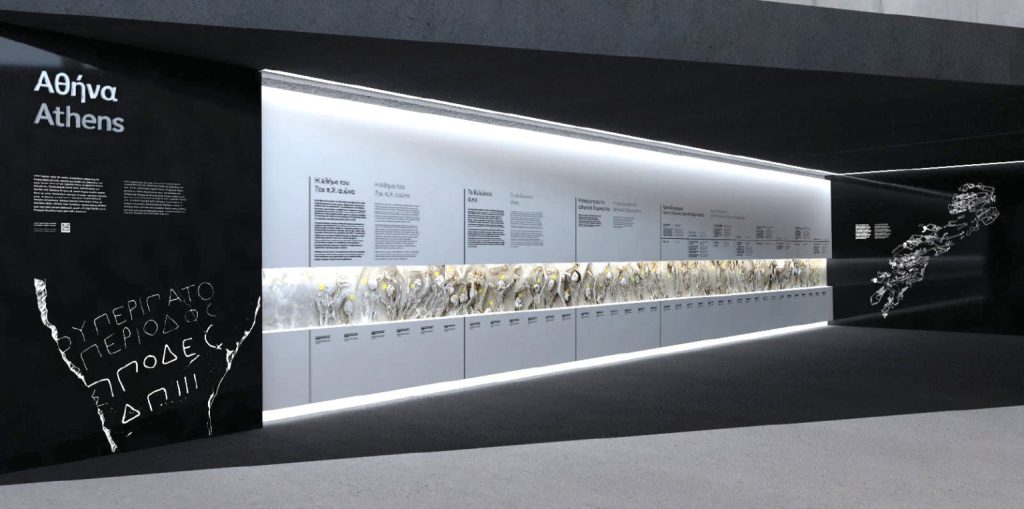
4. Exploration of the necropolis: Burial practices, rituals, and customs are presented.
5. From custom to law: The political unrest and civic changes of 7th-century BC Athens are explained.
6. Silent viewing: Visitors encounter the skeletal remains of the “Shackled Dead” in a space of reflection.
7. Representation/Respite: Art offers a transformative interpretation of the frozen historical moment.
8. Ascent/Exit: The route retraces upward, symbolizing a return to the present.
The exhibition will combine traditional and digital tools, including texts, photographs, maps, drawings, reconstructions, and interactive media.
Excavation history and significance
The Faliro bay, the first harbor of ancient Athens, was home to the city’s largest known cemetery, used between the 8th and 4th centuries BC. Excavations across 11 of its 70 acres have revealed 1,920 burials containing 2,087 individuals, most from the Archaic period.
The necropolis shows a wide variety of burial practices reflecting all social classes, including many violent deaths. Approximately 10.7% of the individuals — 229 people — were buried with signs of execution, such as iron shackles, fractures, and unusual body positions.
The first investigations began in 1863, followed by rescue excavations in 1911 and 1915, which confirmed the site’s scale. Notable finds included a mass grave of 18 executed men with evidence of “apotympanismos,” a method of execution.
A new phase of excavations between 2009 and 2016, during construction of the SNFCC, uncovered the 79 “Shackled Dead” in rows, chained together and killed with fatal blows to the head. Their execution is linked to political turmoil between the early 7th and 6th centuries BC.
In 2016, authorities decided to preserve the find in situ with a protective structure. By 2020, due to worsening preservation issues, the remains were temporarily removed, pending construction of the permanent museum now underway.