In 2026, Athens is set to transform into a vibrant landscape of contemporary and historical art, with exhibitions that bring prehistoric figurines, monumental contemporary sculptures and landmark figures of postwar and contemporary creation into dialogue.
One of the highlights arrives in April 2026, when the Stavros Niarchos Foundation Cultural Center hosts one of the most influential figures in contemporary art. American artist Barbara Kruger comes to Greece for the first time with her solo exhibition Untitled (Pride and Contempt), transforming the Niarchos public space into an expansive, living field of thought and confrontation. Through her signature graphic language, direct phrasing and sharp, confrontational messages, Kruger appropriates the mechanisms of advertising and mass communication to address power, truth, manipulation and individual responsibility.
The exhibition will feature thirteen new works, specially conceived for the outdoor space and unfolding on both sides of the canal, while a monumental mural on the façade of the National Library of Greece will serve as a visual and conceptual focal point. Curated by Katerina Stathopoulou, the exhibition invites visitors not merely to observe, but to confront their own position within public space and society.
Β & Μ Theocharakis Foundation for the Fine Arts and Music pays tribute to one of the most important pioneers of postwar art with Stephen Antonakos: A Centennial Celebration (18 March–28 June), marking 100 years since the birth of the Greek-American artist Stephen Antonakos (1926–2013). Rather than functioning as a conventional retrospective, the exhibition juxtaposes a carefully selected group of works from the Stephen Antonakos Studio and private collections—highlighting his enduring contribution to light sculpture and minimalist language—with works by artists who were his friends and artistic companions. This approach reveals the exchanges, affinities and influences that shaped his artistic universe.
Curated by American curator Sara Reisman, Chief Curator of the National Academy of Design in New York, the exhibition aims to present Antonakos’ work with clarity and substance, underscoring both its historical importance and its lasting relevance.
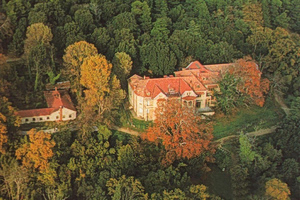
The Museum of Cycladic Art, continuing its tradition of unexpected dialogues between eras, presents for the first time to the Greek public an iconic work by Jeff Koons. Balloon Venus Lespugue (Orange) (2013–2019), a monumental sculpture made of polished, reflective stainless steel—one of only five worldwide—draws inspiration from the Paleolithic Venus of Lespugue. On display at the Stathatos Mansion this spring (19 March–31 August), the work comes from the Homem Sonnabend Collection and will be shown alongside ten replicas of Paleolithic Venus figurines on loan from leading European museums, creating a striking dialogue between ancient and contemporary archetypes.
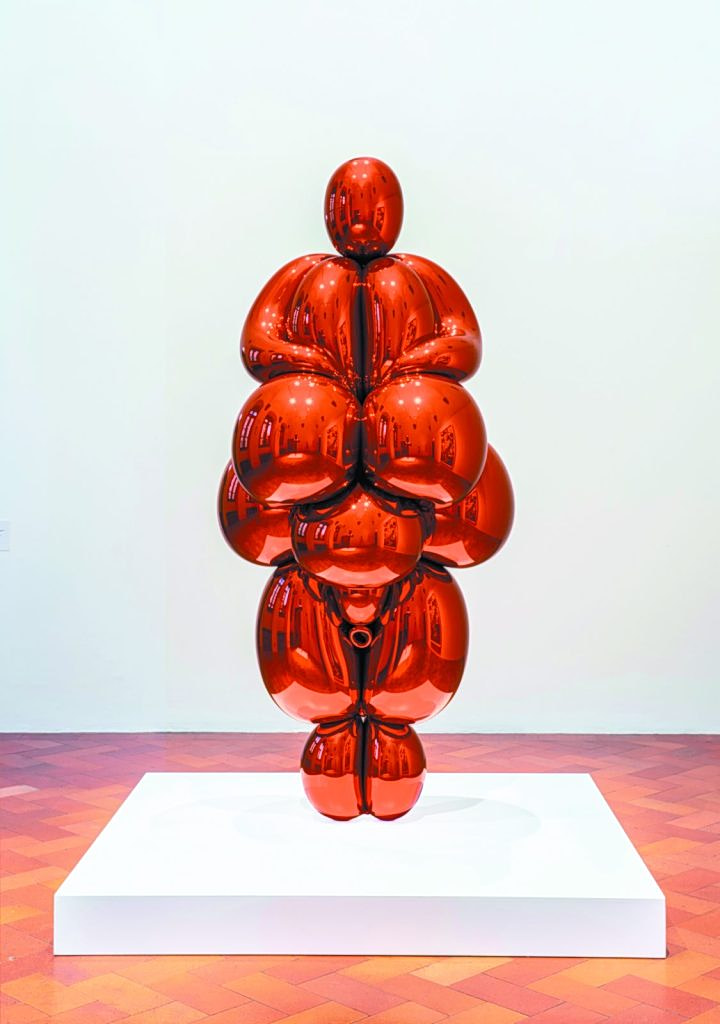
Jeff Koons, “Balloon Venus Lespugue (Orange)”.
The third and final chapter of the trilogy Allspice / Michael Rakowitz & Ancient Cultures will be presented in spring at the Old Acropolis Museum, completing a cycle that began at the Acropolis Museum and continued in its surrounding spaces. Featuring new works by Iraqi-American Jewish artist Michael Rakowitz, the exhibition delves deeper into the relationships between Mesopotamia, Iraq, Greece and the wider Near East, examining what remains of a culture when everything around it is destroyed.
Through materials, narratives and concepts that travel across time and geography, the trilogy traces the trajectories of objects, people and memory—from ancient exchanges to contemporary displacement, looting and efforts at restoration. Organized in collaboration with the Ministry of Culture, the Acropolis Museum and NEON, and curated by Acropolis Museum Director Professor Nikolaos Stampolidis and NEON Director Elina Kountouri, this final chapter functions both as a conclusion and as an open question: how is culture produced amid destruction, and who bears responsibility for memory?
Escape Room and Plato
Also anticipated is the 61st Venice Biennale (May 9–November 22), titled In Minor Keys, honoring its late artistic director Koyo Kouoh. The Greek Pavilion will present Escape Room by Andreas Angelidakis, curated by Giorgos Bekiarakis and produced by MOMus – Metropolitan Organisation of Museums of Visual Arts of Thessaloniki. This immersive installation translates Plato’s allegory of the cave into a contemporary digital framework, inviting visitors to experience—and attempt to escape—a world of illusions, while reflecting on our relationship with digital reality and the post-truth era.
The Vorres Museum relaunches itself through, among other initiatives, the new exhibition program The 365 Project, curated by Olga Daniilopoulou. The series introduces contemporary interventions in direct dialogue with the museum’s permanent collection, with a new artist presenting a work every two months. The program opens with Ilias Papailiakis’ White Series (Eight Studies) (10 January–8 March), works that hover between drawing, sculpture and painting. Conceived as studies for frescoes of a funerary monument that will never be realized, they form a polyptych illusion that fills the space with movement, memory and narrative.
As 2026 marks the 200th anniversary of the heroic Exodus of Messolonghi, commemorative events and exhibitions will take place both in the city itself and at the Benaki Museum of Greek Culture. The exhibition Messolonghi 1826: 200 Years Since the Exodus (18 February–3 May) will explore the iconography of Messolonghi, the Greek War of Independence and Philhellenism through paintings, drawings, engravings, books and objects. Rare and often unpublished material from the Benaki Museum, the collection of historian John Robertson and other sources sheds light on the city’s role in political Philhellenism and the formation of modern Greece. The exhibition is curated by Konstantinos I. Stefanis, Spiridoula Dimitriou and John Robertson.
Sixty Years of MIET
Another anniversary celebrates sixty years of the Cultural Foundation of the National Bank of Greece (MIET), marked by the exhibition Readings of a Collection: 60 Years of MIET (26 February–26 April) at the Piraeus Street building. Featuring more than one hundred works spanning most of the 20th century, the exhibition is curated by Konstantinos Papachristou.
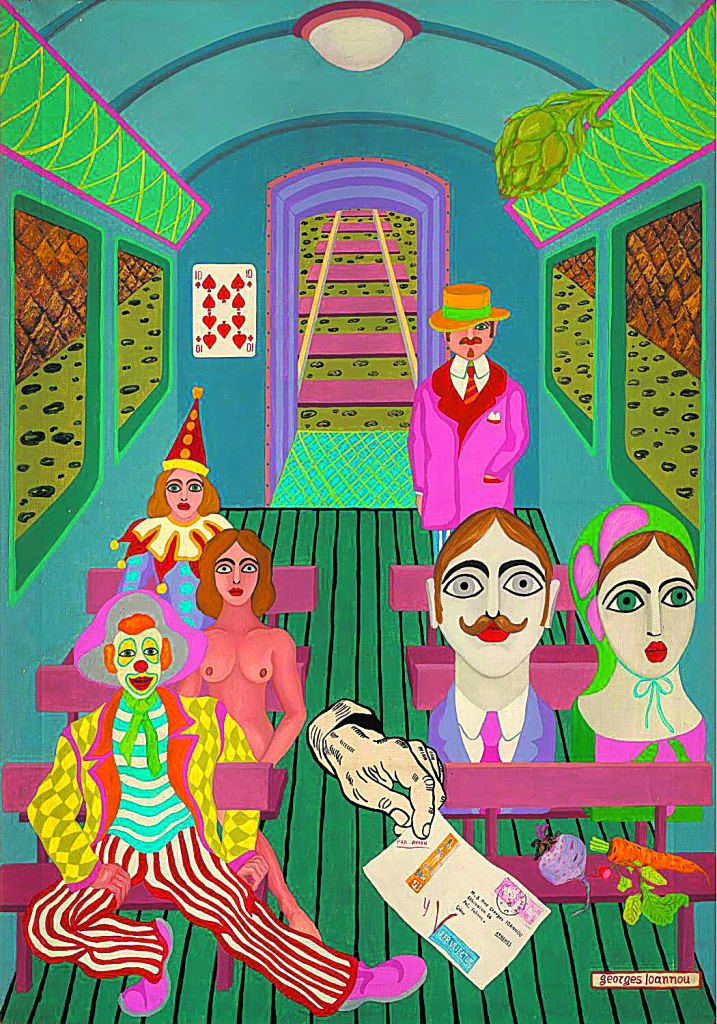
At the Benaki Museum on Piraeus Street, the major retrospective Alexis Akrithakis – A Line Like a Wave (February 12–May 24), curated by Chloé Akrithakis and Alexis Papazacharias, marks the artist’s first large-scale retrospective in Greece in 30 years. The exhibition surveys the full range of his work, from the psychedelic imagery of the 1960s and the emblematic “suitcase” of the 1970s to light constructions, expressionist landscapes, portraits and late works, including those inspired by patients of the Dromokaiteio psychiatric hospital.
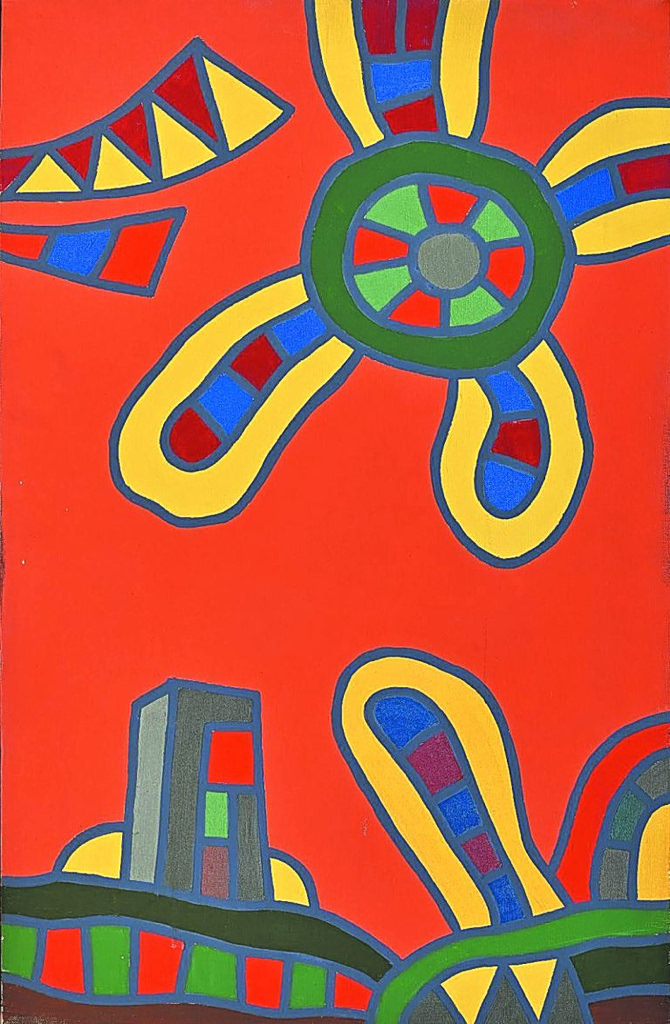
Alexis Akrithakis, Untitled, 1970.
Finally, at annexM of the Athens Concert Hall, curator Anna Kafetsi presents Symphony 37 – The Portrait of an Algorithm by Giorgos Drivas, opening on 10 January. Created within the annexM artist residency research program in 2025, the work is a multi-layered audiovisual, performative exhibition developed through close collaboration between the artist and Artificial Intelligence models. Its culmination will be a live performance of a musical symphony composed by the artist under the continuous guidance of AI systems, presented in different spaces of the Concert Hall during the first two months of 2026.