Spies, messengers, fighters, and sponsors–women played all these roles during the Greek Revolution, a war that ended four centuries of Ottoman oppression and reshaped Greece’s future.
And yet their stories are rarely taught in schools, and their instrumental contributions to this war remain largely overlooked.
This is finally beginning to change.
On the occasion of Women’s History Month, TO BHMA International Edition spoke with Angie Xidias, who is boldly introducing the world to the daring women who took part in the Greek War of Independence.
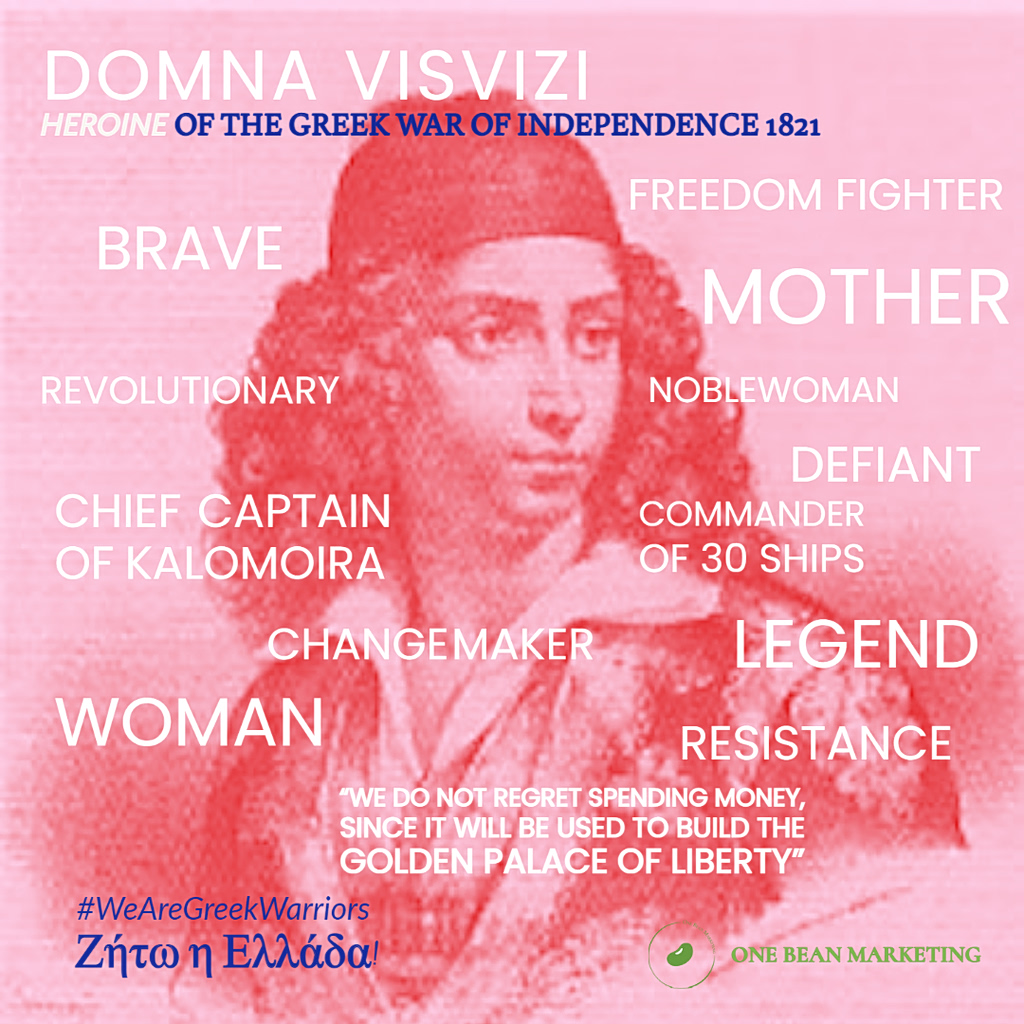
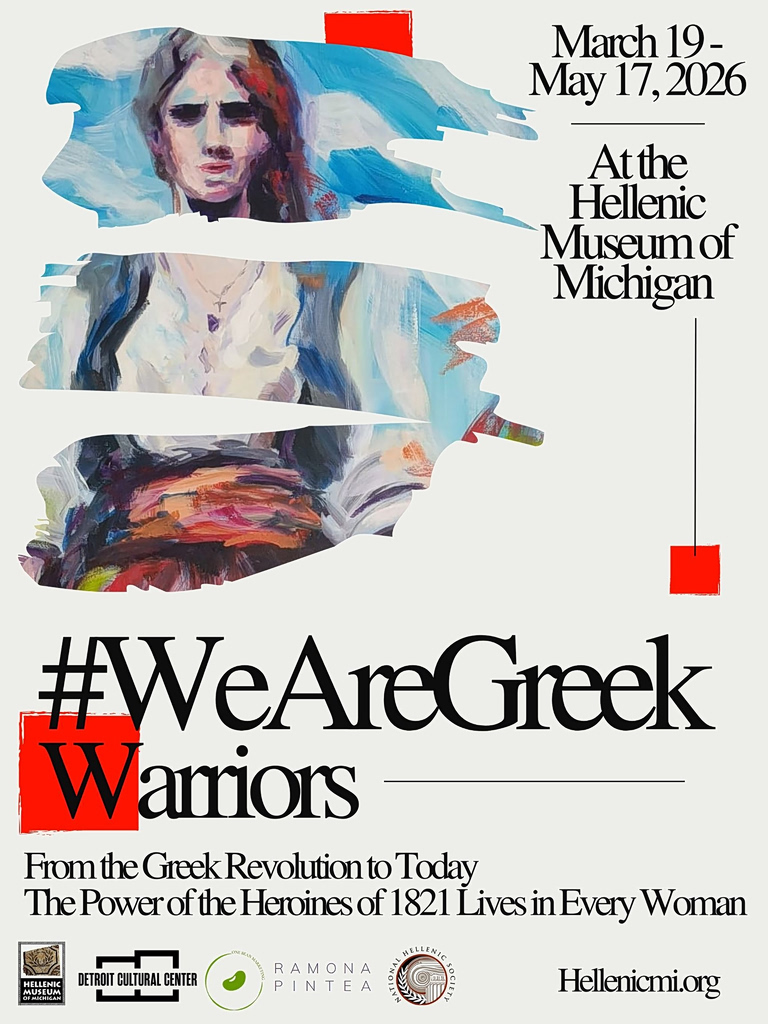
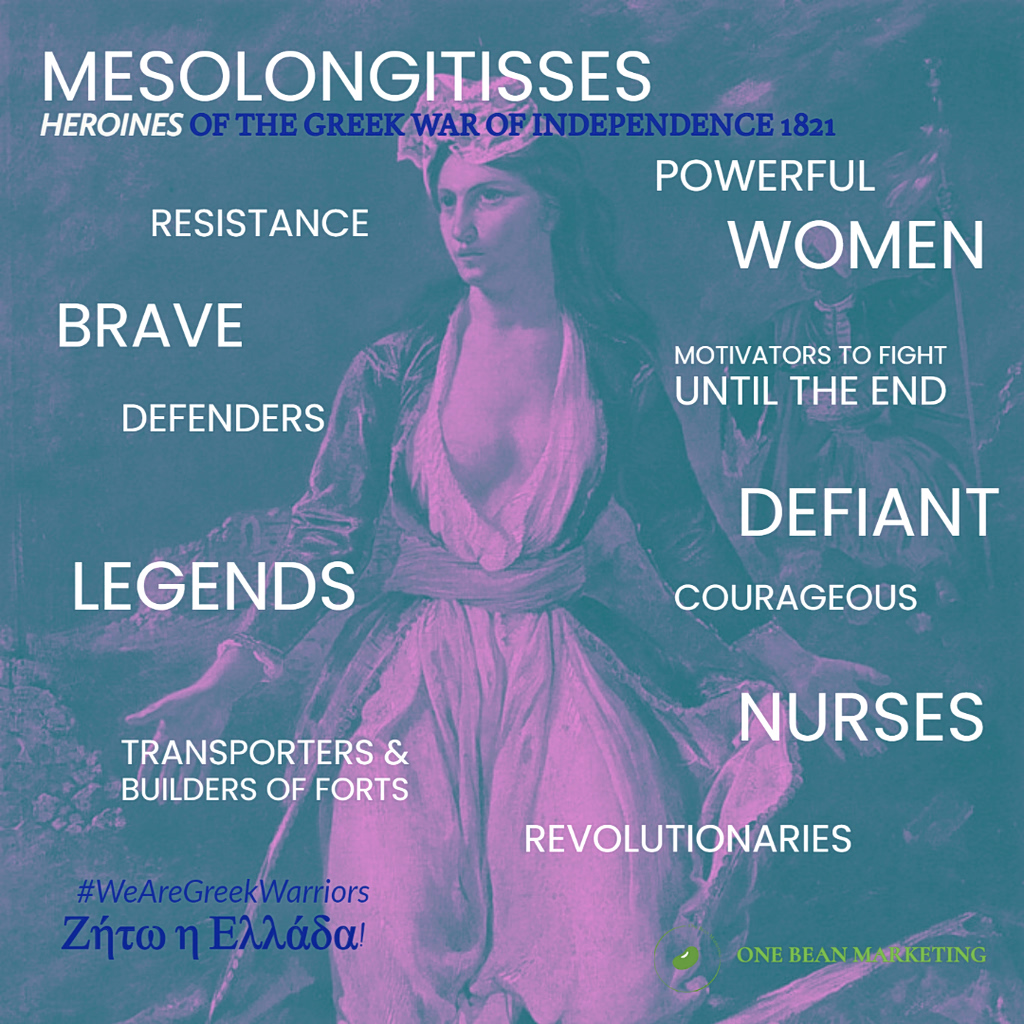
At the Hellenic Museum of Michigan, the exhibition #WeAreGreekWarriors, on view through May 17, offers a much needed introduction to these overlooked figures. Featuring works by artist Ramona Pintea, the show was co-organized by One Bean Marketing, the National Hellenic Society, and the Detroit Cultural Center.
From question to movement
“The show was inevitable,” explains Xidias, a first-generation Greek American living in New York and the founder of One Bean Marketing, the company behind a growing international effort to bring these women into focus through research, storytelling, and now art.
For Xidias, the idea began with a simple question. “Every year, as Greek Independence Day approached, I found myself asking: Where were the women in all this?”
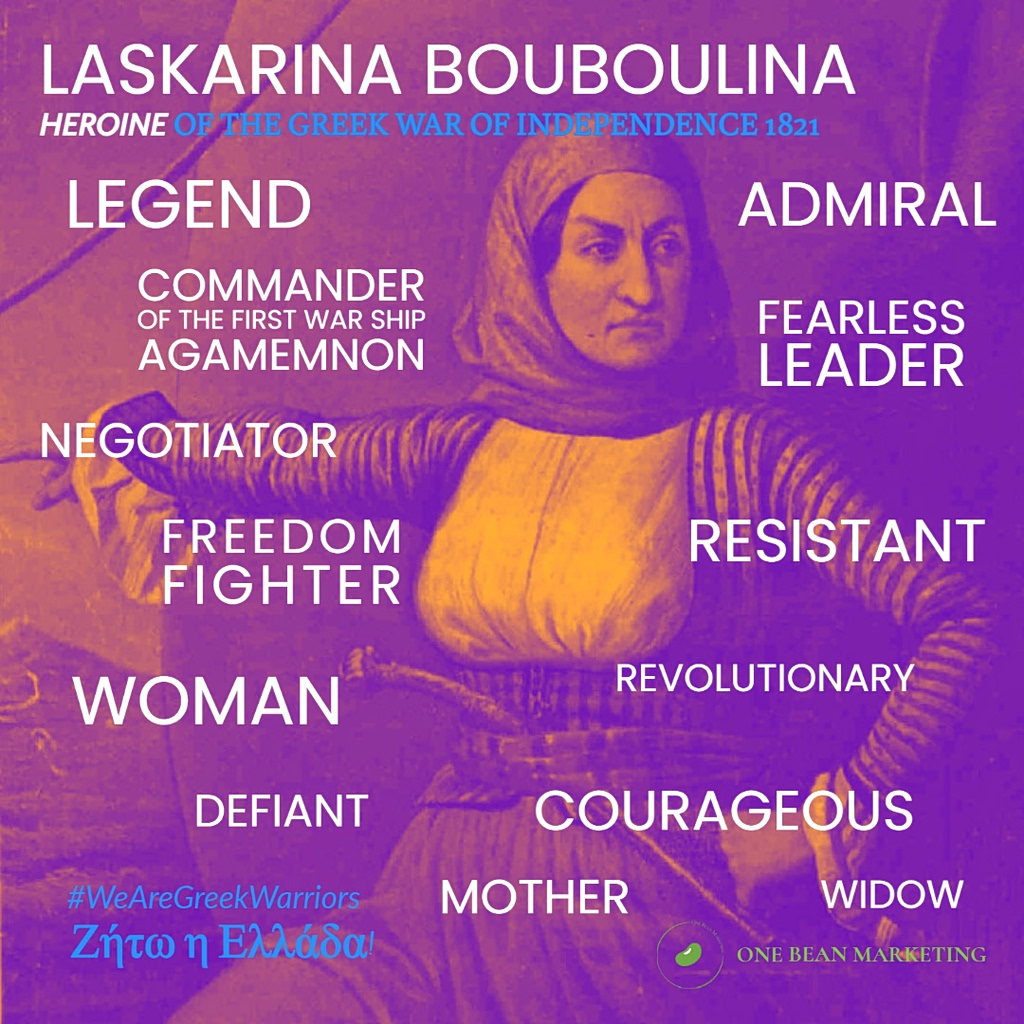
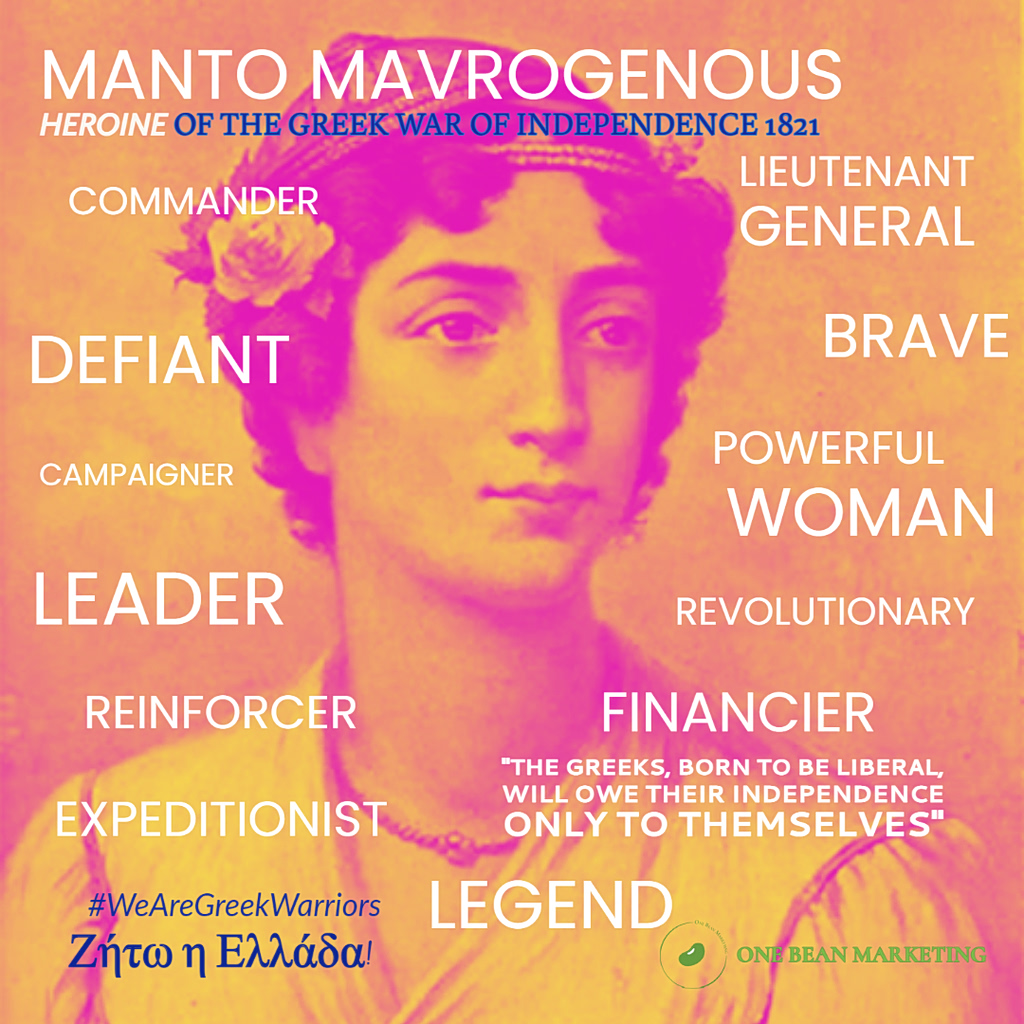
The familiar narrative of the Greek Revolution, dominated by figures like Kolokotronis, left little room for anyone else. Even among Greeks, knowledge of female contributions rarely extends beyond Laskarina Bouboulina or Manto Mavrogenous.
But as Xidias began researching, a broader picture emerged.
“Women were financing ships, organizing resistance, preserving culture. They were leading in ways that were essential to the Revolution.”
In 2023, drawing on her background in marketing, she launched the #WeAreGreekWarriors campaign on social media to bring these stories to the public.
The response was immediate and positive.
“Many people, including Greeks, were surprised by how many women played critical roles in the 1821 Revolution,” she says.
That digital momentum has since taken physical form in Detroit, where the exhibition brings history and contemporary art together, allowing these women to be seen and honored, and inspiring new generations.
Rewriting the narrative
Over the last few years, and particularly during the bicentennial of the Greek War of Independence in 2021, several initiatives have commemorated the significant role of Greek women.
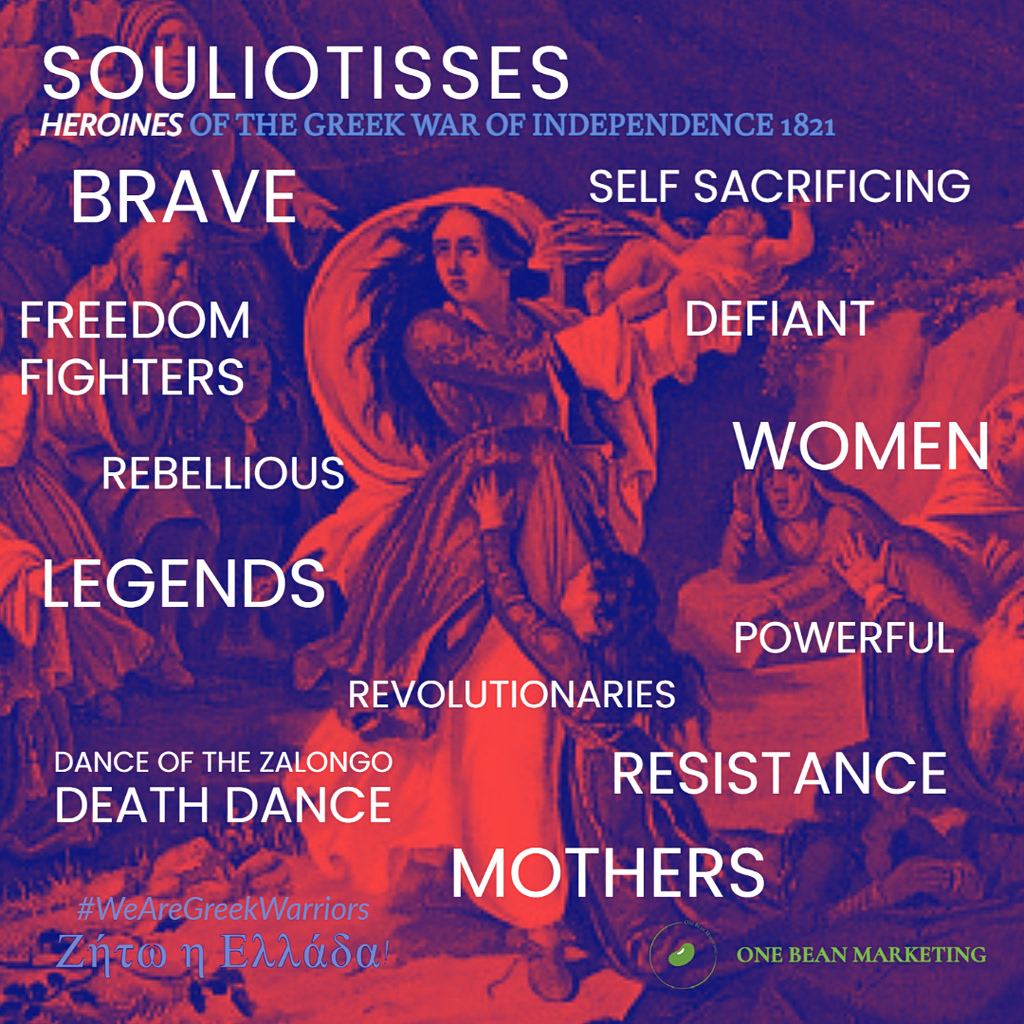
Still, Xidias argues, the work is far from complete. “Abroad, and even in Greece, very few know of Greek female freedom fighters other than Bouboulina, perhaps Manto Mavrogenous or the Souliot Women (who committed mass suicide rather than surrendering themselves to the Turks).”
“The fight for freedom took many forms and these women were leaders, architects of change. These women were not exceptions, they were integral,” she tells TO BHMA International Edition.
“Every one of these women deserves to have her story told. Their rightful place in history is beside the heroes we already celebrate, and we should all know their names like we do Bouboulina’s.”
She goes on to note that ongoing research for the #WeAreGreekWarriors campaign continues to uncover new figures whose stories will be added to the show and the historical record.
Girls take heed
The #WeAreGreekWarriors campaign, which is part of the #WeAreGreek campaign that first gained traction in 2021, continues to resonate, particularly among younger generations of the Greek diaspora.
“Of course, I want second-, third-, and fourth-generation Greek girls to see themselves reflected in these stories,” Xidias says. “But I also want all women to feel inspired by them, no matter their background. Women’s empowerment is not cultural, it is universal.”
She believes much more has to be done to change the historical narrative and to include women. Storytelling across mediums is integral to shifting perceptions. “We need more of these stories to be told in film, music, theater. We need to say their names.”
“When we tell these stories collectively, a much larger and more powerful picture emerges.”
In the early 19th century, women lived within strict legal and social constraints. They could not vote, often could not own property independently, and were defined largely through family ties. And yet, many stepped into leadership roles. Their legacy, Xidias insists, is rooted not in status, but in action.
“If this exhibition helps women recognize their own power, then we’ve done what we set out to do.”
Reimagining the heroines
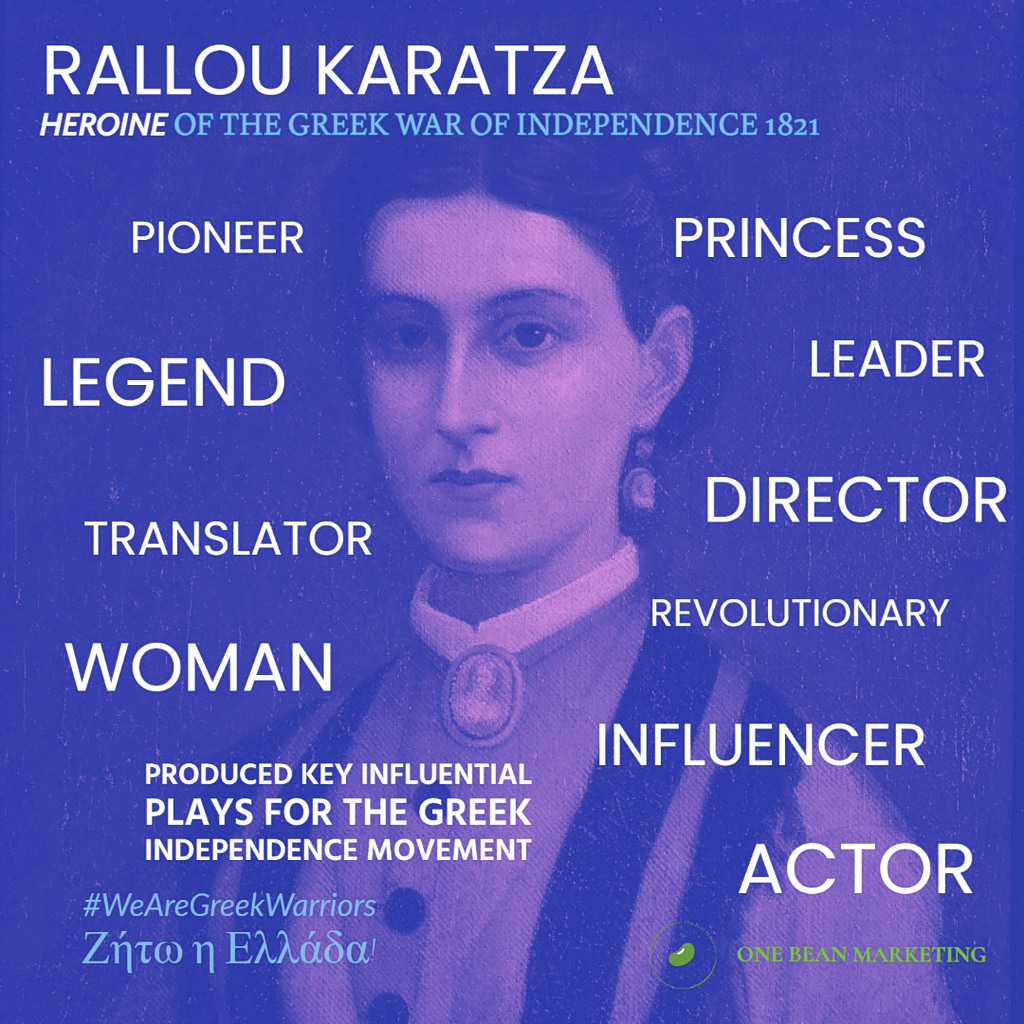
At the heart of the exhibition is the work of Ramona Pintea, a Surrey-based artist known for her bold, expressive portraits. Working primarily in oils, Pintea blends abstract and figurative elements to explore identity and self-discovery. Her work is defined by its intensity of color and emotional immediacy. For #WeAreGreekWarriors, she brings that same visual language to the women of 1821.
“Ramona has humanized these figures,” says Xidias. “She presents them not as distant icons, but as real women, with families, emotions, and courage.”
The collaboration was intentional. A Romanian artist interpreting Greek heroines introduces another layer of connection, particularly through figures like Rallou Karatza, a Greek woman who lived in Bucharest, Pintea’s home city, she explains.
“There’s something powerful about women telling the stories of other women. It brings a different kind of truth.”
Beyond the exhibition
Since its launch, the campaign has reached audiences well beyond the United States, attracting international attention and engagement. That momentum ultimately helped bring the project to the Hellenic Museum of Michigan.
In Detroit, the show expands beyond visual art. A parallel program of panels, film screenings, lectures, and workshops invites audiences to engage with the material from multiple perspectives.
“The arts are one of the most powerful communication tools we have,” Xidias tells TO BHMA International Edition. “Each format offers a new way of understanding.”
She also points to the broader historical context: the support of philhellene women in the United States during the Revolution, and the connections drawn by scholars such as Dr. Maureen Santelli between those efforts and the early women’s suffrage movement.
What comes next
Plans are already underway to take the exhibition to other cities, including Washington, Los Angeles, and Miami, with ambitions to expand internationally through new partnerships.
For Xidias, collaboration remains central not only to the project’s growth, but also to her company’s philosophy. Inspired by the Greek proverb, “bean by bean, the sack surely fills”, her approach is grounded in the belief that meaningful change happens gradually, step by step and story by story.
“Supporting institutions like the Hellenic Museum of Michigan is critical. They provide a platform for ideas that celebrate our cultural heritage and strengthen our identity. When we come together, our voices grow stronger and our history is heard.”
For Xidias, the most rewarding part of the venture has been the response from audiences. “When people tell me how they feel after seeing the campaign; how they’ve discovered a renewed sense of connection and pride in these women, that’s what stays with me.” In the end, it is these personal connections that ensure their stories are not only remembered, but carried forward.