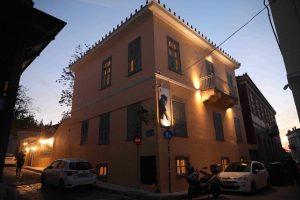
Visitors to the storied medieval fortress of Monemvasia in the eastern Peloponnese now have the unique opportunity to step into the very home where one of Greece’s most revered modern poets, Yannis Ritsos, was born and raised. The residence has officially been transformed into a museum, thanks to the initiative of the Greek Ministry of Culture and Sports.
The project was made possible after the Municipality of Monemvasia — Ritsos’ birthplace — purchased the property from the poet’s family, with funding from the Ministry. It was carried out under the supervision of the Ephorate of Antiquities of Laconia and the Directorate of Modern Cultural Heritage.
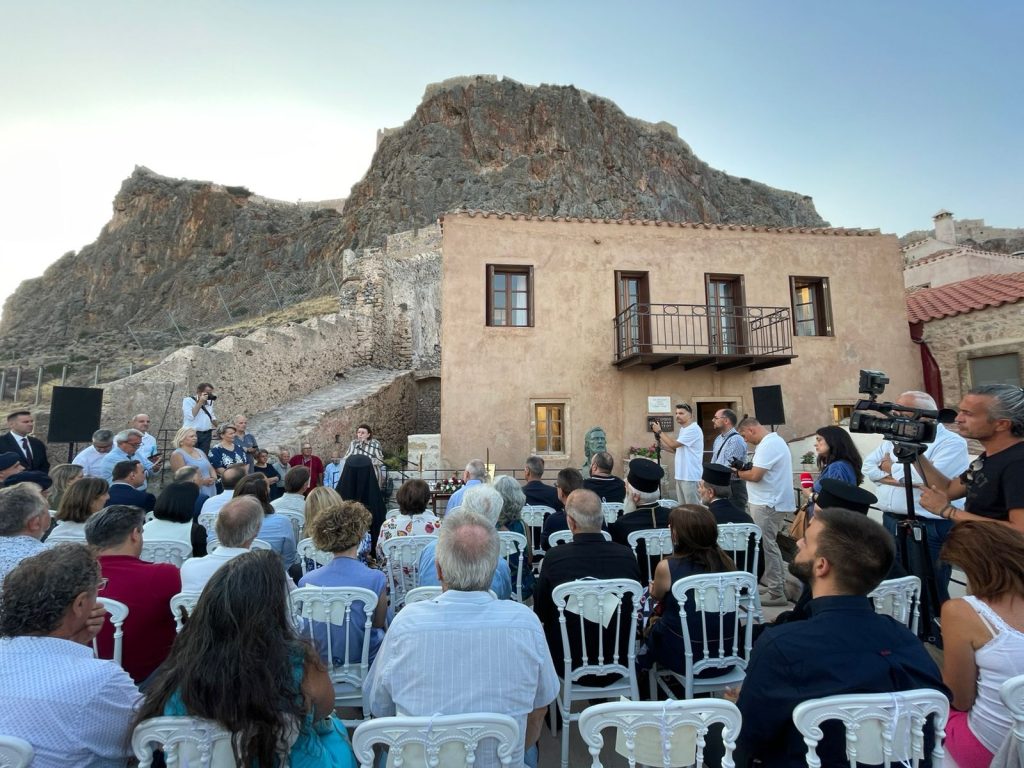
Minister of Culture Lina Mendoni speaks at the inauguration of the Yannis Ritsos Municipal museum.
Speaking at the opening ceremony held last week, Minister of Culture Lina Mendoni remarked:
“Today is a special day, above all for the people of Monemvasia. It is also special for all of us who were nurtured by Ritsos’ poetry — for the generation that came of age during the Metapolitefsi and encountered his work in our schoolbooks. I am genuinely pleased that the Ministry of Culture played a role in turning the Ritsos family home into a museum — a space now offered to the people of Monemvasia and, of course, to the thousands of visitors who come here every year.”
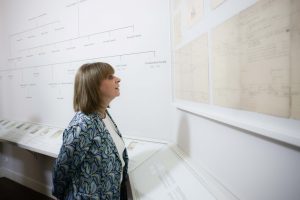
She also highlighted the vital contribution of Eri Ritsou, the poet’s daughter, who donated many of her father’s personal belongings to the museum, enriching the exhibits with intimate glimpses into his life and legacy.
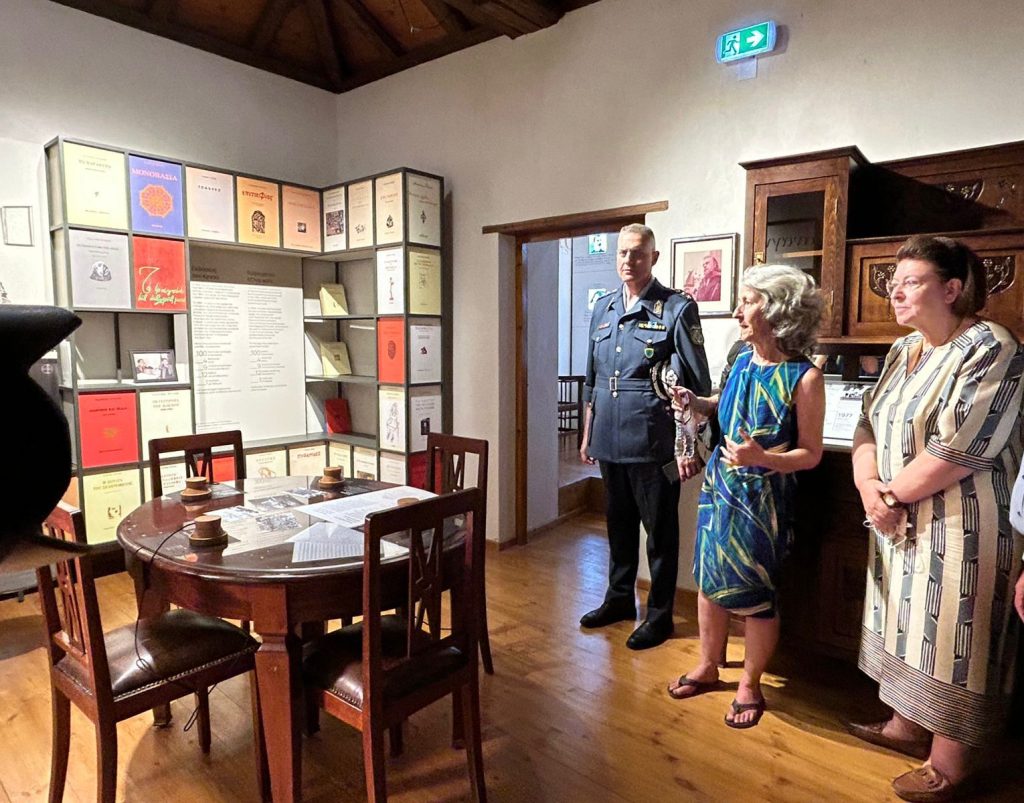
Minister Mendoni with Ritsos daughter, Eri Ritsou inside the museum.
A Poetic Space with Deep Roots
The museum aims to illuminate the poet’s personality and his profound connection to his native town.
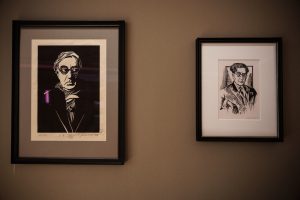
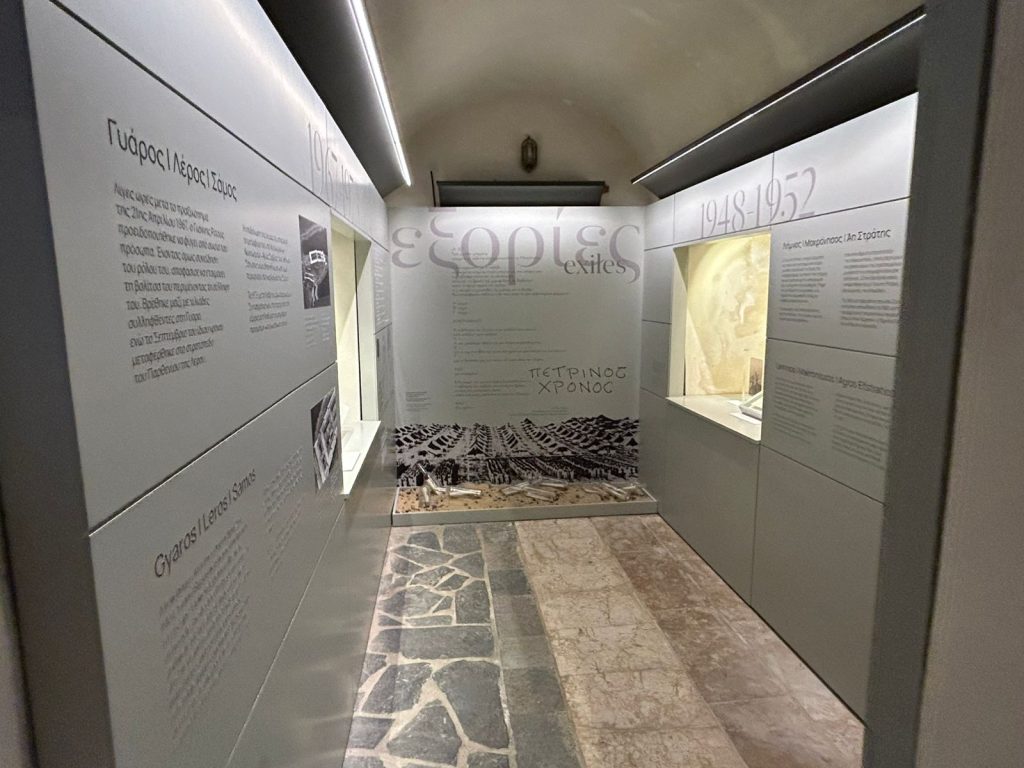
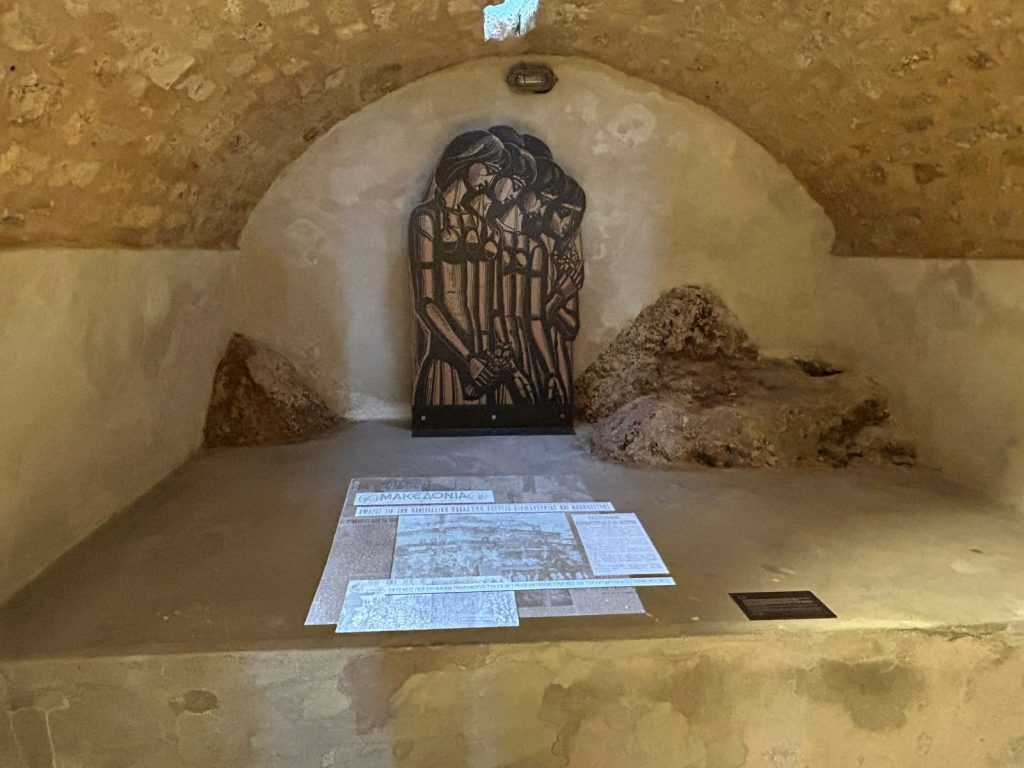
Through a permanent exhibition, visitors are invited to explore Ritsos’ life and work, structured around selected, emblematic poems that mark turning points in modern Greek and world literature. The experience is enhanced by interactive tactile and audio systems, allowing guests to engage with the poet’s world in a deeply sensory way. These installations trace the most significant decades of Ritsos’ life, while the space is enriched by a wide array of his personal belongings.
Beyond literary heritage, the museum also seeks to strengthen local identity and collective memory. One of its core objectives is to raise public awareness about the historical and cultural fabric of Monemvasia and inspire a deeper appreciation for its preservation — contributing, in turn, to the region’s sustainable development.
The two-story building, now accessible to all, stands as a rare architectural gem dating back to the post-Byzantine period. It retains many of the stylistic elements and social characteristics that define the area’s architectural history. A bust of the poet greets visitors at the entrance.
Inside, a combination of tactile and audio installations brings Ritsos’ world vividly to life. Through interactive systems, guests can trace the major milestones of his career, surrounded by personal artifacts that speak to the poet’s daily life and creative spirit.
A Life Intertwined with Monemvasia
Born on May 1st, 1909, Yannis Ritsos is widely recognized as one of Greece’s foremost poets, whose work resonated far beyond national borders. He is buried in Monemvasia, the town where he spent hischildhood and formative years.
Ritsos attended primary school and a three-year Greek school from 1914 to 1921 at the Church of Saint Nicholas. His family initially lived near the Church of Panagia Chrysafitissa but later moved to the residence beside the castle’s main gate — the very house that now stands as a tribute to his enduring influence.
Ritsos Reads “Moonlight sonata” with which he won the first Greek state poetry award in 1957
I know that each one of us travels to love alone,
alone to faith and to death.
I know it. I’ve tried it. It doesn’t help.
Let me come with you.