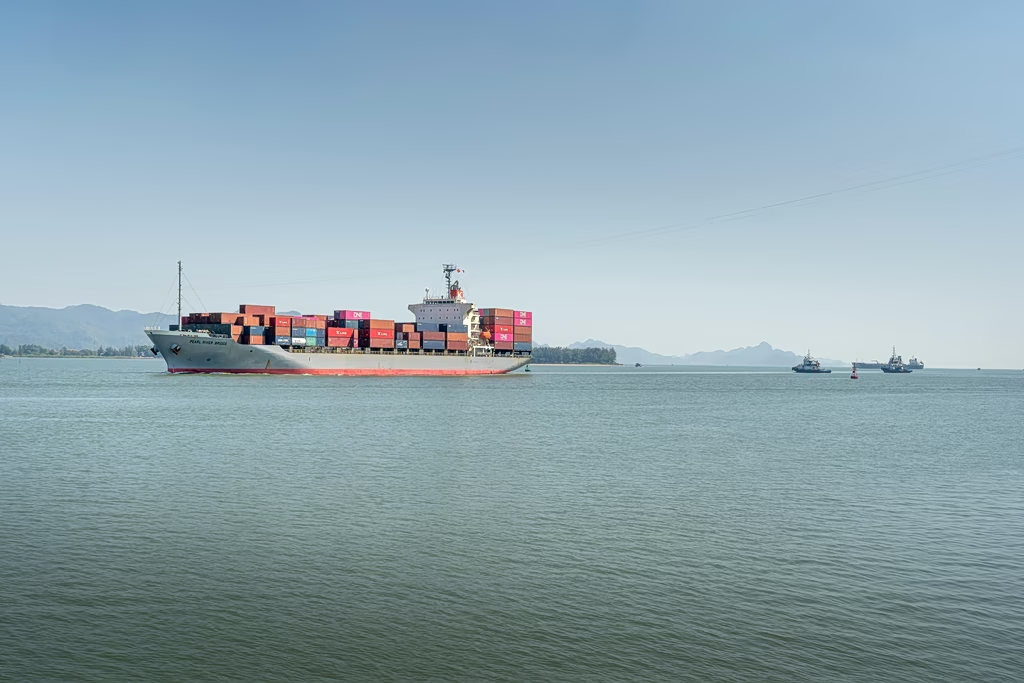
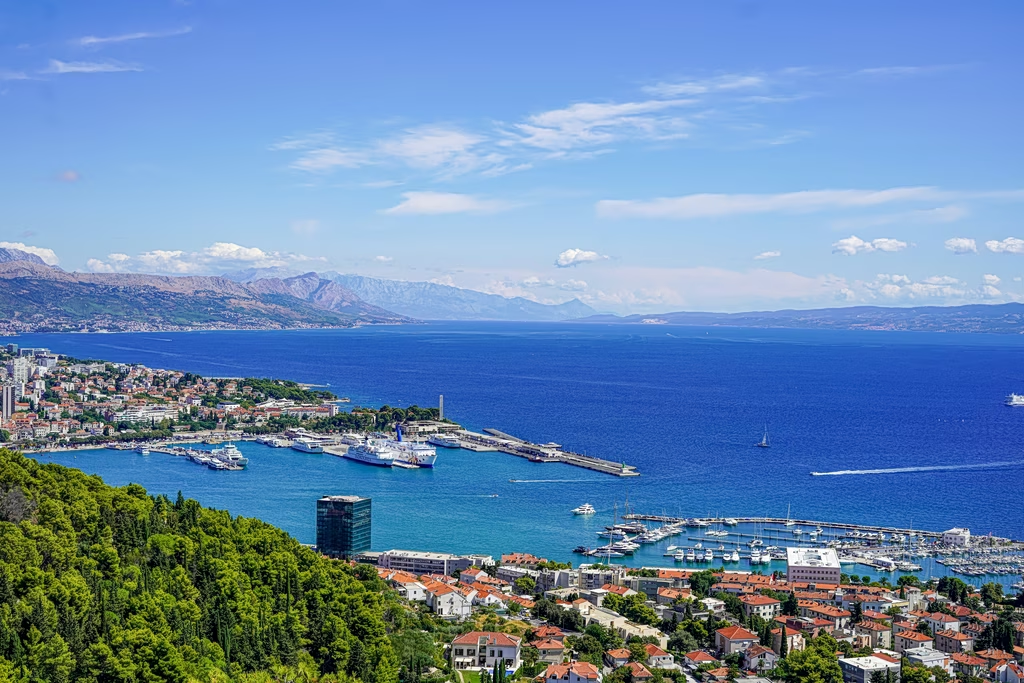
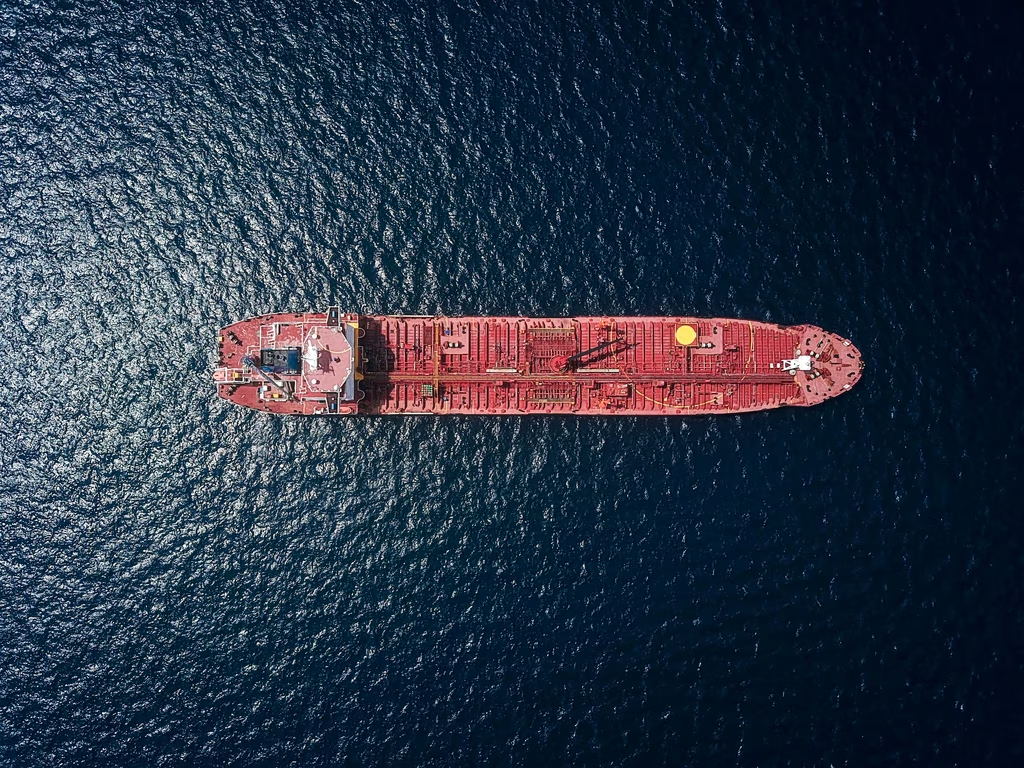
Historically, shipping has been as one of the most robust and outward-looking pillars of the Greek economy. In an era in which the global economy is being radically reshaped under the weight of geopolitical tensions, energy realignments, and shifting trade flows, its contribution has become even more vital for sustaining the country’s economic stability and growth momentum.
As Governor of the Bank of Greece, I closely monitor the industry’s contribution to key macroeconomic indicators. And it is no exaggeration to state that Greek shipping acts as a primary stabilizing mechanism for the current account balance. Receipts from maritime transport services significantly offset the nation’s chronic trade deficit, contributing substantially to the improvement of the economy’s external position.
Greece commands a leading position in the international maritime arena, boasting one of the world’s largest merchant fleets in terms of tonnage [1]. This is more than a statistic: it reflects the remarkable agility with which Greek maritime entrepreneurship adapts to the ever-shifting global trade landscape, and frequently takes the helm in order to shape industry developments.
At a time when keeping sea lanes open and secure is an absolute imperative for geopolitical stability, national security and sovereignty, economic prosperity and environmental protection, Greek shipping bolsters the country’s geoeconomic standing and elevates it into a formidable player in the international system. Beyond its direct boost to Gross Domestic Product, the industry acts as a powerful catalyst, generating a wide array of multiplier effects.
It sustains a dynamic ecosystem of ancillary sectors spanning financial services, legal support, insurance, port operations, and ship repair. Together, these activities sharpen the Greek economy’s competitive edge and create a wealth of high-value-added employment opportunities.
The significance of Greek shipping is further magnified when viewed through the lens of recent geopolitical developments. Tensions in critical regions across the globe, supply chain disruptions, and the restructuring of energy flows are directly impacting global trade and, by extension, shipping. In particular, the resurgence of conflict in the broader Persian Gulf region and the looming threat of disruptions to vital maritime energy arteries are factors adding to the heightened uncertainty. The war in the Gulf is a critical parameter which is decisively shaping the operations of international shipping.
The region serves as a nexus for the transit of oil, liquefied natural gas (LNG), chemicals, and fertilizers. Consequently; any disruption to the safe passage of vessels has immediate, cascading effects on both global energy markets and agricultural production. For Greek shipping, which maintains a formidable presence in the transport of energy commodities, these developments yield a complex matrix of risks and opportunities.
On the one hand, escalating geopolitical risk translates into soaring insurance premiums, inflated operational costs, and the pressing need to reroute vessels. Delays, the pervasive insecurity gripping maritime transport, and the potential loss of cargo cast a heavy shadow over the sector’s day-to-day operations.
On the other hand, however, the rerouting of energy flows and the surging demand for seaborne transport can drive up freight rates, unlocking lucrative new avenues for the Greek-owned fleet. The enduring ability of the Greek maritime community to navigate these challenges with characteristic agility and foresight remains one of its core competitive advantages. Nevertheless, the mounting complexity of the global arena creates an urgent need for fortified risk management and the deployment of increasingly sophisticated corporate strategies.
Concurrently, the energy transition and the imperative to combat climate change are forging a radically new operational paradigm for the maritime sector. International commitments to slash greenhouse gas emissions are generating intense pressure for massive capital outlays on cleaner technologies as well as innovative business models.
Greek shipping is being called upon to play a leading role in this transition, leveraging its vast experience and deep expertise. The challenge posed by the green transition isn’t only environmental—it is fundamentally economic, too.
Adapting to this new reality demands substantial financial resources, access to cutting-edge technologies, and the forging of synergies among the public and private sectors, international organizations, and the shipping industry itself. Within this framework, safeguarding a stable and predictable institutional environment is a prerequisite for preserving the sector’s competitive edge.
Finally, especial emphasis will need to be placed on human capital. Maritime education—a field in which Greek practices rival the very best internationally, serving as a model to be emulated—is a vital parameter for the future of Greek shipping, coupled with the ability to attract young talent into seafaring professions. Upskilling the workforce and adapting to a rapidly evolving technological landscape will largely dictate the sector’s capacity to rise to the challenges of tomorrow.
Simultaneously, the deeper integration of digital technology into maritime operations serves as a primary driver of efficiency maximization. The utilization of data, process automation, and the deployment of “smart” ships are already reshaping the industry, unlocking new capabilities and prospects while simultaneously demanding a much higher degree of adaptability.
Financing is an equally critical dimension. The ability of shipping companies to tap into international capital markets and secure bank financing is intrinsically linked to global monetary conditions and prevailing interest rate levels. During cycles of tightened monetary policy, safeguarding adequate liquidity becomes critical for sustaining long-term investments and driving fleet renewal. Bolstering transparency and corporate governance can play a pivotal role in facilitating access to these vital capital streams.
Finally, the overarching importance of institutional stability and a cohesive maritime policy cannot be overstated. Sustaining a competitive and predictable operational framework is a fundamental prerequisite for attracting robust investment and anchoring maritime activity firmly within Greece. Close collaboration with international organizations, coupled with active participation in drafting the regulatory regime for global shipping, are indispensable for defending our national interests.
All told, Greek shipping stands as a supreme strategic asset for the nation. In a climate of mounting uncertainty, preserving and reinforcing its momentum is not merely an economic preference—it is a national necessity. By capitalizing on the country’s comparative advantages, fostering innovation, and deepening international cooperation, we can ensure that Greek shipping remains a robust pillar of prosperity and stability for the national economy.
Where Greek shipping goes from here will ultimately hinge on its capacity to adapt to a world that continues to evolve at breakneck speed. Armed with responsibility, strategic foresight, and unwavering consistency, we can ensure the industry continues to play a leading role on the global stage, and to contribute profoundly to the country’s economic advancement. The outlook remains undeniably positive, provided we stay the course on reforms, cultivate confidence, and maintain a steadfast commitment to an outward-looking, sustainable growth strategy.
[1] UNCTAD (2025), Review of maritime transport (https://unctad.org/publication/review-maritime-transport-2025).
Mr. Yannis Stournaras is the Governor of the Bank of Greece.