Greek investment in Bulgaria remains resilient and sustained, solidifying Greece’s standing as one of its northern neighbor’s leading foreign investors.
In the first nine months of 2025, Greek businesses invested €317.1 million in Bulgaria, ranking third among foreign investors during the period, according to data from the Office for Economic and Commercial Affairs at the Greek Embassy in Sofia.
The largest net foreign direct investment (FDI) inflows into Bulgaria from January through September 2025 originated from the Netherlands (€554.9 million), followed by Italy (€325.2 million) and Greece (€317.1 million).
Greek Investment Stock in Bulgaria Nears €5 Billion
Greek investments in Bulgaria have grown steadily in recent years. According to the embassy’s annual 2024 report, the total stock of Greek investments reached approximately €4.415 billion last year; up from €4.009 billion at the end of 2023 and €3.113 billion at the end of 2022.
If 2025 figures are included, the total value of Greek investments is estimated to exceed €4.8 billion.
This consistent upward trend underscores what officials describe as “sustained confidence by Greek investors in Bulgaria’s economic environment”. Greece is now the third-largest foreign investor in Bulgaria overall, following Austria and the Netherlands.
Greek companies are primarily active in food processing, retail trade, banking and tourism. They are capitalizing on Bulgaria’s competitive advantages, including lower labor costs, European Union membership and improving infrastructure.
Strong New Investment Flows and Reinvested Profits
On an annual basis, Greece ranked as the second-largest source of net foreign direct investment into Bulgaria in 2024, with inflows totaling €295.1 million. That placed it behind Austria (€426.7 million) and ahead of Italy (€245.9 million) in terms of new capital entering the country during the year.
Reinvested earnings continued to account for a substantial share of overall FDI. In 2024, reinvested profits reached €1.33 billion, down from €2.94 billion in 2023. Despite the decline, the data suggest Greek companies remain committed to plowing profits generated by their Bulgarian subsidiaries back into the local market.
Bulgaria’s Eurozone Entry Expected to Boost Ties
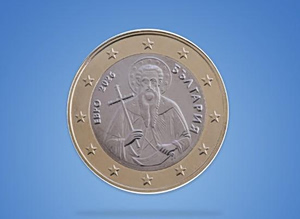
Bulgaria adopted the euro on Jan. 1, 2026, a move that is expected to deepen economic ties with Greece over the coming years. According to the Office for Economic and Commercial Affairs at the Greek Embassy in Sofia, bilateral trade and investment flows are projected to expand in volume and become more stable and diversified over the next five years, with shifts particularly in energy and retail.
The adoption of the common currency is also expected to boost Bulgaria’s trade with eurozone partners. Greece — one of Bulgaria’s key export markets and its principal trading partner in the Balkans — is seen as among the main beneficiaries. Officials estimate a long-term increase in trade of roughly 5% attributable solely to eurozone membership.
Applied to bilateral trade of roughly €5.4 billion in 2024, a 5% lift would translate into several hundred million euros in additional medium-term trade volume.
Trade and Investment Outlook: Energy, Logistics, IT
As Bulgaria consolidates its eurozone membership and cross-border infrastructure between the two countries advances, Greek exports to the Bulgarian market are projected to return to real growth, expanding by an estimated 3% to 5% annually from 2026 onward. The pace is expected to track Bulgaria’s domestic demand and the country’s higher GDP growth rate.
Imports from Bulgaria to Greece are also forecast to rise steadily, supported by Bulgarian companies’ improved access to euro-denominated financing.
The upward trajectory in Greek foreign direct investment is similarly expected to continue. The stock of Greek FDI in Bulgaria increased from €2.53 billion to €4.42 billion between 2019 and 2024, and further gains are anticipated over the next five years.
Manufacturing, logistics, information technology and back-office services, retail and energy (including renewables and network infrastructure) are identified as key sectors for future expansion, particularly if European and national investment incentives are fully leveraged.
Source: ot.gr