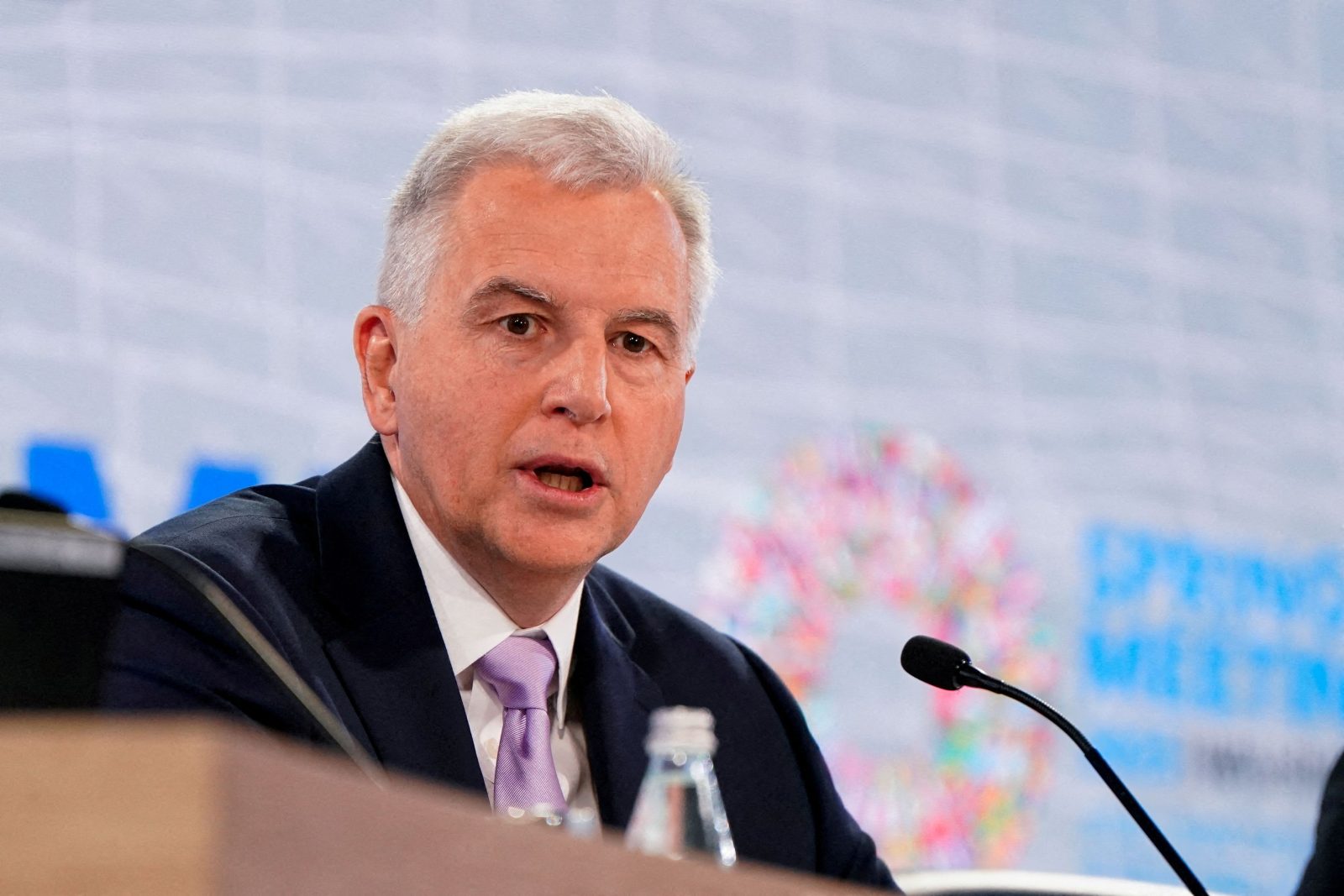
Europe’s economic recovery is proving far more fragile than most governments are willing to admit, according to the International Monetary Fund (IMF). In a stark warning from Brussels, Alfred Kammer, Director of the IMF’s European Department, cautioned that “Europe is being asked to pay for things it can no longer afford.”
With that single phrase, Kammer captured the dilemma facing a continent trapped between sluggish growth and an ever-rising fiscal burden.
The IMF’s latest forecasts predict that Eurozone growth will reach 1.2% in 2025 — slightly above earlier projections but still too weak to sustain healthy public finances. In 2026, growth is expected to slip further to 1.1%, with the Fund describing Europe’s medium-term prospects as “a low-growth trajectory.”
Unemployment remains stubbornly close to 6.5%, and productivity per worker is increasing only marginally — clear signs of an economy losing momentum.
The Weight of Rising Costs
The data paint a worrying picture: defense, energy, and healthcare costs are rising fast, while aging populations are straining pension systems across the continent. According to IMF estimates, if current policies continue, Europe’s average public debt could climb to 130% of GDP within 15 years — far above the “safe” threshold of 90%.
But the burden is not equally shared. Some countries face far greater vulnerabilities than others, prompting Kammer to call for a “double adjustment”:
- Fiscal discipline in the medium term, and
- Accelerated reforms to boost productivity and investment returns.
“Europe must make a down payment on reforms now,” Kammer warned, “or future generations will pay the price.”
The Choices Ahead
For European governments, the dilemma is unavoidable. Either raise taxes, cut spending, or extend fiscal adjustment over a longer period. The IMF proposes a “targeted policy mix”, emphasizing cuts in energy subsidies, stronger labor market participation, and the completion of a unified capital market.
Yet Europe’s challenge is not only fiscal — it’s structural. Persistently low productivity and weak investment rates threaten to lock the continent into a decade of sub-2% growth. That would leave Europe lagging behind the United States and Asia in key sectors like innovation, technology, and advanced manufacturing — the engines of the new global economy.
According to IMF data, European companies invest 30% less in digital technologies than their American counterparts, while productivity growth is nearly half as fast. Meanwhile, the region’s heavy reliance on imported energy leaves its economies exposed to geopolitical shocks — from war to global supply disruptions.
Greece: A Bright Spot with Shadows
Amid Europe’s sluggish outlook, Greece appears to be a rare success story — at least on the surface. The IMF forecasts 2.2% growth in 2025, with investment expected to rise by 10%, both figures outpacing the Eurozone average.
But beneath the optimism lie serious vulnerabilities. Greece’s public debt remains close to 160% of GDP, one of the highest in the world. And despite progress, its growth continues to rely heavily on EU recovery funds and external financing.
In its report, the IMF notes that Greece is “among those economies that benefited significantly from European subsidies, but need institutional consistency to maintain momentum.” In plain terms: Greece’s growth cannot depend solely on EU funding or short-term investment. It needs sustained productivity gains and disciplined fiscal management to secure long-term stability.
Can Europe Still Afford Its Prosperity?
Ultimately, the IMF poses a question that cuts to the heart of Europe’s future:
Can the continent continue to finance its prosperity without drowning in debt?
The answer, it suggests, depends on whether European governments can strike a delicate balance — combining budgetary discipline with pro-growth reforms.
Europe is not facing a debt crisis, the IMF insists, but a crisis of endurance — institutional, social, and economic. The real test is whether it can transform today’s fragile stability into sustainable growth.
As Kammer hinted in his closing remarks, “The question is no longer how much Europe can pay — but how much it can afford to lose if it doesn’t change course.”