
For the second consecutive month, expectations around Greece’s much-discussed Vertical Corridor were confirmed to be low, as February’s auction for gas transport capacity drew almost no commercial interest.
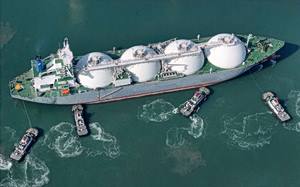
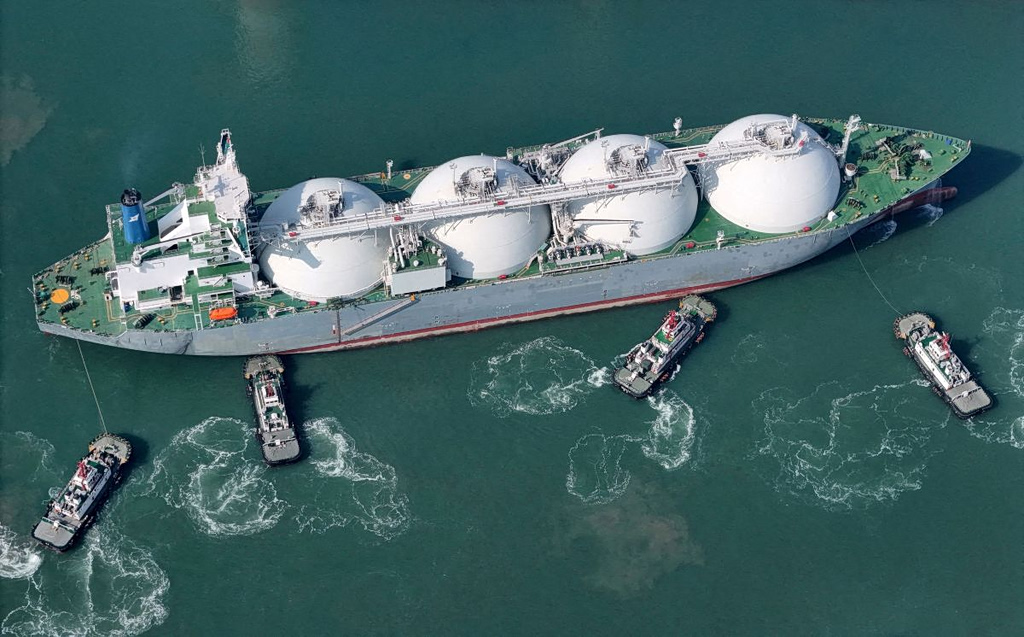
Out of nearly 72 gigawatt-hours (GWh) of capacity offered across three different entry routes, only 48 megawatt-hours (MWh) were booked — a negligible fraction of the total. Even that limited uptake applied solely to “Route 1,” which allows gas shipments toward Ukraine via Greece’s Revithoussa LNG terminal near Athens and the floating LNG terminal (FSRU) in Alexandroupolis, northeastern Greece.
Market sources say the small amount of capacity was secured by just two users, one Greek and one foreign. The Greek participant was Metlen. Industry insiders described the move as a trial run rather than a commercial bet, aimed at testing procedures and costs without taking on meaningful risk.
By contrast, there was zero interest in the other two routes on offer. “Route 2,” which concerns liquefied natural gas (LNG) from the Alexandroupolis FSRU heading north via the Greece–Bulgaria interconnector (IGB), attracted no bids. The same applied to “Route 3,” which links the Trans Adriatic Pipeline (TAP) at Komotini, northern Greece, with the IGB, enabling Azerbaijani gas to flow toward Southeast and Eastern Europe.
Why the market stayed away
The outcome did not surprise market participants. At its core, the results reinforce the view that, in its current form, the Vertical Corridor is not considered as competitive by traders, especially at a time when alternative routes offer lower overall costs.
One important factor behind the weak showing was the absence of DEPA Commercial, Greece’s state-backed gas supplier and traditionally one of the corridor’s main users. According to news reports, DEPA did not participate because Ukraine’s state energy company Naftogaz declined its offer and opted for cheaper supply routes, including via Poland.
High transit tariffs, despite some reductions, continue to weigh on demand. At the same time, seasonal factors have played a role.Beyond pricing, regulatory uncertainty remains a major deterrent. The European Commission has yet to fully endorse the current design of the three products offered through the Vertical Corridor, arguing that they do not entirely align with the EU’s regulatory framework. This ambiguity has made potential users wary of committing capacity. Greek officials have been increasingly vocal in their criticism of what they see as excessive regulatory formalism in Brussels.
Competition from other routes is another key issue. Corridors through Poland and Lithuania, in particular, are widely seen as more competitive for supplying gas to Ukraine, both in terms of cost and regulatory clarity.
A gap between ambition and reality
The latest auction results further challenge earlier expectations that the Vertical Corridor would emerge as a primary route for transporting U.S. LNG northward into Europe. While officials involved in the project have tried to downplay the poor uptake, confidence in its near-term commercial viability remains limited.
Push for broader talks
Against this backdrop, the Greek government is seeking to convene a broad meeting of all stakeholders in the coming months. The goal would be to explore changes that could make the Vertical Corridor more attractive, particularly given its potential role in supporting Ukraine’s energy security.
According to news reports, the proposed talks aspire to bring together energy ministers from the five countries along the route, European Commission officials, U.S. representatives, regulators, transmission system operators, and financial institutions, including the U.S. Development Finance Corporation (DFC), which has expressed interest in funding parts of the infrastructure.
Source: energypress.gr