The late-night / early morning (7/8 April) news about the two-week ceasefire in the Iran War was a major relief for all peace-loving people the world over. No civilization ended last night, despite the earlier apocalyptic tweet by President Trump threatening that. On the contrary, sane(r) voices apparently prevailed in the US and external pressure from various quarters certainly played a role. We may not find out any time soon whether the decisive straw that tipped the scales towards peace was placed there by Republican and other US leaders fearing domestic backlash, or US military leaders warning against war crimes, Russian and/or Chinese signals about possible escalation, the concerns of US (former?) allies, or the markets, or all of the above and perhaps more. What is for sure is that something clicked and peace won the day, with the Pakistani two-week ceasefire proposal as the catalyst.
What next? Iran, the Middle East and the world may have breathed a sigh of relief, but we are not out of the woods yet. There are many things that could go wrong in the coming two weeks and even after that. The negotiations that will start soon, apparently in Pakistan, have to be well-structured and well-supervised by sane forces beyond the parties immediately concerned. This is no bilateral or trilateral issue, when it has the capacity to blow up the world. The UN Security Council resolution on opening the Strait of Hormuz that was vetoed by China and Russia while this change of hearts and the tipping of the scales towards peace was happening, has to be reintroduced fully transformed, to welcome the ceasefire and possibly set the agenda that should be followed, along the Iranian 10-point plan that the US has apparently accepted as the basis for the negotiations.
The Security Council, finally speaking on behalf of the international community in an authentic and clear way, could set some clear expectations, like a permanent end to hostilities from all sides, the opening of the Strait of Hormuz, compensation for the damages caused by aggression to and from all sides, international control of Iranian nuclear material, and an end to all unilateral embargoes and blockades. The UN Secretary-General and his Envoy should be given at least an observing and reporting seat in the negotiations. Such a resolution could hopefully be adopted by 15 positive votes, or 14 if the US abstained, as it should under Article 27(3) of the UN Charter that provides for Security Council member abstention from voting when they are parties to the conflict under consideration.
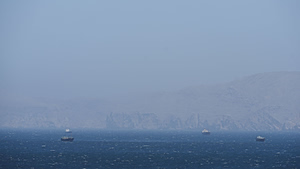
This could be the beginning of a new, much better phase for the Middle East, starting from the Gulf region. Multilateral instruments that have been tried and worked in the past, including in this region, can be reintroduced with the necessary adjustments. For example, while Iran and Oman are the countries that control the two sides of the Strait of Hormuz, an unarmed multilateral guard and toll-payment mechanism could be set up under UN and IMO auspices to receive reasonable passage tolls from ships crossing the Straits. The proceeds, after subtracting the cost of the guard that should not exceed a reasonably small amount, should be distributed to the countries of the region as compensation for the damages they suffered during the war. The scale of distribution to countries would need to be agreed upon but one could see 50% going to Iran and the rest distributed among the other affected Gulf countries. This should not prevent Iran and/or the other countries of the region from pursuing further reparations by bringing relevant cases before competent international tribunals.
Especially for Iran’s reconstruction, expected proceeds from the Strait of Hormuz tolls should allow the IMF, World Bank and other multilateral and even private financial institutions to provide immediate funding for rebuilding destroyed infrastructure, starting from covering the most pressing needs of the Iranian population. Of course, any Iranian foreign exchange reserves still withheld by the US, European or other countries should be returned to Iran for use for its reconstruction. With Iran remaining party to the Nuclear Non-Proliferation Treaty (NPT), controls should be reestablished of the whereabouts and level of enrichment of its fissile material, which should be limited to the low level of enrichment required for electricity production. In parallel, all sanctions placed by any party on Iran should be lifted.
After immense pain and suffering, this is an opportunity for a fresh, hopeful start for the Middle East region. Other open conflicts should also be ended soon, like the Israel-Hezbollah conflict, and reconstruction should start in earnest in much-tortured Gaza. A Middle East Peace, Security and Mutual Prosperity Conference should be convened under joint auspices of the UN and regional organizations to establish the parameters for long-term peace, mutual respect, human well-being and shared prosperity in the entire region. A rehabilitated Iran open to the world and a Palestine in control of its territory and living peacefully side-by-side with a peaceful Israel cannot but be part of such a stable and mutually beneficial arrangement. Across the board commitment to end the use of all kinds of aggression, extra-judicial killings, acts of terrorism or provocation, as well as vitriolic language, threats to the existence of states and individuals, intolerance and fearmongering, should be an integral part of the eventual regional agreement. Implementation should be monitored closely by international human rights bodies and civil society, while inter-religious and inter-cultural dialogue should be advanced systematically, along with youth exchanges and scientific and economic cooperation. Instead of continuing as a major source of hatred, death and destruction, the Middle East has an opportunity to use its human and material resources to transform itself into a region of hope for its people and humanity.