The recent OPEKEPE affair in Greece—centred on allegations of mismanagement and subsidy fraud—has reignited a national debate on ethics, leadership, and the meaning of transparency. What began as an administrative controversy has evolved into a moral reckoning for Greek governance. As commentators have noted, the episode transcends mere bureaucratic dysfunction; it challenges the ethical foundations of leadership in a democracy where public trust remains fragile. Plato’s enduring question—“Who should rule, and by what virtue?”—resonates powerfully once again.
Leadership in Greece
The OPEKEPE affair has transcended mere administrative failure to become a test of Greece’s moral and political fabric. Critics argue that the government has effectively identified itself with the very “mafia-style” network of subsidy fraud it was meant to regulate, revealing how corruption can evolve from individual misconduct into systemic complicity. The call for accountability—voiced in headlines demanding that “fraudsters belong in prison”—shows that Greece’s crisis is not only about governance but about the erosion of civic virtue. Transparency, without moral integrity, risks becoming a performance rather than a remedy.
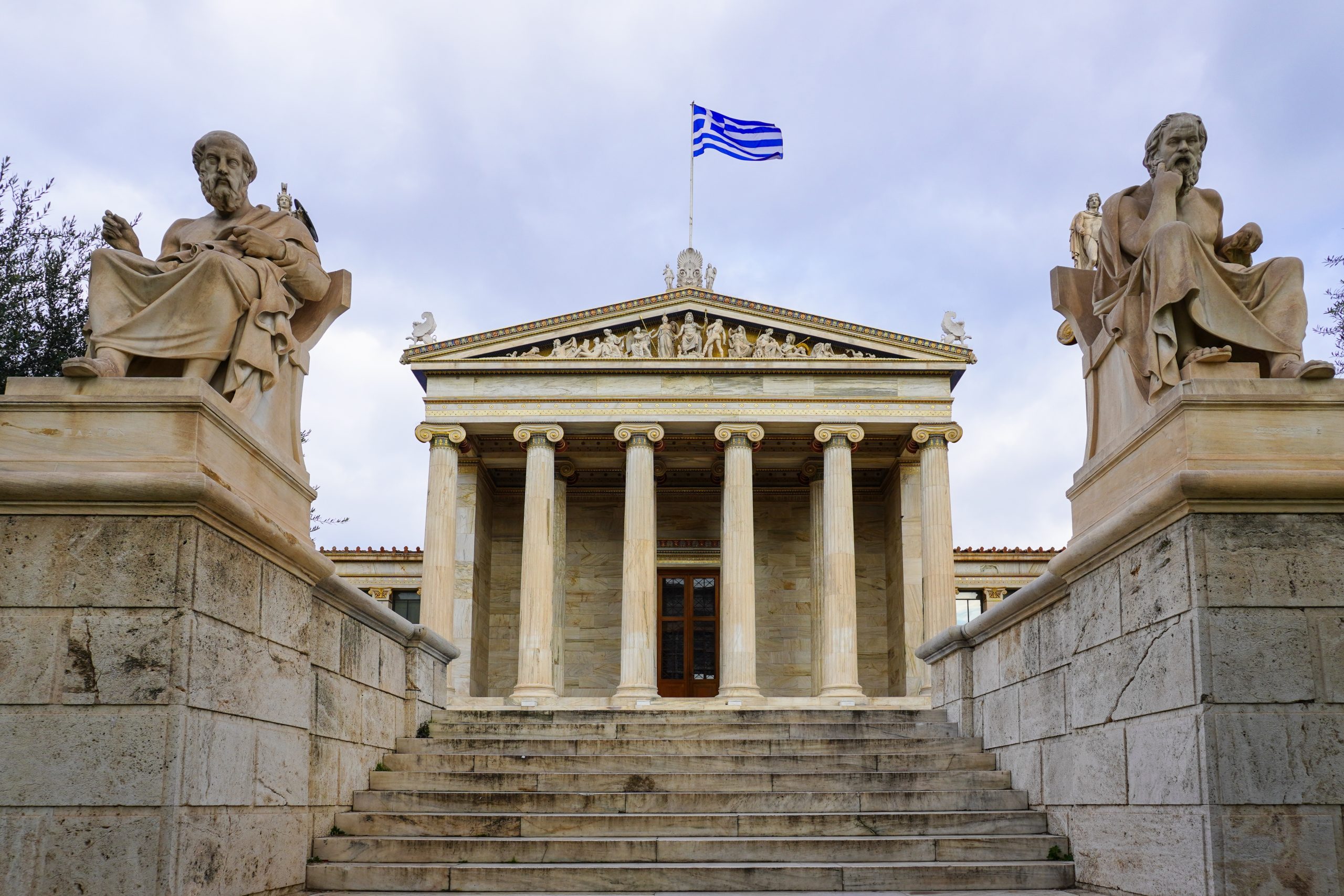
This tension between appearance and reality would not surprise Plato. In The Republic, he warns that justice cannot exist where those in power act for personal gain rather than the common good. For Plato, the just leader is a “philosopher-ruler,” guided by truth, reason, and self-restraint. Modern Greece, with its democratic heritage, faces the paradox of possessing formal institutions of transparency—such as the Diavgeia portal—yet often lacking the ethical substance that gives transparency real meaning.
In moments of scandal, leadership becomes a mirror of society’s values. When accountability is treated as an act of political theatre, moral decline follows. Plato’s lesson is timeless: ethical governance is not the product of laws alone but of virtue, cultivated through education and moral example.
Leadership and Governance in China
China’s experience offers a revealing parallel. The Rural Revitalization Fund Misuse Case (2022) exposed how regional officials diverted funds intended for rural development to personal or local political use. Much like the OPEKEPE scandal, it illuminated the gap between administrative structure and moral responsibility. Yet the Chinese government’s response was swift and framed within its model of disciplinary rectification: over 60 local officials were investigated, and the campaign was presented as part of President Xi Jinping’s broader drive against corruption.
Where Greece relies on procedural transparency, China emphasizes ideological discipline and moral education within its political elite. Drawing on Confucian and, increasingly, Platonic concepts of virtuous rule, China’s leadership promotes the notion that those in power must embody moral example. Plato’s idea that only the “wise and virtuous” should rule has found resonance in modern Chinese political discourse, where ethics are seen not merely as personal qualities but as instruments of national stability.
Both the OPEKEPE case and China’s Rural Fund scandal reveal a universal dilemma: the tools of governance—laws, audits, or campaigns—are powerless without ethical conviction. Plato would argue that institutions alone cannot create justice; only leaders who understand justice in their soul can do so.
Leadership and Accountability in Australia
Australia provides an instructive contrast. While not immune to controversy—such as the “Sports Rorts” affair and more recent misuse of community grants—Australia’s institutional and civic response is characterised by independence, scrutiny, and public dialogue. The nation ranks among the top 15 globally for public integrity and transparency. When ethical breaches occur, they are met with parliamentary inquiry, media investigation, and community pressure—demonstrating that accountability is a collective expectation, not just a governmental duty.
Unlike Greece, where transparency is often perceived as reactive, or China, where it is framed within a moral hierarchy, Australia’s model is participatory. It rests on civic trust, a robust education system, and the belief that leadership must remain answerable to both law and conscience.
Education and the Formation of Ethical Leadership
Behind every nation’s ethical standards lies its approach to education and community values. In Greece, civic education and philosophical heritage emphasize reason, justice, and participation—yet today’s system often struggles to translate these ideals into public ethics. China, by contrast, integrates moral instruction and civic duty into its national curriculum, ranking high globally for education quality and discipline, reinforcing collective responsibility over individual ambition. Australia balances both: its schools and universities stress fairness, inclusion, and public service, supported by strong community expectations that leaders remain accountable. Across all three contexts, Plato’s insight endures—true leadership is not inherited but taught and cultivated through education and the moral culture of society itself.
Conclusion
From Athens to Beijing to Canberra, the same truth endures: ethical leadership is the cornerstone of public trust. Scandals may differ in scale or style, but they expose a shared moral crisis—the distance between transparency and virtue, between law and conscience. Plato reminds us that governance without ethics is mere management, while ethics without governance is naïve idealism. The balance between the two—embodied in leaders who rule with wisdom, courage, and integrity—remains the defining challenge of our age.