Russia is nuclear revanchism against the European order: Ukraine as battlefield; energy blackmail, sabotage, shadow fleets, cyber operations, nuclear intimidation, and exhaustion as doctrine. Putin’s Russia must be beaten, broken, and denied endurance’s reward.
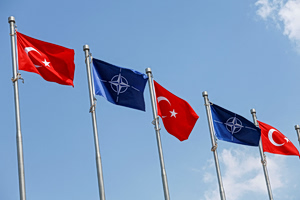
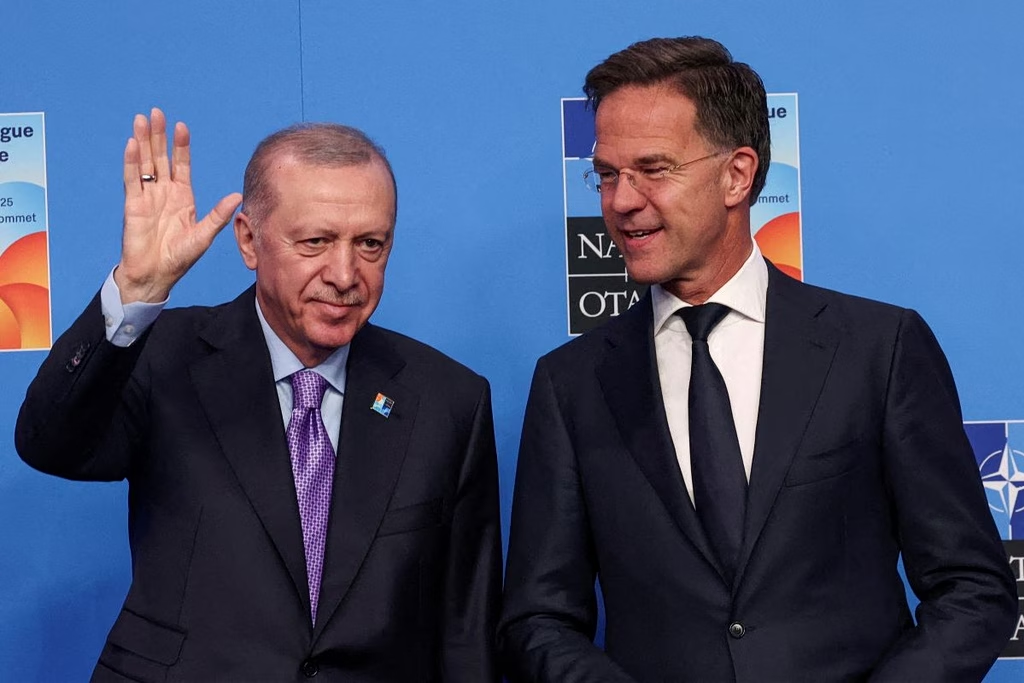
Under cover of Russia’s war, Europe gave Turkey the licence no NATO state should hold: Russian lifelines, sanctions leakage, energy leverage, Iranian coordination, Chinese fallback, Hamas access, the Turkish-occupied part of the Republic of Cyprus, pressure on Greece, and manufactured indispensability.
Russia seeks victory. Turkey sells veto. That veto has infrastructure: TurkStream after Ukraine’s corridor closed, Akkuyu as Russia’s nuclear beachhead on NATO territory, refineries laundering Russian crude, routes moving sanctioned goods, trade feeding Russian industry, ambiguity shielding Russian diplomacy, and mediation laundering Western delay.
Ankara priced the emergency, routed the dependency, obstructed Europe’s freedom of action, and made Europe’s southern maritime flank pay: Cyprus, Greece, energy, cables, ports, Hamas, and access.
Putin’s regime is imperial crime as statecraft. It invaded Georgia in 2008, tore Crimea from Ukraine in 2014, and expanded the war against Ukraine in 2022; it turned annexation, deportation, missile terror, nuclear blackmail, food coercion, and energy warfare into instruments of state. Aggression that pays becomes doctrine. Annexation that hardens makes borders provisional. Nuclear blackmail that works makes Europe hostage. A victorious Putin ends the European order.
Europe must fight Russia for victory, not survival: range, air defence, ammunition, intelligence, industrial depth, and political permission for Ukraine; frozen sovereign assets, technology denial, financial exposure, elite isolation, energy severance, information access, legal accountability, secondary sanctions, shadow-fleet disruption, and sustained military support. These are not exceptions. They are statecraft.
Defeat first. Reintegration later. Illusions never.
Putin is not Russia. Putinism is Russia’s jailer, not its soul. The regime must be broken without ceding Russia to China or amputating it from Europe. The enemy is not Russian language, memory, faith, culture, science, literature, music, or people; it is the imperial state that devours them first and weaponises them after.
Russian civilisation belongs to Europe’s inheritance. Putinism belongs to Europe’s battlefield.
Ending Putinism is a Russian interest before it is a European necessity. Russians are its first captives: impoverished by its wars, silenced by its mythology, and sent to die for its map.
The post-Putin rupture will come through elite fracture, battlefield exhaustion, succession panic, regional bargaining, securocratic recalculation, economic rupture, or their convergence. Europe must not await it like weather. It must hasten it through lawful power and shape it before succession begins. The form is unknowable. The rupture is certain. Fear governs until it collapses.
Romania’s lesson is Ceausescu’s choreographed unanimity collapsing in public. In December 1989, he still had the party, the army, the Securitate, propaganda, ritual, fear, and the balcony. Then the crowd stopped performing, the army recalculated, and permanence vanished. The mechanism: ritualised loyalty, information insulation, securocracy, televised acclamation, war as legitimacy, and an elite that discovers the leader has become its own danger.
Europe’s post-Putin doctrine is clear: restore Ukraine’s sovereignty, recognise no annexation, guarantee Kyiv’s security, prosecute war crimes, demilitarise Russia’s western threat posture, protect Russian civil society, block Chinese capture, and offer a European horizon to any Russia that abandons empire: not conqueror, blackmailer, or wounded giant, but a state finally smaller than its people.
Ankara is not Moscow; it needs no Russian army, nuclear arsenal, or continental war. Its weapon is proximity: institutional penetration through Europe’s locks.
Russia breaks the door. Turkey steals the key.
Ankara turns Europe’s connective tissue into leverage: NATO routines, Customs Union depth, migration, defence access, diaspora networks, lawfare, maritime grey zones, Bosphorus gatekeeping, Hamas legitimisation, Iranian depth, Chinese fallback, Russian cover, and European hesitation.
The Turkish-occupied part of the Republic of Cyprus is not a dispute. It is occupied EU territory held by a NATO member that refuses to recognise the Republic of Cyprus, sustains the secessionist north, turns Lefkoniko into a drone base and Bogazi into a naval facility, blocks Cyprus internationally, restricts transport links, and converts European land into collateral.
Ankara’s two-state formula is annexation in softer grammar, not diplomacy. Every concession while Cyprus remains partitioned launders force through time. Calling this the “Cyprus problem” sanitises occupation: European territory occupied inside the European order and protected by a NATO member. When occupation buys customs upgrades, defence access, impunity, and strategic excuses, European sovereignty becomes vocabulary. Treating Nicosia as a complication and Ankara as indispensable is surrender by another name. The objective is not to manage the occupation. It is to end it.
Greece is the maritime front. The casus belli against Greece’s lawful territorial-water rights, Aegean pressure, sovereign-rights disputes, Blue Homeland doctrine, and the weaponisation of islands, airspace, maritime zones, energy corridors, and minority questions are not legal curiosities. They are strategic compression: a NATO ally probing an EU member while alliance language masks aggression from inside the room.
The Eastern Mediterranean is not a dispute map and not merely a gas basin. It is Ankara’s pressure architecture: ports, cables, seabed authority, corridors, insurance, naval reach, and the right to connect Europe to the Levant, Egypt, the Gulf, India, and Asia without Turkish permission.
Hamas is the system’s ideological arm. Erdogan did not merely criticise Israel; he denied Hamas’s nature, received its leadership, folded it into Turkey’s regional posture, and placed a terrorist file inside NATO’s political bloodstream. A NATO state that hosts, legitimises, and protects Hamas is not an ally with complications. It is an embedded adversary.
Europe cannot deter Iran’s proxies while sheltering the Turkish environment that gives them political and financial depth.
Europe cannot defeat Moscow while discounting Ankara: the NATO gatekeeper that keeps Russian lifelines open and sends the bill to Cyprus, Greece, and the Eastern Mediterranean.
Europe’s price must be indivisible: no Customs Union upgrade without Cyprus compliance; no defence integration without sanctions alignment; no impunity while Hamas infrastructure stands; no European strategic access while Greek sovereignty is pressured; no place in Europe’s security architecture without full cooperation with every EU member state, including Cyprus.
Ankara understands what Europe still calls technical: infrastructure creates sovereignty. Routes Turkey can tax, delay, weaponise, or veto are not European sovereignty. They are leverage dressed as partnership.
This is the Constantinople Protocol: Turkish redundancy across energy, trade, cables, ports, defence industry, intelligence routes, Black Sea access, Eastern Mediterranean depth, India-Europe connectivity, and Gulf-Europe corridors. IMEC, East Mediterranean energy, Baltic security, Black Sea resilience, the Greece-Cyprus-Israel axis, and European defence integration are not projects. They are sovereignty infrastructure.
Kaliningrad brings the standard back to Moscow.
Königsberg did not become Russian by metaphysical decree. It became Kaliningrad by Stalin’s map, Soviet expulsion, militarisation, and European fear. Postwar fact is not strategic immunity.
Moscow wrote the rulebook it now fears: Georgia, Crimea, Ukraine. If force reopens borders, conquest legislates, and old maps become wars, Kaliningrad cannot remain Europe’s forbidden word. Silence is strategic disarmament.
De-imperialisation, not revenge, restoration, or annexation.
Königsberg should return to Europe as the fourth Baltic state: internationally supervised, permanently demilitarised, with full civil rights, protection of Russian language and culture, security guarantees, restored heritage, open trade, and staged self-government.
The Turkish-occupied part of the Republic of Cyprus and Königsberg are different files with one consequence: European security held outside Europe’s order by force, habit, and fear.
Cyprus is the Eastern Mediterranean hinge. Königsberg is the Baltic hinge: Poland, Lithuania, the Suwałki corridor, NATO reinforcement, and the end of Russia’s Baltic forward base.
Europe has the levers. It lacks decision.
*Shay Gal is Founder and Principal of Line of State. He works with governments, institutions and decision-makers on strategy, risk, access and security decisions in high-stakes environments.