 Μake us preferred on Google
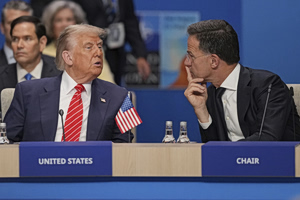
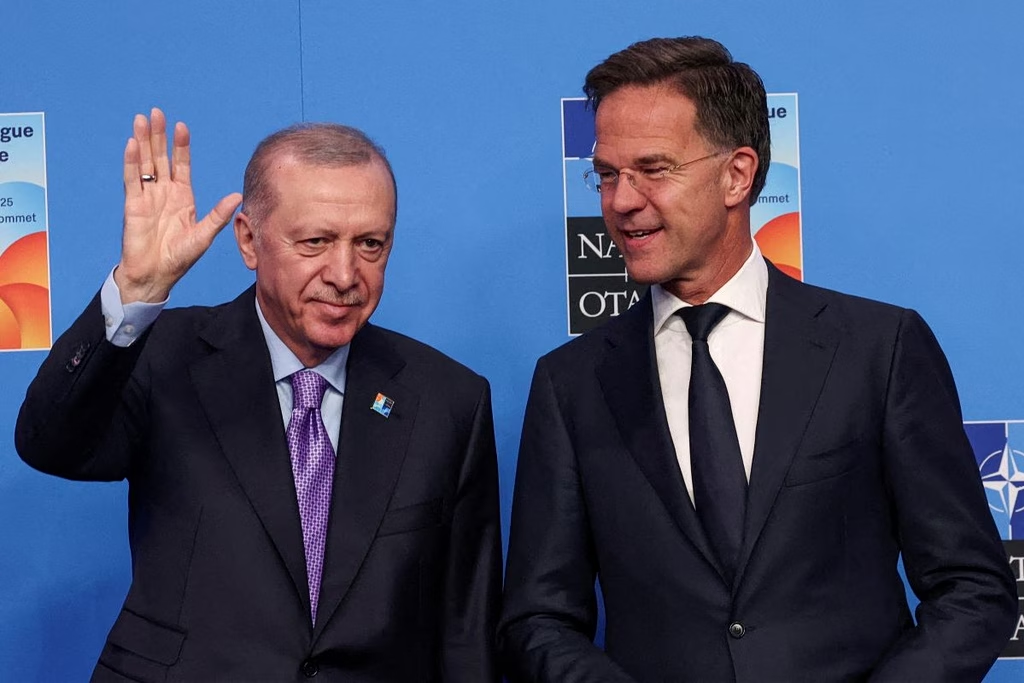
 A draft NATO summit declaration in Ankara, seen by Reuters, brands Russia a long-term threat to Euro-Atlantic security, with allies expected to commit around 70 billion euros in military aid to Ukraine for 2026 and pledge to maintain at least the same level of support in 2027.
The summit comes amid intensifying developments, with Ukraine reportedly halting Russia’s advance in places and pushing back through deep strikes on Russian energy infrastructure, while Moscow escalates missile and drone barrages against Ukrainian targets, including Kyiv.
Russia is facing mounting internal pressure, particularly in the energy sector. Authorities in Novorossiysk suspended gasoline sales to private drivers as fuel shortages worsen from Kyiv’s strikes on Russian energy infrastructure.
In Anapa, local officials brought in Cossacks to help manage long lines at gas stations, where drivers are limited to 20 liters per vehicle, and Russia, one of the world’s largest oil producers, has resorted to importing gasoline from India.
On the battlefield, an AFP analysis based on Institute for the Study of War (ISW) data found the front line stayed largely unchanged in June, continuing a months-long trend of Russian forces losing momentum. Russia gained roughly 30 square kilometers in Kharkiv province, though ISW attributes this mainly to earlier incursions being reclassified rather than new advances.
Ukraine, meanwhile, gained around 11 square kilometers in Zaporizhzhia and 18 in Dnipropetrovsk, though ISW cautions the scope of these counterattacks remains unclear.
Russia lost control of 403 square kilometers in April and May combined, as its advance slowed sharply from late 2025 levels and Ukraine intensified medium-range drone strikes near the front.
April marked the first month in two and a half years that Russian-held territory shrank, a trend that continued into May. Russian forces advanced an average of 15 square kilometers per month in 2026, compared to 405 square kilometers per month the previous year, and just 1 square kilometer per day in June.
More than four years into the invasion, Russia holds just over 19% of Ukraine, including the 7% comprising Crimea and Donbas areas already under Russian or pro-Russian separatist control before February 2022.
A CSIS study published Wednesday estimates Russia has suffered 400,000 to 450,000 deaths out of roughly 1.4 million total casualties, while Ukraine has lost 125,000 soldiers, with between 525,000 and 625,000 wounded.