 Μake us preferred on Google
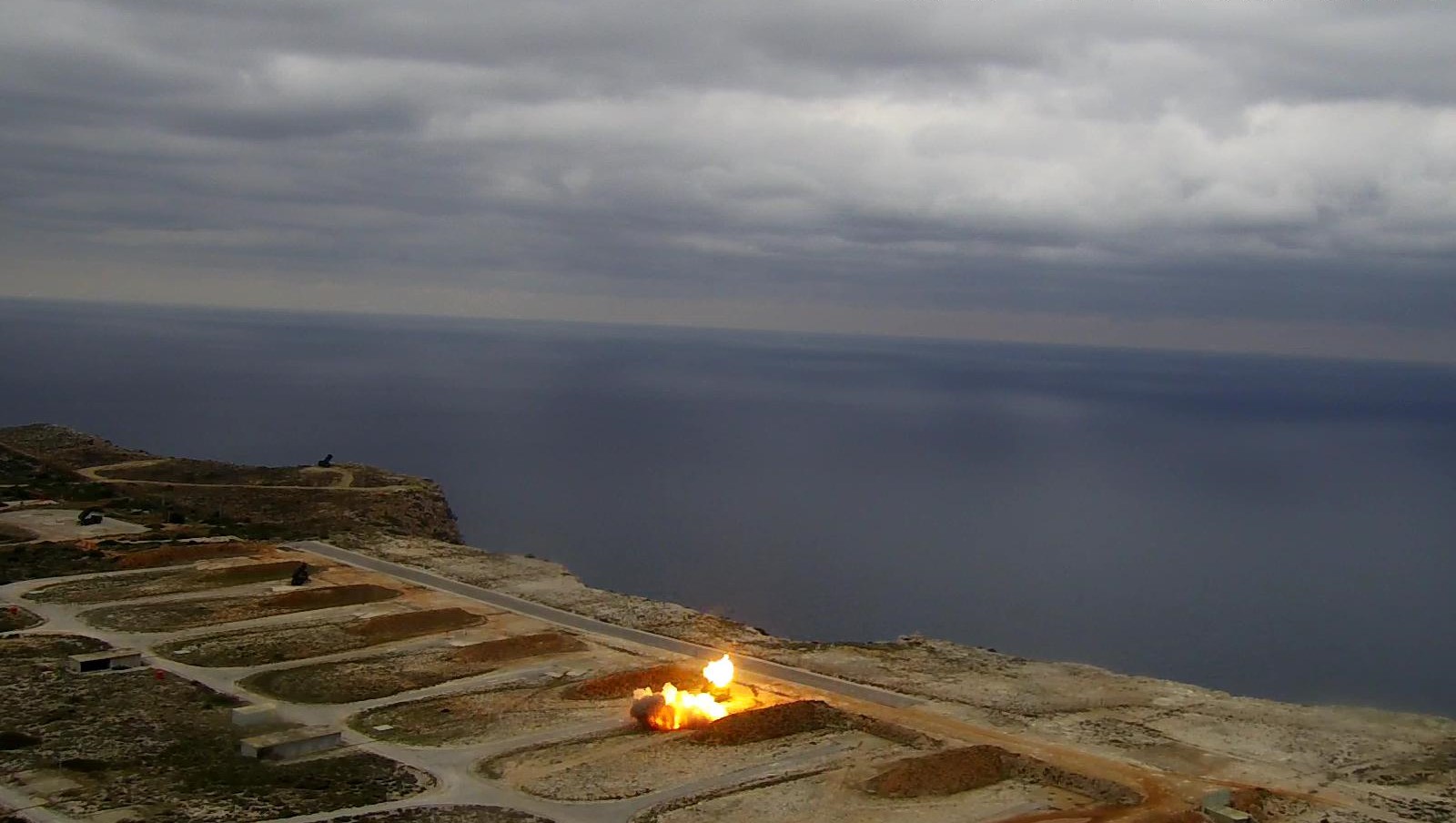
 Greece is helping defend Saudi Arabia. Greek personnel and a Patriot battery protect critical Saudi infrastructure against missiles and aerial threats. Athens supplies Riyadh with operational air defense, expertise, personnel and protection for assets the Kingdom will not leave exposed. At the same time, Riyadh is scaling Turkish defense power through market access, localization, production, capital and institutional footholds.
The defense agreement signed in Mecca by Saudi Arabia, Pakistan and Turkey provides that an armed attack on one will be considered an attack on all three. It defines no common enemy, threat hierarchy, mandatory response or escalation authority.
They wrote the guarantee before agreeing on the threat.
Saudi Arabia’s threat map centers on Iran. Pakistan’s centers on India. Turkey’s extends through the Aegean and Eastern Mediterranean. India is not a Saudi enemy. Greece is not a Pakistani enemy. Defending Saudi Arabia does not bind Ankara and Islamabad to Riyadh’s objectives toward Iran. The three therefore share neither a common war nor a common end state.
The Guarantee Threat Gap is the distance between the wars an alliance promises to cover and the wars its members are prepared to inherit from one another. The wider the gap, the more activation depends on interpretation in crisis: who is the aggressor, who declares the threshold crossed, what assistance follows, and what happens when one member’s enemy is another’s essential partner?
Riyadh already had a mutual defense guarantee through the Gulf Cooperation Council. By buying abroad a guarantee it already received at home, Saudi Arabia brought two external powers into its security core and demoted the GCC from architecture to forum.
The guarantee awaits a crisis. Institutional penetration does not. The ministerial committee and permanent secretariat will codify procedures, planning and cooperation. Around them will accumulate procurement, training, exercises, maintenance, standards, doctrine, officer networks, defense industry, logistics, communications, software, mission data and intelligence interfaces. A weapons supplier becomes a maintainer; the maintainer holds knowledge; the holder of knowledge becomes a planning partner; the planning partner gains access to decisions.
Influence becomes infrastructure.
Influence Infrastructure is the institutional foothold a foreign partner acquires inside a state’s capabilities without commanding it, threatening it or fighting for it.
The test is what stops working when the partner says no. Who holds the source code, mission data and diagnostic tools? Who updates the software? Who trains the operators? Who supplies ammunition, spares and heavy maintenance? Who shaped the doctrine? How long can the state keep the capability functioning after the supplier withdraws support?
An alliance can fail on the battlefield and succeed inside the state.
Turkey is the pact’s structural beneficiary. It enters with an expanding defense industry, unmanned systems, electronics, munitions, training and local production capacity. Saudi Arabia and Turkey signed a defense cooperation implementation plan and deals with Baykar in 2023; localization agreements for components, electronic systems, structures and mechanical parts followed.
The Mecca Pact institutionalizes the shift from transaction to system. Ankara needs Turkish systems in Saudi inventories, Turkish firms in maintenance chains, Turkish officers in exercises, Turkish standards in procurement and Turkish industry inside localization programs. Every contract increases revenue. Every interface deepens access. Every dependency entrenches Turkey further.
Qatar is the precedent: military presence, training and exercises turned Turkish security access into durable leverage. Mecca now gives Ankara a route to reproduce that entrenchment inside Saudi Arabia.
Turkey does not need the Gulf to fight its wars. Ankara need not buy support; it need only make opposition expensive.
Greek protection of Saudi security cannot remain strategically detached from Saudi investment in Turkish power. Athens should place both flows on one strategic ledger. On one side sit the Patriot, Greek personnel, exercises, training and the defense of Saudi infrastructure. On the other sit the market, capital, localization, production and institutional access Riyadh gives to the defense industry and security system of the state challenging Greece in the Aegean and Eastern Mediterranean.
Any extension of the Patriot deployment must be repriced. It must purchase reciprocity: political access, industrial and security cooperation, and visibility into the depth of Turkish entrenchment. Saudi capital, localization and procurement that strengthen Turkish capability belong on the Greek Saudi ledger.
A security contribution that produces no reciprocity becomes a strategic subsidy.
Athens must stop measuring Turkish penetration by platforms and export totals alone. Platforms and exports measure commerce, not dependence. Three variables matter instead: entrenchment, operational dependence and exit cost. The map must record maintenance dependencies, Turkish knowledge inside production lines, officer networks, software, mission data and supply chains.
The decisive metric is Turkish removability.
Rising exit costs reward Ankara even without political alignment. A Gulf state need not adopt Turkey’s position in the Aegean for Turkey to benefit. Dependence raises the price of defiance.
Greece must pass the same test itself. Optionality is not sovereignty. At purchase, multiple suppliers expand choice. In crisis, every externally controlled dependency adds another key required to keep capability functioning. A state can diversify suppliers and diversify its dependence, diversify guarantors and diversify the holders of veto power over it.
The Sovereignty Test is simple: what can the state still operate, modify and replenish after the supplier says no?
A sovereign capability requires domestic maintenance, independent training, diagnostic tools, access to mission data, software control, ammunition and spares, repair capacity, continuity planning and a manageable exit cost. Otherwise, the state has purchased capability while leaving the final decision elsewhere.
Greece cannot criticize Gulf dependence on Turkey while reproducing the same structure at home under an American, French, Israeli or any other flag.
Athens must build its own Influence Infrastructure. Cooperation with the UAE, Israel and France; deployments, exercises, training, intelligence, maintenance, cyber, industry and presence in the Eastern Mediterranean and Gulf must form a system that gives Greece access, alternatives and leverage over the decisions of others.
Greece’s objective is not Gulf alignment against Turkey. It is to erode Turkey’s premium as the cheapest, easiest and hardest security provider to replace.
Europe repeats the same error in defense procurement. The flag on the system does not determine who holds the key. The same test extends beyond defense to energy and digital infrastructure.
Saudi Arabia buys insurance. Pakistan buys relevance. Turkey buys permanence. Insurance is tested on the day of crisis. Permanence accumulates every day before it.
The Mecca Pact does not need to fight a war for Turkey to win it.
Shay Gal is Founder and Principal of Line of State, a strategic practice working with governments, institutions and decision-makers on strategy, risk, access and security decisions in high-stakes environments. He previously served as Vice President at Israel Aerospace Industries (IAI).