France, Germany, Sweden and Finland. All these countries have expressed alarm towards the Arctic in the forms of their own Arctic Defense Strategies, and other members are following suit. The Arctic dominated NATO’s strategic dialogue. It makes sense: here, Russia wields its greatest military leverage, and with climate change redrawing maps and melting boundaries, and with control over critical resources and infrastructure certainly to shape Europe’s security. Yet, where is the European Union?
Since Russia’s invasion of Ukraine, the EU has been able to discover military language. The channels €8 billion. The manages 68 collaborative military projects. Brussels €150 billion in defense loans—fully subscribed by 19 member states. Von der Leyen’s “geopolitical Commission” speaks of “learning the language of power.” The Strategic Compass declares Europe ready for greater security responsibility.
Yet, in the Arctic – where great power competition has intensified past Europe’s traditional battlefields- the EU remains absent from actual defense. When across Nordic Response 2024, EU participation fragmented across member states’ national contributions. No EU-coordinated capability. No Brussels-led logistics. This isn’t hypocrisy; it’s strategic failure.
The Defense Charade
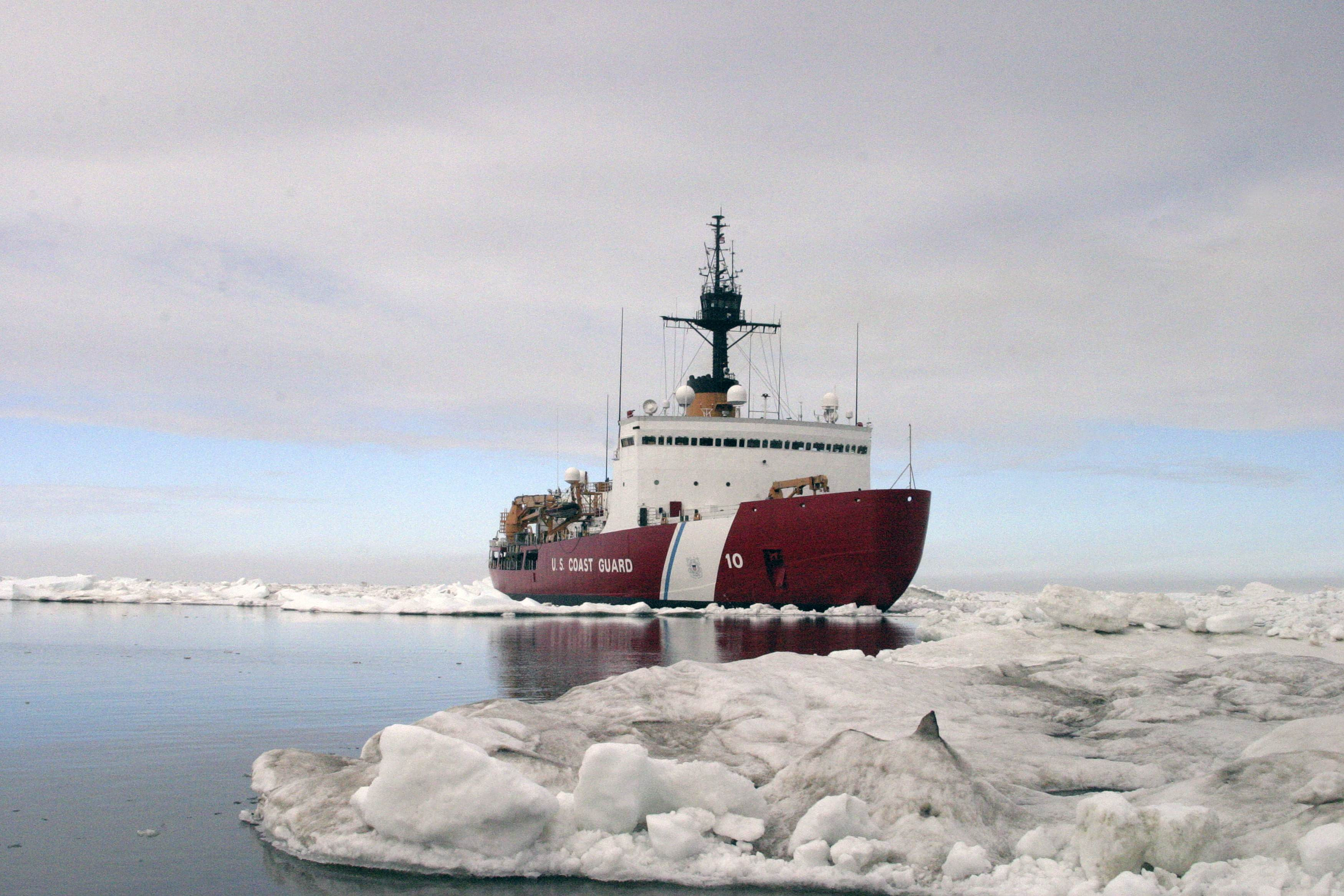
Russia commands approximately 57 icebreakers, including eight nuclear-powered vessels which are available for year-round Arctic operations. In comparison, EU Arctic member states, including Finland with 8 to 9 icebreakers, Sweden with 6, and supplementary capacity in Estonia, Latvia, and Germany. Which collectively operate 14 to 17 vessels. This yields a 4-to-1 disadvantage in heavy icebreaking infrastructure.
A problematic gap is enlarged due to Russia’s fleet including modern nuclear-powered icebreakers, capable of continuous polar operations, while European vessels are primarily designed for Baltic winter conditions. Notably, 80% of the world’s icebreakers. This underlines a paradox, where Europe possesses world-leading design and construction expertise, yet lacks the actual operational capacity in the Arctic itself.
Russia has further been on the move, reopening 50 Soviet-era military posts, including 13 air bases. In September 2025, new base on Wrangel Island, barely 300 miles from Alaska. Such bases, used for infrastructure & logistics, directly project Russia’s Arctic power and presence.
Their expansion is also marked with institutional depth. On December 1, 2024, Russia’s Arctic Military Command—the first unified structure dedicated exclusively to High North operations, integrating the Northern Fleet. Moscow’s decades of Arctic planning reached organizational maturity.
In comparison, the EU’s Arctic infrastructure, capabilities remain skeletal and disjointed. When Arctic Council suspended Russia cooperation, it eliminated the multilateral forum where EU non-military influence operated. Now, only hard security matters; precisely the domain in which Brussels lacks capacity.

FILE PHOTO: Russian President Vladimir Putin launches the first natural gas liquefaction line on a gravity-type base for the Arctic LNG-2 project as he visits the Novatek-Murmansk’s Offshore Superfacility Construction Center in the village of Belokamenka, Murmansk region, Russia July 20, 2023. Sputnik/Konstantin Zavrazhin/Pool via REUTERS ATTENTION EDITORS – THIS IMAGE WAS PROVIDED BY A THIRD PARTY./File Photo
What Defense Actually Requires
Defense of the Arctic front, demands enablers, not just combat forces. It requires infrastructure, logistics and redundancies – the true force multipliers.
Finland, a key player within the region depends on Baltic Sea maritime routes for approximately 80% of its import volumes. In 2023-2024, over 95% of Finland’s trade by volume . This dependence creates a critical infrastructure vulnerability identified by policymakers, with a proposed railway gauge conversion being considered precisely because there are hardly any alternative transport routes if Baltic shipping is disrupted. Thus, any naval blockade of the Baltic Sea route would immediately impact Finland’s ability to receive material and supplies, severely hampering EU’s arctic ‘frontline’.
Submarine cables are also critical. Between 2024 and 2025, 44 documented damages. Svalbard depends on two cables for all communications. When one cable was damaged in January 2022—with Russian trawlers spotted nearby—Svalbard lost connectivity to K-SAT, the world’s largest polar-orbit satellite ground station. Submarine cables carry 99% of inter-continental internet traffic, making these vulnerabilities existential for command and control structures, which is key for Arctic projection.
Despite recognizing these vulnerabilities, NATO’s Maritime Centre for Critical Underwater Infrastructure remains only “partly operational” . The center itself, established after the 2022 Nord Stream explosions, was still under development as of January 2025, whilst Russia actively mapped Allied critical subsea infrastructure. In fact, only four companies globally maintain submarine cable repair capacity – with none of them operating Arctic-capable vessels.
Quartermaster, Not General
Brussels faces a choice. Abandon defense rhetoric as ineffective posturing or make it credible through achievable military-enabling actions.
Europe cannot be the Arctic’s military champion. Russia’s six-to-one icebreaker advantage, 50 reopened Russian military bases, and decades of Arctic operational experience creates gaps that the EU cannot close through political declarations or new defense funding directives. Yet, Europe can be NATO’s crucial quartermaster. Providing the infrastructure, interoperability and the resilience needed to transform allied defense from aspiration to reality.
This is not a consolation prize. In military terms, logistics wins wars. The Arctic reveals European defense in miniature: ambitious rhetoric, massive budgets, institutional frameworks and virtually no capacity to execute when geography demands more than EU communiqués. 20,000 troops deployed to Nordic Response 2024 without any EU coordination demonstrate the problem.
Stop talking like generals. Start building like engineers. That is how Europe would make Arctic defense credible, and how it is finally able to back its geopolitical rhetoric with strategic reality.
Filippo N. Valasakis is a graduate of International Relations and European Affairs from the American College of Greece – DEREE, with an interest in defense, economics, geopolitics and security.
This opinion piece was selected to be published within the framework of To BHMA International Edition’s NextGen Corner, a platform for upcoming voices to share their views on the defining issues of our time.