 Μake us preferred on Google
 The puzzle: On the days when the powerful of the world met in Davos, 400 millionaires and billionaires from 24 countries, in a sharply worded intervention, called for higher taxation of great wealth. “A handful of global oligarchs with extreme wealth have bought our democracies, captured our governments, silenced the freedom of the media, imposed suffocating control over technology and innovation, deepened poverty and social exclusion, and accelerated the disintegration of the planet.” This is what they write in an appeal of the kind that rarely comes… from those in charge.
The world’s billionaires now number more than 3,000. According to Oxfam, their wealth exceeds $18.3 trillion and continues to grow (indicatively, it increased by 16% in the past year). And since numbers alone often do not say much, it may be useful to consider that $2.2 trillion would be enough to lift 3.8 billion people out of the risk of poverty.
And while efforts continue in the rest of Europe to close the gap, the trend in Greece remains the opposite. According to KEFiM, out of the 365 days of the year, workers in our country who cannot or do not wish to cheat the tax authorities work 177 days just to pay taxes. And of course, we are not all swimming in the same sea. Because even if the economy—fueled by pandemic resources and the billions of the Recovery Fund—is doing well, citizens do not reap the benefits of this growth in a fair and proportional manner.
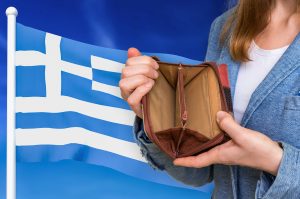
Inequalities in Greece have been increasing since the crisis. The many earn little and pay a lot. Greeks spend more than 35% of their income on housing, while the European average is 19%. Food prices remain sky-high. In its interim report, INE-GSEE records a reality that is all too familiar in lived experience. Our wages, measured in purchasing power units, place us last in the European family. We once spoke of Balkanization. But the Balkans are now pursuing the convergence that Greece itself once achieved. This is how the gap widens even further. But how much inequality can a country withstand before social cohesion is irreparably damaged?
After the memoranda, many of us allowed ourselves to believe that the hard times were over. The middle class awaited the much-discussed return to normality—a normality that has been permanently lost. In terms of climate and psychology, we perhaps overlooked the fact that, in the absence of memoranda, any pretext for the hardship of the many is also eliminated. And this, we will see translated at the next ballot boxes, now that anti-system sentiment appears to be finding political representatives who are arriving with momentum and ambition.