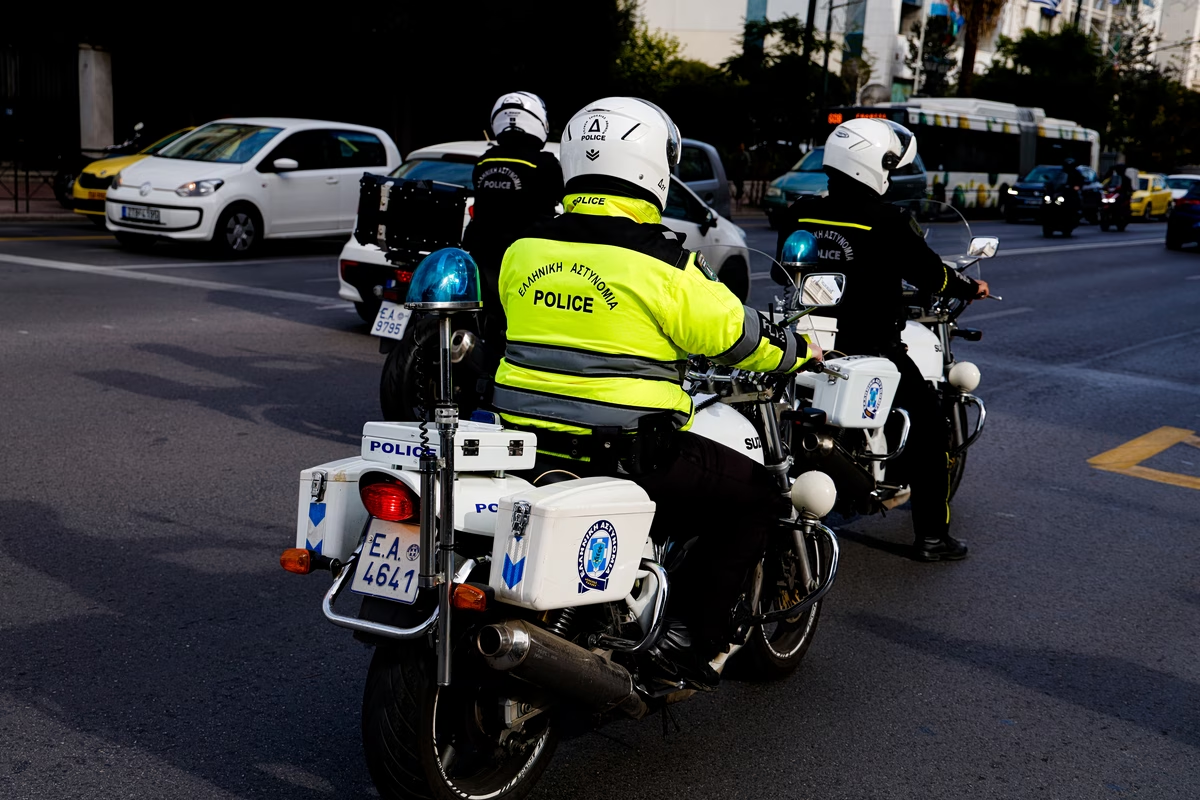
Lately we’ve been witnessing a string of violent incidents in which police officers are somehow “involved,” sometimes as perpetrators, sometimes as victims. A great deal has been written about what shape and function a modern, socially engaged, decentralized, humane, accountable police force should have.
The police are a democratic institution and a protector of vulnerable citizens. Too often, though, officers overstep the powers granted to them by the Constitution and the law, adopting what might be called a “blue subculture” mindset (the sense that “we are the State”) and engaging in violent or unlawful conduct, ranging from unwarranted use of force against citizens to involvement in criminal organizations.
I don’t believe every officer harbors an abuser within them. That’s exactly why political and institutional leadership needs to put preventive measures in place, from modern psychometric testing to closer oversight of how officers actually operate on the job. A national council on democratic policing, bringing together political parties, the Ombudsman, judges’ associations, bar associations and outside experts, may well be necessary.
In any case, a few principles apply. Citizens want protection not just from crime but from disorder, things like peace and quiet in their own neighborhood. Police work shouldn’t be limited to reacting to individual “incidents”; it should be oriented toward addressing underlying problems, since specific incidents are themselves often symptoms of a broader social issue. Identifying a problem, and especially its root causes, is what leads to modern policing built on evidence, problem solving, and ultimately community policing.
The community remains the first line of defense, both for controlling crime itself and for controlling the fear of becoming a victim. Despite differing historical, geographic and cultural approaches, community policing represents the most contemporary way of merging counseling with law enforcement.
A decentralized police force addressing the pressing problems of its own area of responsibility needs to work out several things: how it engages with community issues, how the community gets involved in police work, and the sometimes awkward dynamics of power and roles that come with that.
Multi-agency cooperation between local institutions, their social services, citizens and the police isn’t always straightforward. Adapting police culture to local traditions and modernizing policing style matters a great deal to citizens and to social partners like street-level social workers and school teachers.
Public trust in the police depends on factors like a sense of security (knowing where, when and how to find an officer), which grows through visible foot patrols, everyday dispute resolution, professionalism, and mobile police units, anything that draws citizens into taking part in addressing crime.
Police help citizens, and citizens help police. It’s a kind of joint production of public safety by the state and the community. Naturally, the roles need to stay distinct and within constitutional bounds. That’s the international standard for participatory crime prevention policy.
Without it, mutual suspicion on all sides tends to spread, and citizens end up feeling unprotected both from crime itself and from the very officers meant to fight it when some of them break the law.
Giannis Panousis is Professor Emeritus of Criminology.