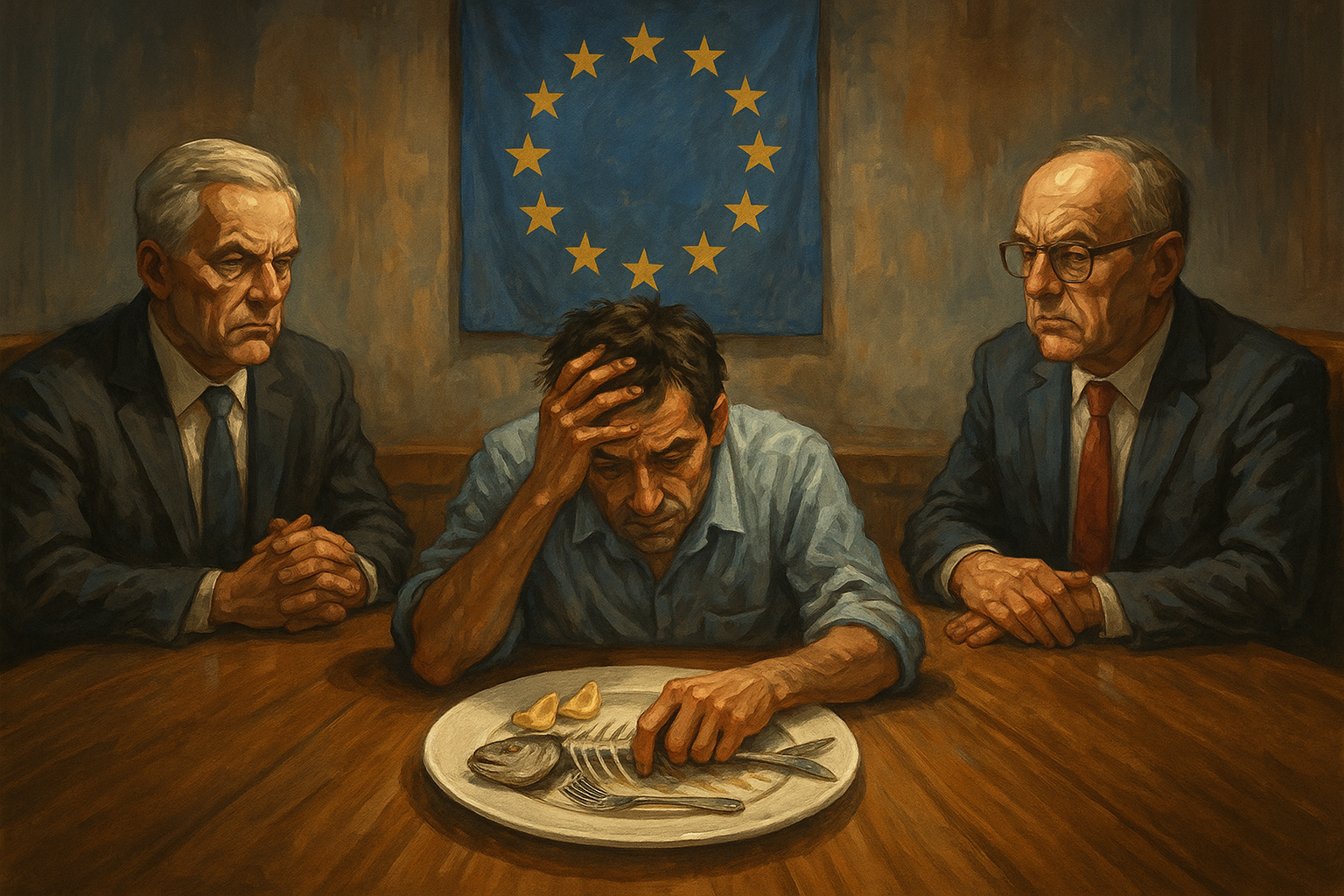
In 2015, Greece became the epicenter of Europe’s political and economic tensions. The debt crisis, years in the making, reached its peak in a summer of high drama: late-night Eurogroup meetings, ultimatums from creditors, and the looming threat of “Grexit.” For Athens, it was a moment of humiliation. Critical decisions about the country’s future were made behind closed doors in Brussels, Berlin, and Frankfurt — often without Greek officials in the room.
What stung most was not only the economic pain of austerity, but the sense of being treated as a passive subject rather than an equal partner. Harsh public comments from European leaders painted Greece as fiscally irresponsible and politically immature. A national referendum rejecting bailout terms was swiftly brushed aside. Greece remained in the Eurozone, but only at the cost of deep economic sacrifices imposed from outside.
Fast forward a decade, and the analogy many in Athens once made about their treatment within Europe might now apply to Europe itself on the global stage. The European Union, still a vast economic power, increasingly finds itself in a position eerily similar to Greece’s in 2015 — present in the conversation, but not always in the room where the real decisions are made.
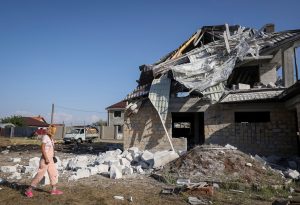
Consider Ukraine. Since Russia’s full-scale invasion in 2022, the EU has mobilized unprecedented financial aid, sheltered millions of refugees, and implemented sanctions with far-reaching consequences. Yet on the most delicate diplomatic choreography — talks over the war’s eventual settlement — Washington has often taken the lead. As Euronews recently noted, Europe is being “frozen out” of potential US–Russia negotiations in Alaska, described by one analyst as “the most consequential peace effort since the war began.” The same analyst’s warning could have been aimed at Athens a decade ago: “When you don’t have actual power, you will not be invited.”
The pattern extends beyond Ukraine. In the Middle East, the US frequently acts first, as recent events in Iran taught us, with Europe adjusting to an American-set agenda. In trade and technology, Brussels often reacts to the moves of Washington or Beijing rather than shaping the rules. The EU projects wealth but not decisive strategic power — a condition Greece knows all too well from its own era of dependency.
The U.S. Vice President’s recent remarks about Europe’s insufficient defense capacity echoed — perhaps unintentionally — the tone European leaders once used toward Greece’s economic “failings.” In 2015, Athens was told it needed to “do its homework” before expecting help. Today, Brussels is told it must invest far more in weapons and defense if it wants to be taken seriously. The language differs, but the underlying dynamic feels familiar: public pressure, external conditions, and reduced agency.
The parallels run deeper. In both cases, the weaker party has assets the stronger side needs — Greece had its Eurozone membership leverage; Europe has its vast market and geographic proximity to crises — but those assets are not enough to secure full equality in decision-making. Public shaming becomes a tool of influence: in 2015, headlines about “lazy Greeks” undermined Athens’s moral authority; today, criticisms of “European weakness” and President Trump’s statements like “If they don’t pay, I’m not going to defend them” chip away at the EU’s strategic standing.
The lesson from Greece’s 2015 experience is sobering. Power is not only about wealth or population size; it is about leverage, capabilities, and the ability to act decisively. Greece eventually regained a measure of economic stability and is no longer the most unhappy nation in Europe, acording to Eurobarometer, but the scars of that year’s negotiations left a lingering distrust of European solidarity. For the EU today, the risk is similar: accept too much direction from external powers, and it may find itself locked into a subordinate role in global affairs.
If Europe truly wants to avoid becoming the “Greece of geopolitics,” it must strengthen its strategic independence. That means deeper unity among member states, more credible defense capabilities, and a willingness to speak with one voice on the world stage.
Encouragingly, Europe seems to be making that turn. From ReArm Europe to the EU Security Action Fund (SAFE), from industrial expansion to large-scale weapons manufacturing, the momentum is building. The August 13, 2025 joint statement by European leaders — affirming that “the people of Ukraine must have the freedom to decide their future” — marks a political stance backed by growing capabilities.
Europe now appears ready to “pay the bill” just as Greece did in 2015. Ten years later, Greece is respected among its European peers. The question is whether Brussels will recognize the echo and whether the EU, in 2035, will be seen as a truly independent power or as a giant still waiting for permission to move.
This opinion piece was selected to be published within the framework of To BHMA International Edition’s NextGen Corner, a platform for upcoming voices to share their views on the defining issues of our time.
*Grigoris Patsakis is a project manager at ELIAMEP’s Turkey program