
 Μake us preferred on Google
 On 27 September 2025, the Brisbane Lions defeated the Geelong Cats before more than 100,000 fans at the Melbourne Cricket Ground. For supporters, it was a spectacular AFL Grand Final. For me, it was also personal. Leon Harris, a former Fitzroy star and now a Lions recruiter, is someone I know from the local community in St Kilda and our occasional discussions. His quiet work identifying young talent has been central to Brisbane’s rise — and it highlights a uniquely Australian approach to sport: fairness built into the rules.
Unlike European football, where the richest clubs dominate, the AFL uses a draft and salary cap to ensure renewal. The weakest clubs get first pick of new talent, while spending limits stop wealthier clubs from hoarding players. This is not just good administration; it reflects Australia’s cultural tradition of the “Fair Go”.
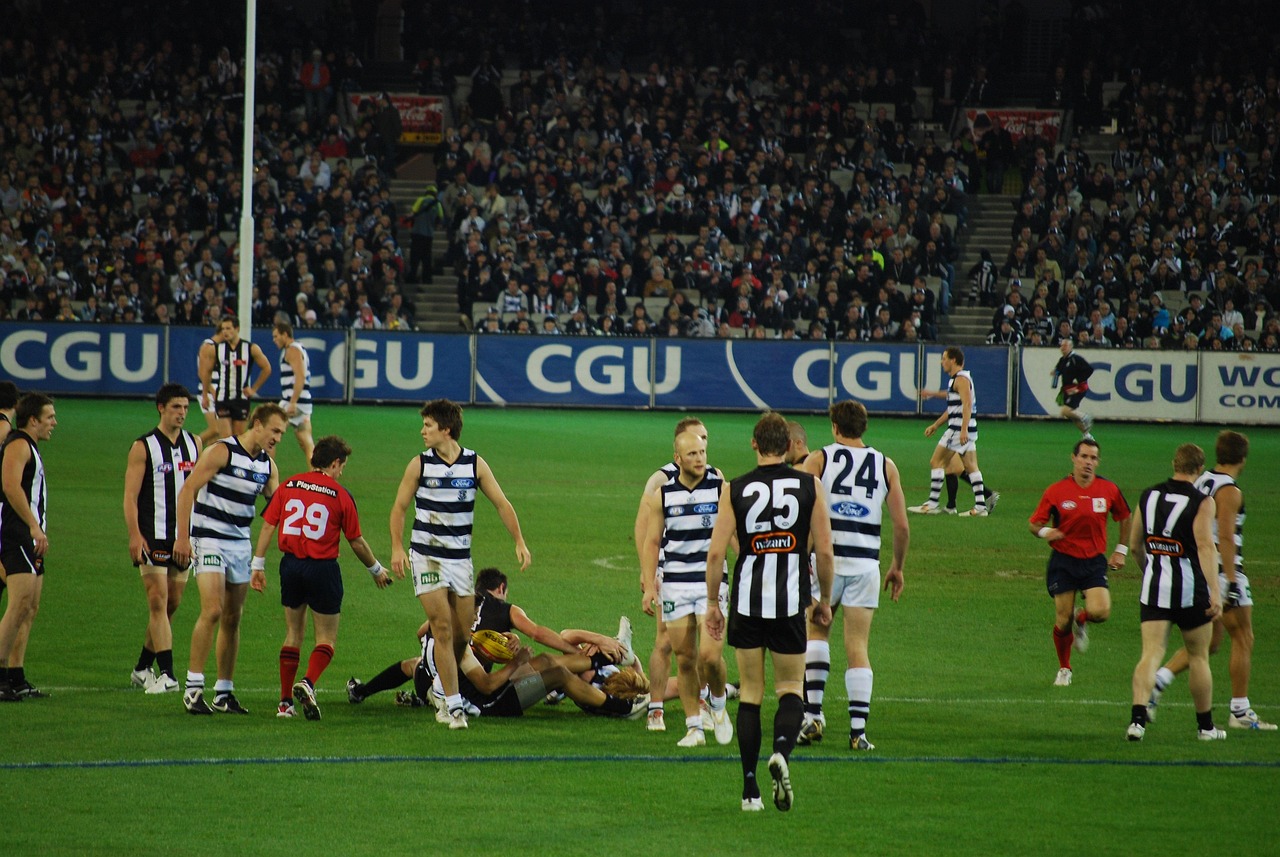
The Fair Go in Practice
The draft system ensures that hope circulates. Almost every AFL supporter can realistically believe their club will rise again. The 2025 Draft, set for 19–20 November, will again deliver new young players to the lowest-ranked teams. By the time pre-season begins, fresh faces will be training across the league.
This principle resonates deeply with Australian identity. The anthem Advance Australia Fair enshrines fairness as a national value, and the AFL has translated it into competition. Even migrant communities — such as the 425,000 Australians of Greek heritage — have embraced this system, contributing strongly to the draft and the game itself.
Contrast with Europe
The difference with European football is stark. In the English Premier League or Germany’s Bundesliga, success belongs to clubs with financial firepower. Manchester City, Paris Saint-Germain and Bayern Munich win year after year, while smaller clubs survive on scraps. The hierarchy rarely changes. For many fans, hope is rationed.
By contrast, Brisbane’s premiership shows how a struggling club can rebuild and win again. Without the draft and salary cap, the Lions would never have competed with Melbourne’s traditional powerhouses. Fairness, in this case, is not an abstract slogan — it is a rule of the game.
Lessons Beyond Sport
The AFL’s system carries lessons far beyond football. Institutions shape fairness. Just as the draft redistributes opportunity on the field, Australia’s medical system Medicare ensures access to health care, while the public Age Pension provides dignity in retirement, and Superannuation (private pension savings) requires all workers to save for old age, not only the affluent. In each case, fairness is deliberately designed, not left to market chance.
Europe, by contrast, often treats inequality as inevitable. But it need not be. Just as the AFL proves that competitive balance can be engineered, so too can societies write rules that prevent entrenched advantage — whether in sport, economics, or politics.
Renewal as a Principle
When Brisbane triumphed at the MCG, it was not only the players who won but also the system that gave them a chance. Leon Harris’s work as a recruiter mattered because the AFL’s institutions ensured that his discoveries could transform a club’s fortunes. Renewal is built into the DNA of the competition.
For European readers, the AFL may seem remote. Yet, its example speaks to a global challenge: how to design institutions that keep hope alive. In an era of inequality and political disillusionment, Australia’s insistence on a “fair go” offers a simple but radical lesson — that fairness does not just happen. It must be written into the rules.
Dr. Steve Bakalis has worked with La Trobe University, The University of Melbourne, Victoria University and universities across the Asia-Pacific and Gulf region.