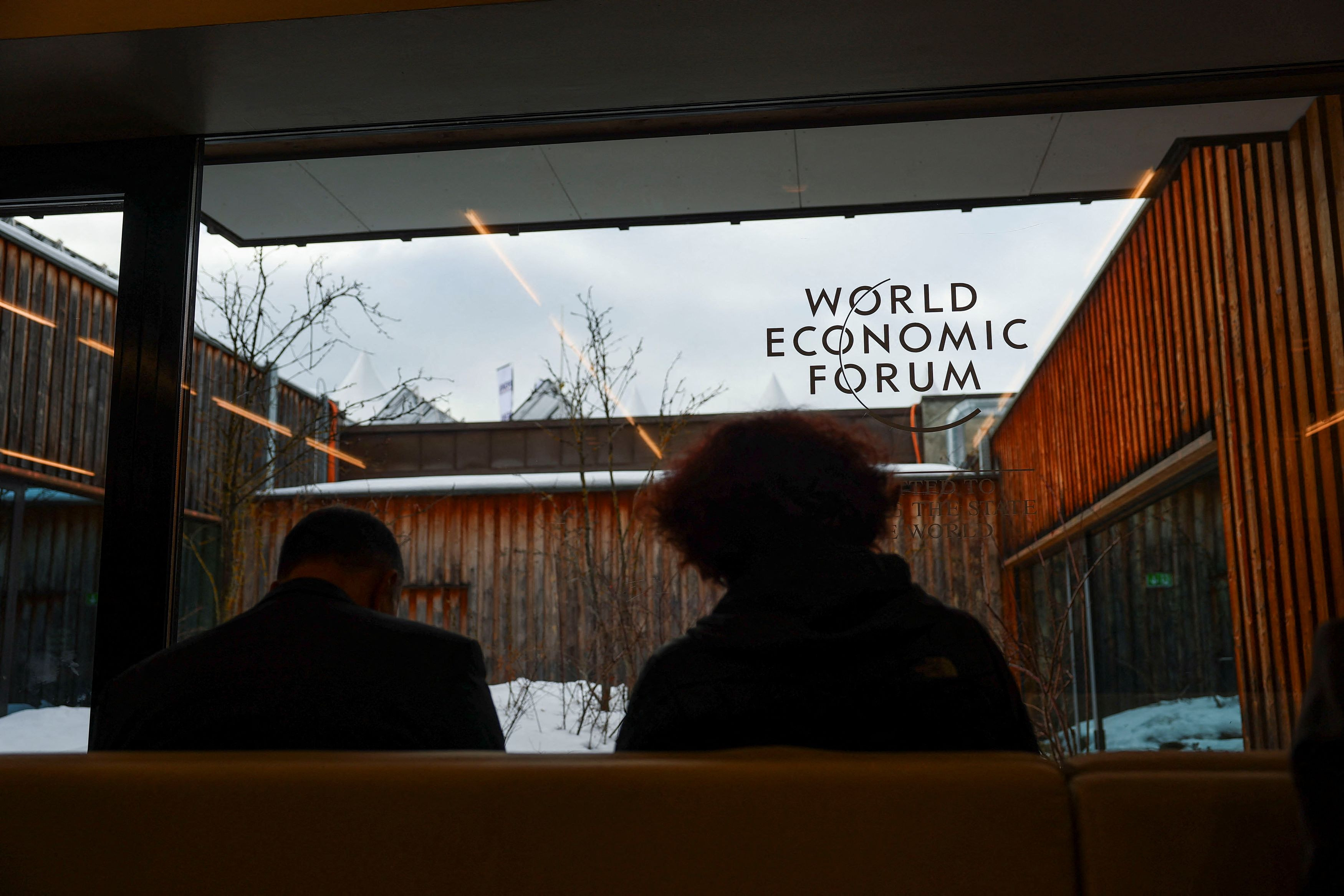
In international politics, decisive change is more often the product of slow-moving processes than of sudden events. The same holds for the foreseeable end of the Western order under American stewardship – an order we in this part of the world learned to value and appreciate after the catastrophe of World War II. Future historians may well single out this year’s World Economic Forum in Davos as the moment when the fractures in transatlantic solidarity surfaced with unmistakable bluntness.
This is less about the back-and-forth of the American president over Greenland – although the initially postponed annexation ambitions are, of course, emblematic of the end of the harmonious coexistence within a defense alliance once grounded in shared values. In Davos, the signs became unmistakable for all to see that, to put it diplomatically, U.S. support for its (former) allies no longer stands quite as ironclad as it once did. New priorities prevail in Washington; the focus is on the Indo-Pacific and the containment of China. The message, conveyed through various channels, is that Europeans will largely have to take care of their own security risks from now on. The message is not entirely new. Still, the uncompromising manner in which Donald Trump delivers it – accompanied by insults and disparagement – repeatedly stirs fresh consternation in Europe. America’s turn away from multilateralism has been a long-developing trend. Yet Europeans have been anything but optimally prepared for this realization.
The cracks in the transatlantic community are prompting fundamental strategic reassessments within the Western alliance – or what remains of it – and in Western capitals. Cynics might describe the plurality of views as a paralyzing cacophony. The truth is that we are in a phase of democratic opinion-forming and orientation – a process for which, if we wish to remain true to our values, there is no alternative.
At one end of the spectrum are voices describing the disruptions emanating from Donald Trump as a “point of no return.” The most eloquent articulation of this worldview came from Canadian Prime Minister Mark Carney in Davos. His blueprint for an “emancipation of the middle powers” from the dictates of the superpowers is a call for Europeans to embark on a radical new beginning:
“We know the old order is not coming back. We shouldn’t mourn it. Nostalgia is not a strategy, but we believe that from the fracture, we can build something bigger, better, stronger, more just. This is the task of the middle powers, the countries that have the most to lose from a world of fortresses and most to gain from genuine cooperation.”
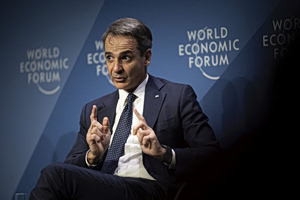
Carney’s radicalism, which has found considerable resonance in European media, is meeting a more restrained response among governments. German Chancellor Friedrich Merz, despite many dire predictions, has not given up on the Americans. He warns against “prematurely writing off the transatlantic partnership.” Greek Prime Minister Kyriakos Mitsotakis also argues against a radical break with Trump: “I am a firm supporter of the transatlantic partnership. I am convinced that a solution can be found if we act in unity – determined but
also constructive.” What binds the German and the Greek positions is an existential concern that a rupture with the United States would leave them exposed to external threats: Berlin fears potential Russian military aggression; in Athens, the fear of a Turkish attack runs deep.
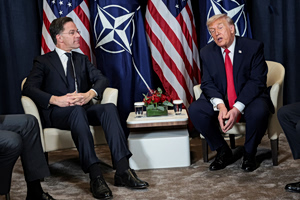
A contrasting line comes from Mark Rutte, NATO’s secretary general, who by virtue of his office is obliged, despite all forebodings, to praise the merits of transatlantic cooperation. “If anyone thinks that the European Union can defend itself without the U.S., keep dreaming. You can’t,” the Dutchman said in the European Parliament, speaking from a position of privileged access to Donald Trump. Rutte is unwilling to lose faith that NATO in its current form has a future. He sees a “total commitment” by the Americans to collective defense and even argues, “The U.S. needs NATO.”
As so often, reality likely lies somewhere in between. The answer to the question of the future of transatlantic relations – closely tied to NATO’s future – will emerge only over time. An abrupt rupture is unlikely. Europeans, above all, must prepare for a gradual drifting apart, a step-by-step American drawdown. This process has long been underway and is forcing Europeans into unprecedented and massive efforts, particularly in armaments. At the same time, both at the collective E.U. level and at the level of nation-states, the search for alternative alliances and partners is in full swing. This involves economic cooperation, but increasingly also military and defense-industrial projects. The European Union’s far-reaching trade deal with India illustrates this diversification and marks a milestone on the steep path toward reducing transatlantic dependencies.
Dr. Ronald Meinardus is a senior research fellow at the Hellenic Foundation for European and Foreign Policy (ELIAMEP).