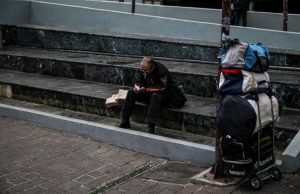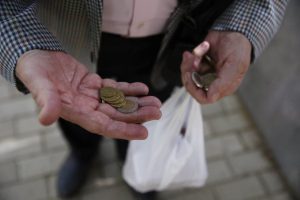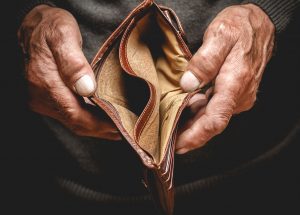
Even as Greece’s economy grows, albeit at a rate which ought to be higher, many citizens say they feel poorer than ever. Nobel laureate Amartya Sen’s “capability approach” helps explain why.
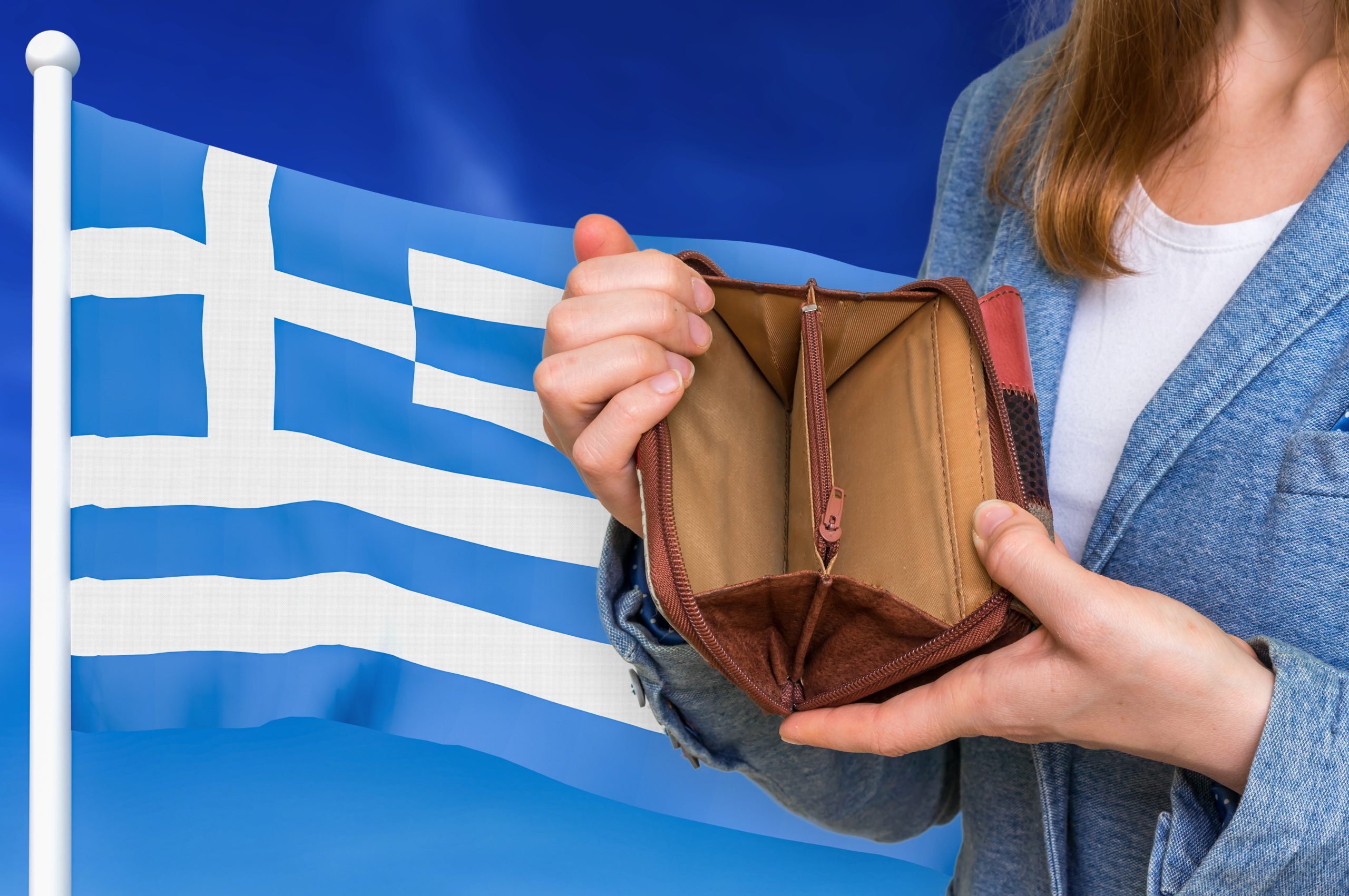
The economy is growing, unemployment has fallen, and tourism is booming — yet according to Eurostat, more than two-thirds of Greeks say they feel poor, the highest rate in the entire European Union. The paradox is striking. Many of these same people actually earn above the official poverty line which is about 25 percent. The “at-risk-of-poverty” rate is calculated as 60% of a country’s median income, while “subjective poverty” is based on a person’s own assessment of their financial situation. But their lived experience — marked by insecurity, overwork, and limited access to basic services — tells a different story.
Economist Amartya Sen, who won the Nobel Prize for his work on human development, offers a lens for understanding this contradiction, which helps explain the discrepancy between “subjective poverty” and “at-risk-of-poverty”. Sen’s “capability approach” argues that poverty isn’t just a lack of income — it’s a lack of freedom: the real ability to live a life you value. That includes access to healthcare, education, stable work, and the time to rest, think, and participate in your community.
You can think of it like a “backpack of life.” Everyone carries one, filled not with money but with freedoms and opportunities — education, health, job security, and support. Some backpacks are full; others are full of holes. And in Greece today, too many are leaking, evidenced by emigration.
Tourism and the Weight of Precarity
Tourism, which now accounts for roughly a third of Greece’s GDP, with both direct and secondary benefits, is often hailed as the country’s economic miracle. But for many workers, it’s a fragile foundation. Jobs in hotels, restaurants, and seasonal services fill the summer months, but leave uncertainty once autumn comes. The result is a kind of economic treadmill — months of exhaustion followed by months of anxiety.
The recent law extending Greece’s workday to 13 hours — defended by the government as a way to enhance flexibility and competitiveness — has intensified the debate. International observers saw it as a step backward for work-life balance. Critics argued that rather than empowering workers, it risks deepening burnout and undermining family and social life.
In Sen’s terms, this is not progress. Work that leaves people drained, isolated, or fearful about tomorrow diminishes their capabilities — the very freedoms that define a good life. So, most probably the high response includes much more than how individuals perceive their own financial and material situation.
Health and Human Security
A similar story unfolds in healthcare. As To Vima recently reported, Greece’s public health system is under growing strain, with chronic staff shortages and long waiting times. For many citizens, this means uncertainty and stress in moments when stability matters most. The issue isn’t just medical — it’s about dignity and peace of mind, both essential parts of a capable life. It is an integral part of the equation about feeling poor.
Beyond GDP: A Question of Dignity
Greece’s recovery narrative often celebrates rising GDP growth rates and tourist arrivals. Yet these figures mask an uncomfortable truth: many Greeks still feel they are running hard but standing still. The economy may be expanding, but the freedoms that make life meaningful — security, time, opportunity — are not. This is also reflected by Greece’s GDP per capita being 70% of the European Union average in 2024 in purchasing power parity terms, according to Eurostat’s estimates.
Sen reminds us that true prosperity can’t be captured by numbers alone. A country’s success should be measured by how freely its citizens can shape their lives — by the fullness of their backpacks, not the size of their paychecks.
Until Greece turns growth into genuine well-being — through fair work, resilient healthcare, and inclusive opportunity — many will continue to say, with quiet honesty: “We feel poor.”