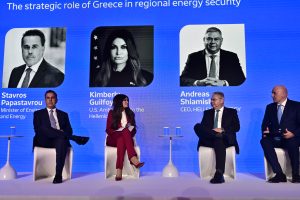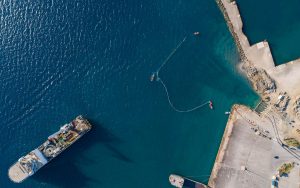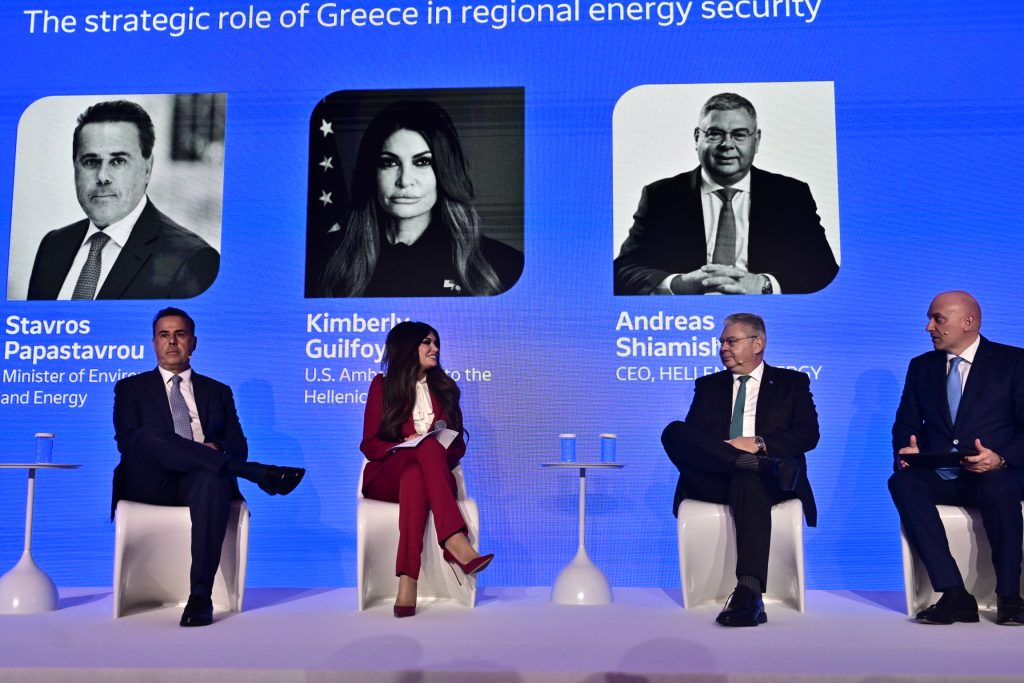
A more-or-less unofficial regional energy summit in the Greek capital also apparently revitalized interest for the ambitious (and challenging) Great Sea Interconnector project, which entails the connection of the power grids of Israel, Cyprus (the government-controlled areas and not the illegally Turkish-occupied northern third) and Greece via an undersea cable laid across the breadth of the east Mediterranean’s seabed.
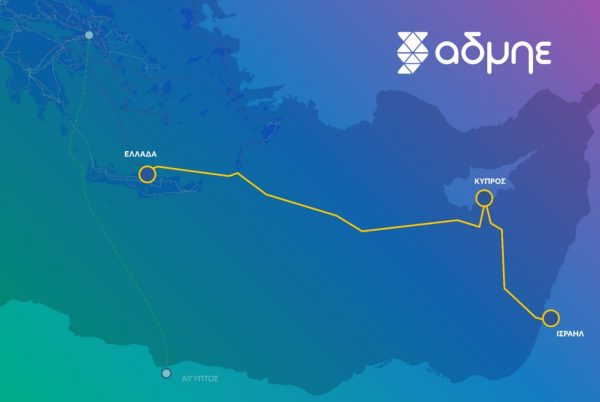
An approximate rendering of a route for the Great Sea Interconnector (GSI) power cable.
Ankara’s opposition to the project is standing and has been curtly expressed with saber-rattling and attempts at “gunboat diplomacy”, yet an embryonic proposal floated by Athens to convene a meeting of five east Mediterranean coastal states (Cyprus, Egypt, Greece, Libya and Turkey) to at least agree on a framework for resolving differences recently made headlines.
Additionally, ever closer Greece-Israel relations, both on a bilateral level and in multilateral settings, replete with defense cooperation and energy, now comprise a permanent factor of the wider region’s geopolitical “calculus”.
On this segment of “Explaining Greece”, Triantafyllos Karatrantos, an expert in international relations, European security and new threats, is asked about these very recent developments and what they entail for the country and the wider region. He also touches on the Gaza conflict and a tenuous peace plan and how this possibly affects Athens.
Dr. Karatrantos is a research associate specializing on the issues of radicalization, terrorism, law enforcement models, security and foreign policy at the Athens-based Hellenic Institute for European and Foreign Policy (ELIAMEP), while he conducts post-doctoral research at the National and Kapodistrian University of Athens.