Senior diplomatic sources at the Ministry of Foreign Affairs share their assessments for the “day after”—the scenarios for the duration of the conflict and the balance of power post-war, the alliances on the ground, and the “Turkey factor.”
Perhaps the attackers’ objectives, especially the Americans’, were ambitious from the start and are now proving difficult to achieve—at least in their entirety. Today, no one knows the exact size of Iran’s missile arsenal or how far Tehran is willing to resist. Moreover, establishing effective communication channels between the theocratic regime and the West seems, at this point, like a midsummer night’s dream.
Yet, despite these disappointing facts, in Athens—as in most European capitals—they are working on the basis of the most optimistic scenario: the war between the U.S.–Israel and Iran, already lasting 15 days and involving nearly all Gulf states, will end at most within the next 3–4 weeks. However, it leaves behind a new reality, the effects of which will not be confined to the Middle East. Its impact is already influencing geopolitical balances worldwide, including in the Eastern Mediterranean.
“The most likely scenario is that we will see a gradual de-escalation within a relatively short period,” a senior diplomatic source told To Vima, adding that the Ministry of Foreign Affairs is closely monitoring developments, without ruling out the possibility that events could become extremely adverse: a prolonged, low-intensity war with destructive consequences, primarily in energy and economic sectors, and with the risk of a new migration wave toward European shores.
Risks and Opportunities
The economic cost, after all, is Tehran’s leverage against its adversaries. The longer the war lasts, the harder it will be for already pressured affluent societies to absorb the impact. In Athens, the focus is not only on managing possible consequences. War is full of risks—especially when the line of fire touches the national security system. It requires adjustments but also presents opportunities, particularly for those who take a clear stance and demonstrate a willingness to participate on the ground.
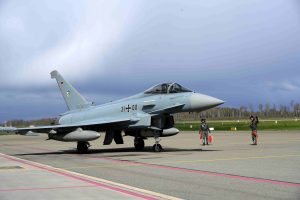
At the Maximos Mansion and the Ministry of Foreign Affairs, the primary gain is seen as projecting the flag and influence in the Eastern Mediterranean, especially beyond Greece’s narrow borders. This, they believe, was achieved through the immediate deployment of two frigates and four F-16 fighter jets to Cyprus, as well as the deployment of Patriot systems in Karpathos and along the Greek-Bulgarian border. The key objective is protection from potential missile threats, obviously originating from Iranian territory or its proxies. As a senior government official notes, Athens’ move “establishes the country as a power capable of guaranteeing stability in the wider region.”
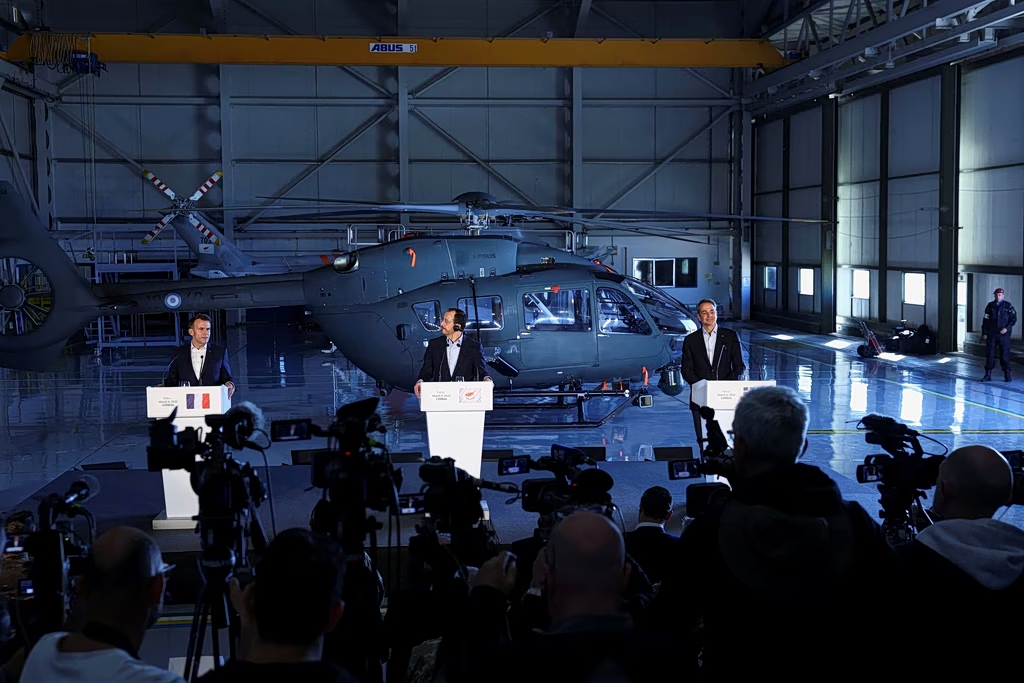
Moreover, the presence of Greek forces on the island has opened the way for other Europeans to follow on the ground—particularly France—and has strengthened Cyprus’ full inclusion in the Western security system. “Something that until a few years ago could not be taken for granted, even though it is European territory,” notes a minister with deep knowledge of the political system in Nicosia to To Vima.
Combined with the rapid strengthening of relations with Israel and the United States, and the fact that President Nikos Christodoulides operates within a purely NATO-oriented framework, it is clear that Cyprus is gradually transforming from a weak link in broader Greek defense and a neutral player, with its gaze both West and East, into an allied factor in the Eastern Mediterranean. Based on this logic, Greece is expanding its diplomatic and defense reach across the Cyprus–Dodecanese–Crete axis, a region of intense geopolitical interest, with Turkey’s revisionist presence distinctly noted.
Strategy and Benefits
In recent years, as Europe has been dragged into a violent paradigm shift where defense has become a top priority both nationally and collectively, Athens now emerges as a power with a demonstrated willingness to participate even beyond its immediate interests. According to the rationale of the Ministry of Foreign Affairs leadership, this strategy, combined with adherence to allied obligations, is certain to yield tangible benefits, and in the near future.
“The country’s consistency toward Israel and the United States is recognized,” diplomats note, who are in continuous contact with George Gerapetritis, while ruling party officials believe that the current war crisis strengthens strategic relations with Washington and Tel Aviv. They add that Greece’s participation in the Gaza stabilization force will contribute further to this direction.
At the same time, with European military assistance to Cyprus, the Eastern Mediterranean emerges as a field of early and partial development of the EU’s ambitious defense autonomy project, with Athens seeking triple benefits: first, by accelerating strategic integration, it brings forces to the region that otherwise might have remained indifferent (e.g., the UK, the Netherlands), creating a positive precedent for future crises.
Second, it further strengthens military cooperation with France—a nuclear power with longstanding interests in Southeast Europe—while Athens and Paris finalize the details before renewing the defense agreement and extending the mutual assistance clause in case of an external attack. Third, it sends the message to the U.S. and NATO that Greece is willing to participate in smaller, more flexible arrangements that will play a significant role in Western defense in the coming years. The common denominator of all these efforts is strengthening Greece’s imprint in the wider region.
Turkey
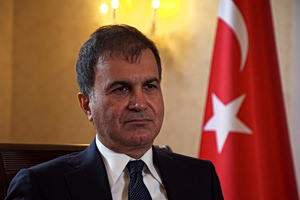
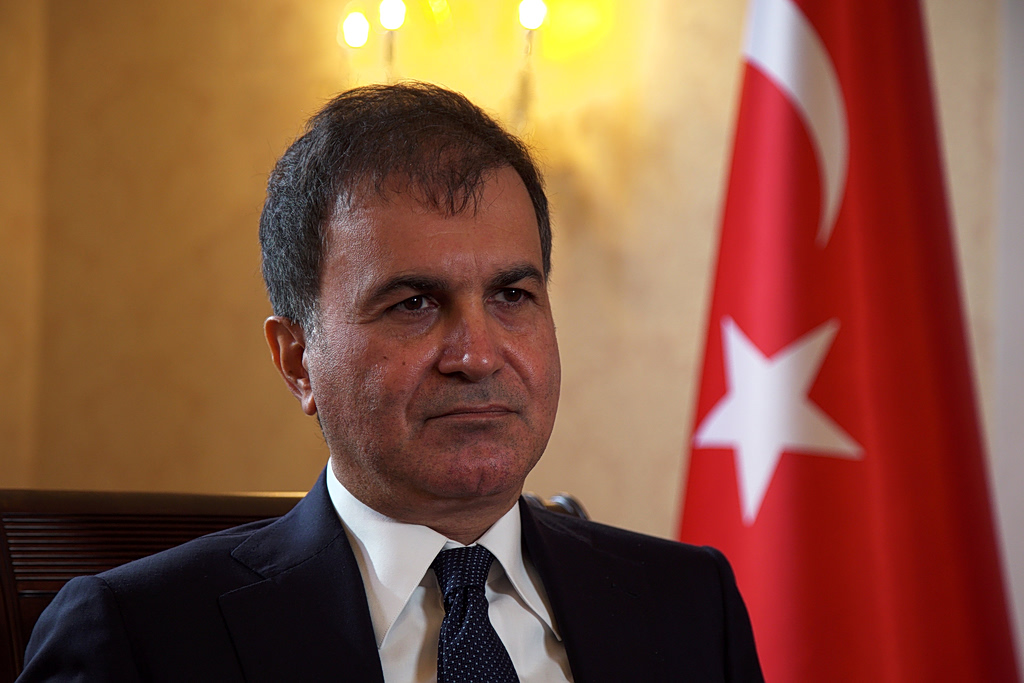
Although Athens insists that its foreign policy during the war does not have an “anti-Turkish dimension,” no one can ignore that its choices affect both relations and the balance of power with Ankara. The Greek government considers Ankara’s reaction—sending six F-16 fighter jets and air defense systems to Cyprus—as largely cosmetic, while it remains cautious about how the stance of this “cunning neutral” could affect Greece’s position at the critical crossroads between East and West.
The common assessment of the Maximos Mansion and the Ministry of Foreign Affairs is that Turkey is currently facing a series of issues beyond the narrow Aegean framework. As demonstrated, Turkish air defense is porous, while the scenario of Iranian Kurds getting involved in the war—with U.S. approval—evokes in Ankara the nightmare of a possible unification of their co-ethnics in Iraq and Turkey, aiming ultimately for the long-sought autonomy.
At the same time, Turkey’s economy has little room for further increases in energy prices, which would inevitably drive inflation higher. And as for the duration of the war? That will determine whether Turkey faces yet another massive influx of populations onto its territory. Pending these challenges, Greek-Turkish relations currently appear as a footnote in history.